Hyperinflation: The Ultimate Guide to Economic Collapse, Extreme Banknotes and Currency Reform
Introduction: Why Hyperinflation Matters
Hyperinflation is one of the most dramatic and destructive economic phenomena in human history. It represents a breakdown of the monetary system so severe that money itself loses meaning. Prices rise uncontrollably, savings disappear, and entire economies collapse within months or even weeks.
Unlike normal inflation, which is a manageable and often necessary part of economic growth, hyperinflation signals deep structural failure. It occurs when governments lose control over their monetary policy, often due to political instability, war, or economic mismanagement.
This guide provides a complete and detailed analysis of hyperinflation, including its causes, mechanisms, real-world examples, and consequences. It also explains how extreme banknotes emerge during crises and how countries recover through currency reform.
What is Hyperinflation
Hyperinflation is typically defined as inflation exceeding 50 percent per month. At this level, prices double rapidly, sometimes within days. Money loses its function as a store of value, a medium of exchange, and a unit of account.
During hyperinflation, people stop trusting the currency. Instead of saving money, they spend it immediately or convert it into goods or foreign currencies. This behavior accelerates inflation further, creating a vicious cycle.
For a deeper explanation, see the article What is Hyperinflation, which explores definitions and economic theory in detail.
Core Causes of Hyperinflation
Hyperinflation does not happen randomly. It is usually the result of several interconnected factors.
The most important cause is excessive money printing. Governments facing budget deficits often print money to cover expenses. Without corresponding economic growth, this increases the money supply and reduces the value of each unit.
Another key factor is the collapse of production. When goods become scarce, prices rise naturally. Combined with increased money supply, this leads to exponential inflation.
Political instability and war also play a significant role. Governments under pressure may prioritize short-term survival over long-term stability.
Finally, loss of confidence is critical. Once people believe a currency will continue to lose value, they act accordingly, accelerating the collapse.
The Psychology of Hyperinflation
Hyperinflation is not only an economic process but also a psychological one. Expectations drive behavior, and behavior drives inflation.
When people expect prices to rise, they spend money quickly. This increases the velocity of money, meaning it circulates faster through the economy. As a result, prices rise even more.
This feedback loop is one of the reasons hyperinflation is so difficult to stop once it begins.
Historical Case Study: Germany 1923
Germany’s hyperinflation in 1923 is one of the most famous examples in history. Following World War I, Germany faced massive reparations, economic instability, and political turmoil.
To meet its obligations, the government printed large amounts of money. This led to rapid inflation, which soon became hyperinflation.
At its peak, prices doubled every few days. Workers were paid multiple times per day so they could spend their wages before they lost value. People carried wheelbarrows of banknotes to buy basic goods.
This case is explored in detail in Germany 1923 Inflation, where the mechanisms and consequences are analyzed further.
Historical Case Study: Zimbabwe
Zimbabwe experienced one of the most extreme cases of hyperinflation in modern history during the late 2000s.
Economic decline, political instability, and land reform policies led to a collapse in production. The government responded by printing money, which triggered hyperinflation.
At its peak, Zimbabwe issued banknotes in denominations of billions and trillions. Prices changed daily, and the national currency became essentially worthless.
This phenomenon is described in Zimbabwe Billion Dollar Notes, highlighting the scale and impact of the crisis.
Post-Soviet Hyperinflation and Million Banknotes
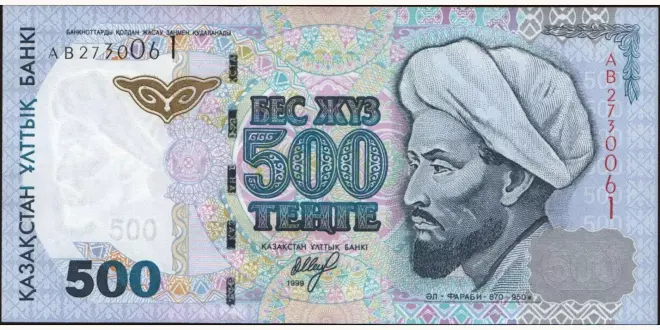
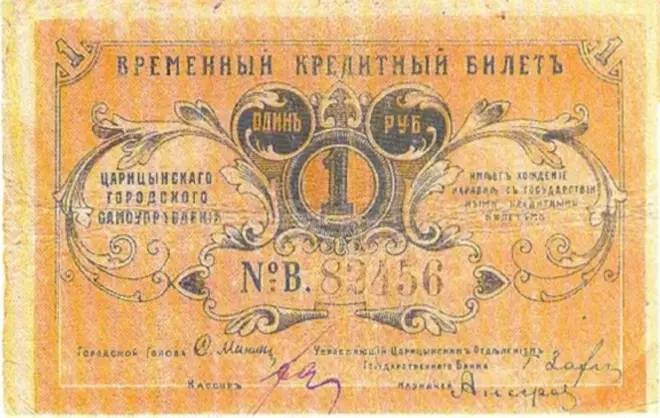
After the collapse of the Soviet Union, many newly independent states experienced hyperinflation. Countries such as Ukraine, Georgia, and Belarus issued banknotes with denominations reaching millions.
These million banknotes were not signs of wealth but evidence of currency collapse. They were necessary for everyday transactions because smaller denominations became useless.
This period is analyzed in Million Banknotes of the 1990s, which shows how hyperinflation affected daily life.
Why Extreme Banknotes Appear
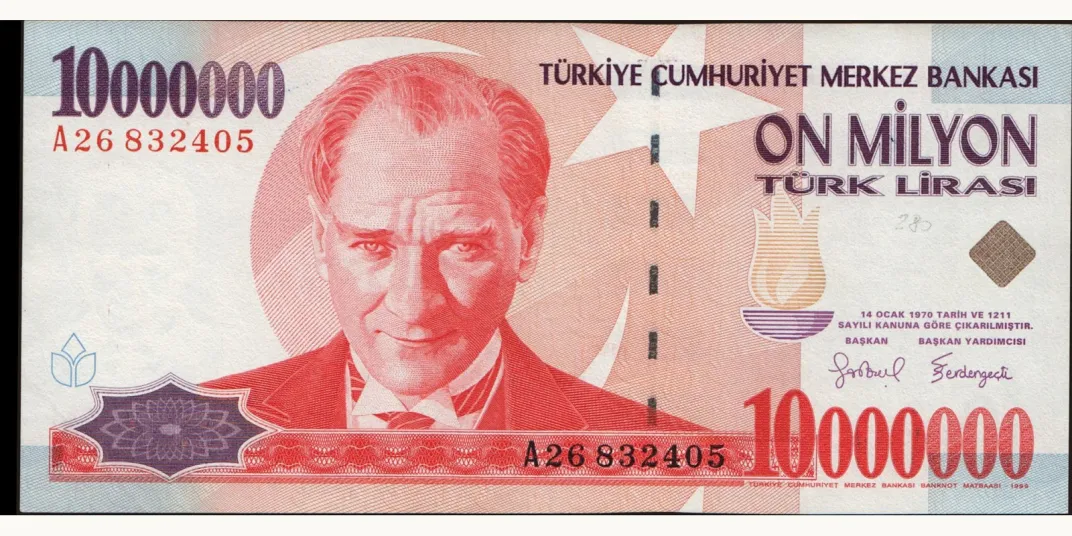
One of the most visible signs of hyperinflation is the appearance of extremely high denomination banknotes.
Governments issue these notes to maintain transaction efficiency. Without them, people would need impractically large amounts of cash.
However, these banknotes also signal a failure of monetary policy. They are a symptom, not a solution.
Today, such banknotes are valuable historical artifacts and are widely collected.
Impact on Society
Hyperinflation has devastating consequences for society.
Savings accumulated over years can disappear within weeks. Salaries lose value almost immediately after being paid. Long-term planning becomes impossible.
People adapt by switching to foreign currencies or using barter systems. Trust in government institutions declines, and social tensions increase.
The middle class is often the hardest hit, as their savings are wiped out.
Impact on Business and Economy
Businesses struggle to operate in hyperinflationary environments. Pricing becomes unpredictable, supply chains break down, and contracts lose meaning.
Investment declines, and economic activity slows. Companies may close or reduce operations, leading to unemployment.
Financial systems become unstable, and banks may fail.
How Hyperinflation Ends
Ending hyperinflation requires strong and decisive action.
The most common solution is currency reform. This involves introducing a new currency, removing zeros from the old one, or adopting a foreign currency.
Governments must also restore confidence by implementing strict monetary and fiscal policies.
Learn more in How Currency Reform Works, which explains the mechanisms in detail.
Currency Reform Strategies
There are several approaches to currency reform.
Redenomination removes zeros from the currency but keeps the same monetary system.
Currency replacement introduces a completely new currency, often backed by reforms.
Dollarization involves adopting a stable foreign currency, such as the US dollar.
Each method has advantages and challenges, depending on the economic context.
Lessons for Modern Economies
Hyperinflation teaches important lessons.
Stable monetary policy is essential. Governments must avoid excessive money printing and maintain fiscal discipline.
Independent central banks play a key role in preventing political interference.
Transparency and public trust are critical for economic stability.
These lessons remain relevant today, especially in countries facing economic uncertainty.
Hyperinflation and Banknote Collecting
For collectors, hyperinflationary banknotes are fascinating objects. They represent unique historical moments and illustrate the extremes of monetary systems.
Million, billion, and trillion banknotes are popular among collectors due to their unusual denominations and historical significance.
Their value depends on rarity, condition, and context.
Conclusion
Hyperinflation is one of the clearest examples of how economic systems can fail. It transforms money from a stable tool of exchange into a rapidly depreciating asset.
Understanding hyperinflation helps us appreciate the importance of monetary stability, institutional strength, and economic discipline.
By studying past crises, we can better prepare for future challenges.
| Definition | Inflation above 50 percent per month |
|---|---|
| Main Cause | Excessive money printing |
| Famous Cases | Germany 1923, Zimbabwe, Post-Soviet states |
| Extreme Notes | Millions, billions, trillions |
| Solution | Currency reform |
Question
What is hyperinflation
Answer
It is extreme inflation where prices rise uncontrollably and money loses value rapidly
Question
Why do countries issue million banknotes
Answer
Because smaller denominations become impractical during hyperinflation
Question
What are the most famous examples
Answer
Germany 1923, Zimbabwe 2008 and post-Soviet countries
Question
How can hyperinflation be stopped
Answer
Through strict monetary policy and currency reform
Question
Are hyperinflation banknotes valuable
Answer
Yes, they are popular among collectors due to their historical significance
Related Articles