Turkestan Banknotes of 1918 (“Turkbon”): Civil War Money, Economic Crisis, Design and Collector Value
Introduction: Why Turkestan Banknotes Are More Than Just Money
The Turkestan banknotes of 1918 are not simply rare monetary issues from the Civil War period. They represent a powerful example of how an economy survives under conditions of total state collapse, broken connections, and the absence of centralized authority.
At the moment when the traditional financial system ceased to exist, the region faced a critical choice: either return to primitive exchange or create its own money. This is exactly how the banknotes now known as “Turkbon” emerged.
After the October Revolution of 1917, the former Russian Empire ceased to function as a unified economic system. The destruction of transport connections, military conflicts, and political instability led to the isolation of many regions. Turkestan became one of the most isolated areas, with particularly severe disconnection from the center.
Under these conditions, money stopped performing its key role as a universal medium of exchange. Without stable monetary circulation, neither trade, nor production, nor governance can function. That is why issuing local banknotes became not just an economic step, but a fundamental move toward restoring the basic structure of the economy.
What Makes Turkestan Banknotes of 1918 Unique Among Civil War Currency
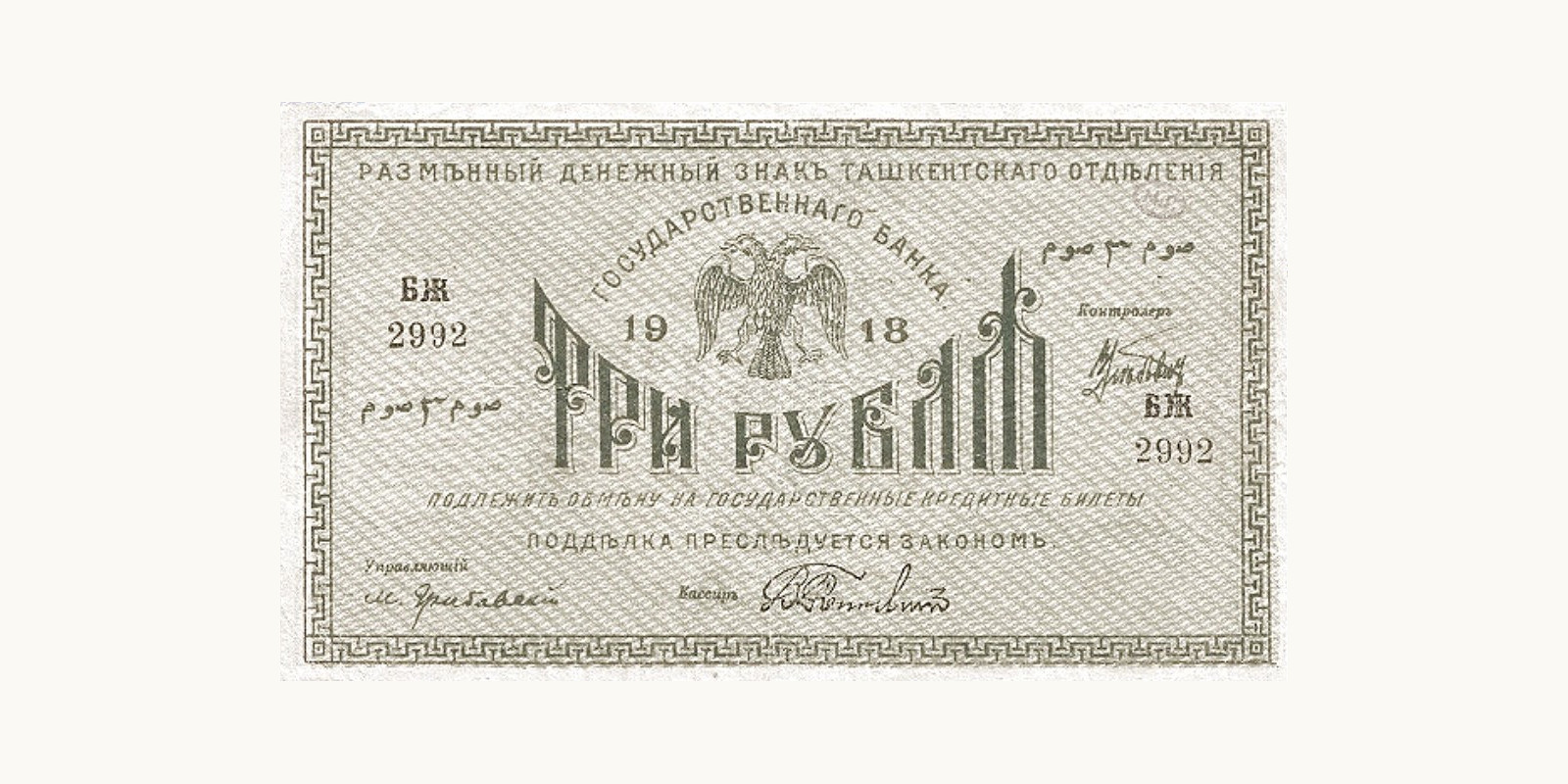
The Turkestan banknotes of 1918 (“Turkbon”) occupy a special place among all monetary issues of the Civil War period. Unlike many other regional currencies, they not only functioned as a medium of exchange but also reflected the cultural and economic specificity of the region.
The key feature lies in the fact that these banknotes were created under conditions of complete isolation. This means their issuance was not part of a unified monetary policy but rather a forced survival measure. For this reason, Turkbon can be considered a classic example of emergency money.
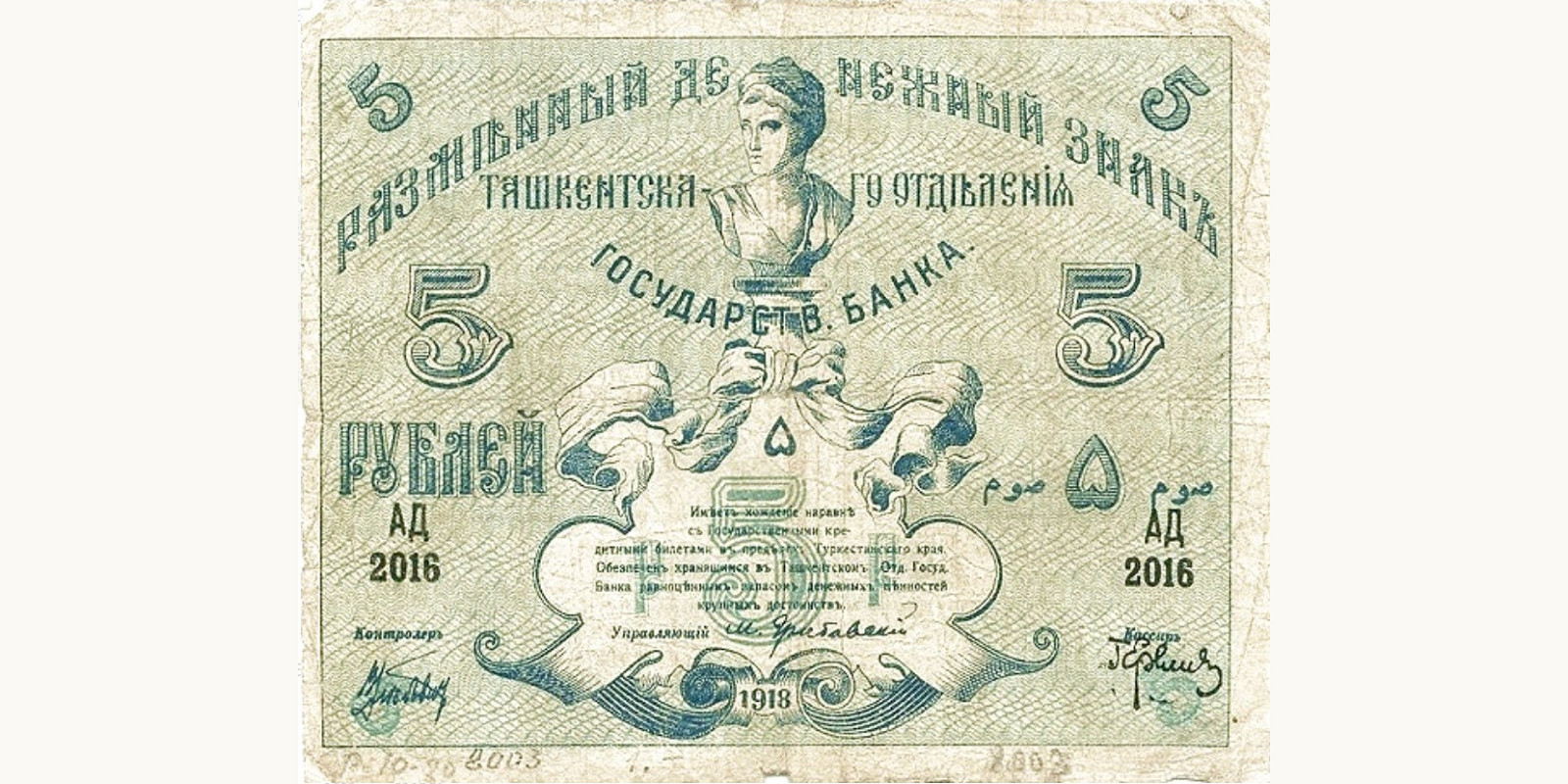
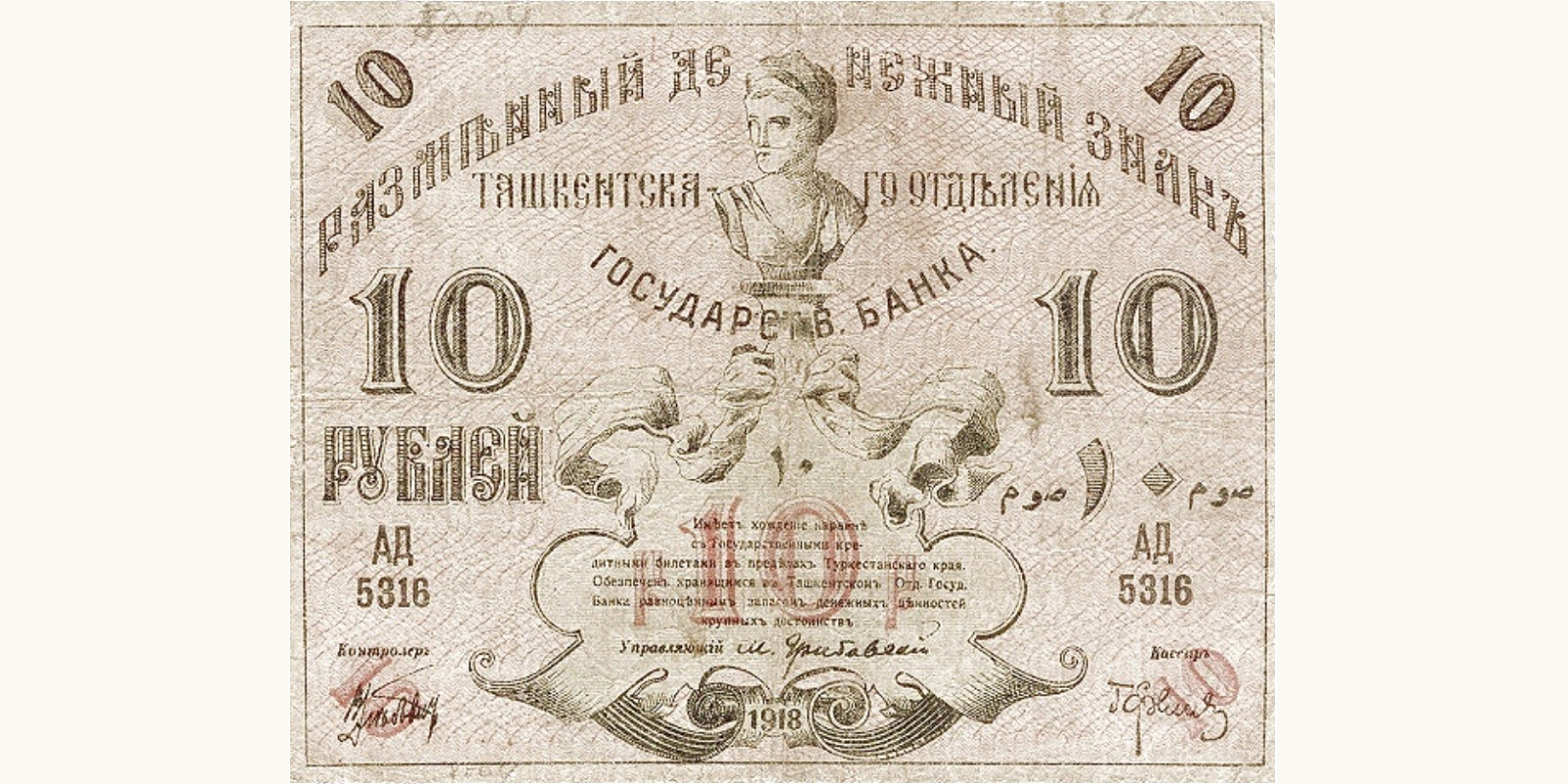
In addition, the banknotes of Turkestan stand out due to their unique design. Eastern ornamentation makes them visually distinct from other Civil War issues, significantly increasing their collector value.
Thus, Turkbon combines several important factors at once: historical significance, rarity, and artistic uniqueness.
Turkestan During the Civil War: Isolation and Autonomy
The situation in Turkestan in 1918 was truly unique. On the one hand, the region formally belonged to Soviet Russia; on the other, it effectively existed autonomously. The central government was unable to maintain control or provide support.
The Civil War destroyed key transport arteries, especially railways. Routes connecting Turkestan with central regions were either destroyed or controlled by different military forces. This resulted in a complete halt of supplies, including currency deliveries.
The regional economy became isolated within a closed space. External trade almost disappeared, the internal market became disorganized, and the financial system ceased to function. It was at this moment that the need for a local monetary system became unavoidable.
Monetary Shortage: How Lack of Money Destroys an Economy
The term “monetary shortage” is not a metaphor—it precisely describes the situation Turkestan faced. The absence of cash leads to the breakdown of the entire economic structure.
When enterprises cannot pay wages, production stops. When trade cannot use money as a universal equivalent, it either collapses or shifts to primitive forms. When the state cannot collect taxes or finance its activities, it loses the ability to govern.
All of these processes occurred simultaneously in Turkestan. People began hoarding any available currency, which further reduced circulation. As a result, even a minimal amount of cash became a critically important resource.
Barter Economy: A Temporary Solution with Serious Limitations
In the absence of money, the economy does not disappear—it degrades into simpler forms. Barter became the primary mechanism of exchange in Turkestan.
However, barter has fundamental limitations. It requires a coincidence of needs between parties, which significantly complicates transactions. It prevents easy scaling of trade and makes complex economic relationships nearly impossible.
Moreover, barter destroys the pricing system. Without a unified equivalent, the value of goods becomes subjective and unstable. This leads to chaos and reduces economic efficiency.
That is why even imperfect paper money proves to be a far more effective economic tool.
The Creation of Turkbon: Logic and Necessity
The decision to issue local banknotes was driven not by ideology, but by practical necessity. Local authorities understood that without restoring monetary circulation, the regional economy could not function.
In 1918, temporary credit notes were introduced, which became known as “Turkbon.” They were not intended to serve as a full-fledged currency in the classical sense, but they fulfilled the essential function of enabling circulation.
It is important to note that these banknotes were initially considered temporary. Nevertheless, they played a crucial role in restoring basic economic processes.
Which Turkestan Banknotes of 1918 Are Considered the Rarest
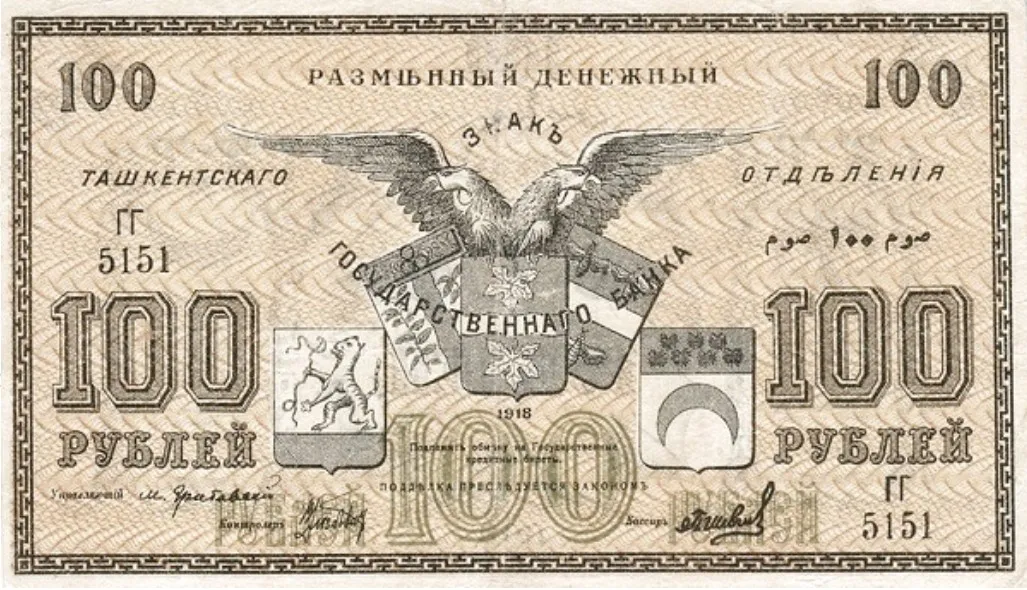
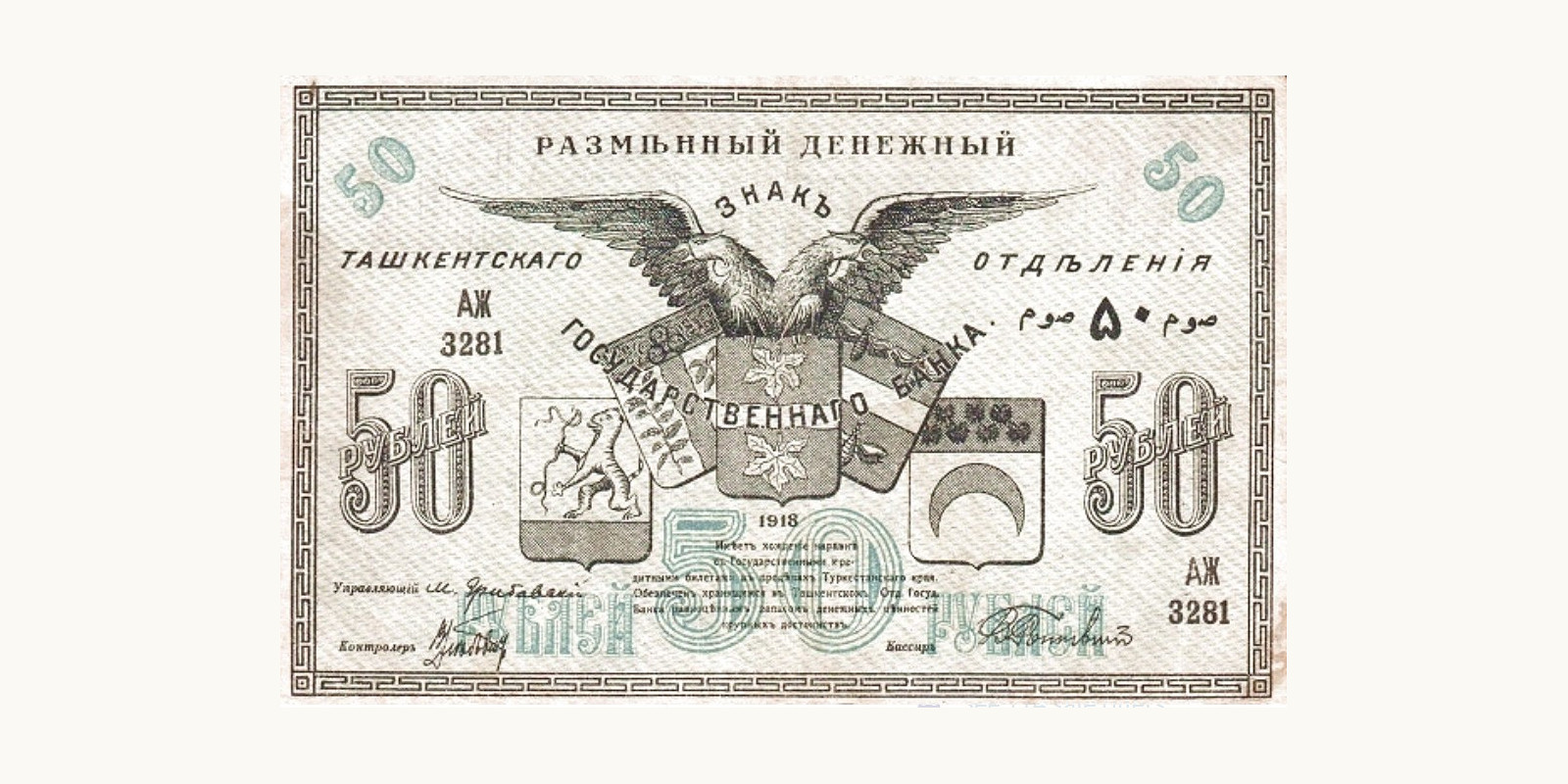
Among all Turkbon issues, collectors pay particular attention to large denominations. The rarest are considered to be 50 and 100 rubles, especially in well-preserved condition.
Their rarity is explained not only by smaller print runs but also by circulation patterns. These banknotes were used less frequently and were often retained by a limited number of individuals, reducing their spread.
Additionally, specimens with sharp ornamentation and minimal printing defects are especially valued. Even minor differences can significantly affect price.
Thus, rare Turkestan banknotes of 1918 represent one of the most attractive segments of the market.
Denomination System: An Attempt to Build a Complete Economy
The choice of denominations—from 1 to 100 rubles—was not accidental. It reflected an attempt to create a full monetary system capable of supporting different levels of economic activity.
Small denominations facilitated everyday trade. Medium denominations were used for wages and business transactions. Large denominations supported more significant economic operations.
Even in crisis conditions, there was a clear attempt to preserve the structure of monetary circulation.
Design of the Banknotes: Intersection of Cultures and Traditions
One of the most fascinating features of Turkestan banknotes is their design. Unlike imperial and later Soviet issues, they do not follow strict European standards.
Their appearance clearly reflects the influence of Eastern ornamentation. Geometric patterns, floral motifs, and intricate decorative frames represent traditions of Islamic and Central Asian art.
This design not only decorates the banknotes but also forms their unique identity. It demonstrates that even in times of crisis, cultural authenticity is preserved.
Production and Technical Limitations
Banknote production took place under severe resource constraints. Limited printing capabilities, lack of quality materials, and shortage of skilled specialists affected the final output.
Printing quality varies significantly, which today serves as an important factor for collectors. Some notes show visible defects such as misalignment and color variations.
However, these imperfections make each banknote unique and highlight its historical authenticity.
Varieties and Collecting Complexity
Differences between banknote issues add complexity and interest for collectors. Variations may involve paper type, typography, composition, and print quality.
This transforms collecting Turkbon into a serious research activity that requires expertise and attention to detail.
Market and Value Today
The modern market for Turkestan banknotes is shaped by several key factors: rarity, condition, historical importance, and visual appeal.
Well-preserved specimens are extremely rare, which significantly increases their value—especially for higher denominations.
Why Turkbon Is Attractive for Investors
From an investment perspective, these banknotes offer several advantages. They are rare, historically significant, and belong to a niche but growing market segment.
As interest in Civil War history increases, demand for such items continues to rise.
Conclusion: The Significance of Turkestan Banknotes
The Turkestan banknotes of 1918 are not just financial instruments—they are a reflection of an entire historical era. They show how economies adapt to crisis, how culture survives under pressure, and how even temporary solutions can leave a lasting legacy.
For collectors, these are not just rare objects, but a way to connect with history and understand the processes that shaped the modern world.
Real Prices of Turkestan Banknotes: How Much Turkbon Costs Today
The modern market for Turkestan banknotes of 1918 remains relatively niche, but this is precisely what makes it especially attractive for collectors and investors. Unlike mass-issued Soviet banknotes, Turkbon has limited supply, and each transaction can significantly influence overall market pricing.
The value of banknotes depends on several key factors: denomination, condition, rarity of the specific issue, and visual appeal. The most accessible are small denominations such as 1, 3, and 5 rubles. Even in good condition, they remain relatively affordable, making them an excellent entry point for beginner collectors.
However, the situation changes dramatically when it comes to higher denominations. Banknotes of 50 and 100 rubles are significantly rarer, especially in well-preserved condition. Their value can be multiple times higher than more common issues. In rare cases, particularly with excellent preservation and sharp ornamentation, prices can reach substantial levels at auctions.
A separate category includes rare varieties and printing errors. Such banknotes can be significantly more valuable than standard issues, as they represent not only monetary instruments but also unique production artifacts.
Investment Potential: Why Turkbon Prices Are Rising
Interest in Civil War banknotes continues to grow steadily, and Turkestan is no exception. This trend is driven by several important factors.
First, limited supply. Unlike modern currency, the number of surviving specimens does not increase. On the contrary, some banknotes are lost over time, further reducing availability.
Second, growing interest in historical topics. Collectors increasingly focus on the Civil War period as one of the most dramatic and complex stages in history. This naturally increases demand.
Third, unique design. Eastern ornamentation makes Turkestan banknotes visually distinct, attracting not only numismatists but also collectors of art and cultural artifacts.
As a result, Turkbon is gradually moving from a niche collectible into a broader investment segment.
Fakes and Risks: How Not to Lose Money
Despite the relative rarity of Turkestan banknotes, the market is not immune to counterfeits. In fact, the simplicity of original printing creates additional challenges for collectors.
Fakes range from crude copies to high-quality reproductions made using modern technologies. Therefore, it is essential to pay attention to several key factors when purchasing.
First is the paper. Original banknotes have a specific texture that is difficult to replicate. Modern paper often appears either too smooth or artificially aged.
Second is the ornament quality. Authentic notes display structured and consistent patterns, even if printing is imperfect. Counterfeits often show blurred or overly “perfect” lines.
Another important factor is provenance. Buying from trusted sellers significantly reduces risk.
Where to Buy Turkestan Banknotes
There are several main channels for acquiring these banknotes. The most popular are specialized auctions and online marketplaces focused on collectors.
Auctions offer a higher level of trust and often include expert evaluation. However, prices there may be higher.
Online platforms provide a wider selection but require more caution. It is important to verify seller reputation and carefully examine images.
Comparison with Other Civil War Currency
Turkestan banknotes are part of a broader category of emergency monetary issues. Similar processes occurred in Ukraine, Siberia, and other regions.
However, Turkestan stands out due to its design and cultural context. While other regions often used European-style elements, Turkestan preserved Eastern artistic traditions.
How Turkbon Is Collected: Collector Strategies
Collecting Turkestan banknotes can follow several strategies. The simplest approach is assembling a full set of denominations. A more advanced strategy involves searching for varieties.
Experienced collectors focus on details such as print quality, paper characteristics, and rare variations.
How Turkestan Banknotes Were Used in Everyday Life
To understand the true value of Turkestan banknotes, it is important to examine how they functioned in real economic life. During the Civil War, money became a survival tool rather than an abstract financial instrument.
In local markets, banknotes were primarily used to purchase essential goods such as bread, flour, salt, and fuel. Small denominations like 1 and 3 rubles circulated actively and wore out quickly, which explains why well-preserved examples are rare today.
Wages, when paid, were often issued in Turkbon. Workers received money that could lose purchasing power within days, creating constant economic instability.
In rural areas, barter persisted longer, but even there, monetary transactions gradually became more common, especially in trade with cities.
Inflation and Devaluation: The Hidden Side of Turkbon
Although Turkestan is not always cited as a classic case of hyperinflation, devaluation processes were clearly present. The main reason was the lack of a stable economic foundation.
As more banknotes were issued, their real value declined. At the same time, production did not increase, leading to rising prices. People tried to spend money quickly, fearing further devaluation.
This phenomenon is known as the “velocity of money” effect and is typical for crisis economies.
As a result, Turkestan banknotes fulfilled only part of their role: they enabled exchange but failed to store value.
Deep Analysis of Design: Meaning of Ornamentation
The ornamentation on Turkestan banknotes is not random decoration. It reflects centuries-old artistic traditions and carries cultural meaning.
Geometric patterns typical of Islamic art symbolize order and infinity. Repeating elements create a sense of structure and harmony, which is especially important for money as a symbol of stability.
Floral motifs can represent life and growth. In times of crisis, such imagery may have played a psychological role by reinforcing a sense of continuity.
Interestingly, the absence of portraits and political symbols distinguishes these banknotes from many others, making them more universal and culturally neutral.
Comparison with Other Civil War Banknotes
Turkestan banknotes should be viewed within the broader monetary chaos of the Civil War period. Similar issues appeared across the former Russian Empire.
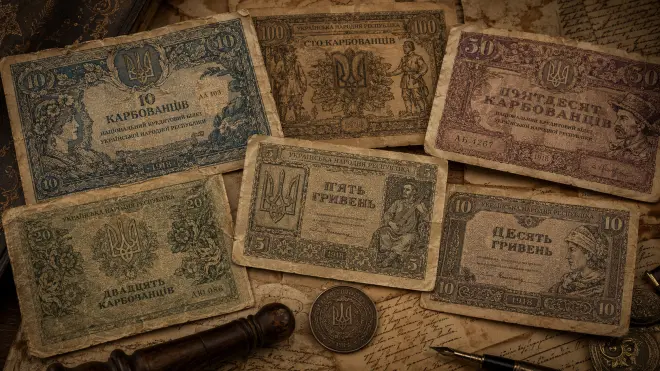
In Ukraine, karbovanets were issued; in Siberia, local credit notes; in the Far East, temporary regional currencies. All share a common feature—they emerged during state collapse.
However, Turkestan stands out due to its artistic style, strongly influenced by Eastern culture, making it both a historical and artistic phenomenon.
Why Turkbon Rarity Will Only Increase
The rarity of Turkestan banknotes is determined not only by limited print runs but also by natural loss. Over more than a century, many banknotes have been destroyed or damaged.
Additionally, many specimens are held in private collections and rarely appear on the market. This creates a situation where demand gradually exceeds supply.
As interest in alternative investments grows, these banknotes are increasingly viewed as long-term assets.
Collector Psychology: Why People Buy Turkbon
Interest in Turkestan banknotes is driven not only by rarity but also by emotional factors.
Collectors often seek items with historical depth. Civil War banknotes are not just currency—they are tangible evidence of dramatic events.
The visual appeal also plays a role. Eastern ornamentation makes these banknotes aesthetically attractive, expanding interest beyond traditional numismatics.
How to Identify a Rare Specimen
Experienced collectors focus on several indicators of rarity.
Key factors include condition, print clarity, presence of defects, and paper characteristics. Even small differences can significantly influence value.
Provenance and documentation also play an important role.
Where to Find Rare Banknotes (Practical Guide)
Searching for rare banknotes requires a systematic approach. In addition to auctions and marketplaces, there are specialized communities and private collector networks.
Some of the most interesting pieces are sold privately, making community involvement highly valuable.
Why Turkestan Banknotes Remain Undervalued
Despite their historical and collectible importance, Turkestan banknotes remain undervalued compared to other Civil War issues. This is due to limited awareness, complex classification, and a relatively narrow collector base.
However, this creates opportunity. As interest grows, prices may increase significantly.
Turkestan Banknotes in Global Numismatics
In international numismatics, Turkestan banknotes are part of the broader concept of “emergency money.” Similar issues appeared worldwide during crises.
Their combination of Islamic art and European printing techniques makes them unique.
Why Interest in Turkbon Continues to Grow
Demand is increasing due to rarity, historical importance, and visual uniqueness. These factors push Turkbon from niche collecting into a broader market.
Future Market Trends
The market shows strong potential for growth. Limited supply, global accessibility through online platforms, and generational shifts all support rising demand.
Importance for Studying Economic Crises
Turkestan banknotes provide valuable insight into how monetary systems function during collapse. They demonstrate short-term stabilization mechanisms rather than long-term value storage.
How to Choose Turkestan Banknotes for Investment
Key factors include condition, rarity, and visual appeal. Large denominations and rare varieties are especially attractive.
Practical Conclusion: Should You Buy Turkbon
Turkbon represents a rare, historically significant, and visually unique asset with long-term potential.
Turkestan Banknotes in Global Monetary History
They are part of a global pattern of crisis currencies and illustrate universal economic mechanisms.
Final Conclusion
Turkestan banknotes combine history, economics, and culture. Their rarity and uniqueness ensure continued interest and growth potential.
Related Articles