Azerbaijan Banknotes 1992–1995: Early Manat Issues, Inflation and Currency Transformation
Introduction: The Birth of the Azerbaijani Manat
The collapse of the Soviet Union in 1991 triggered profound economic and political changes across newly independent states. Azerbaijan was among the first republics to introduce its own national currency, the manat, marking a crucial step toward financial sovereignty.
In 1992, the first Azerbaijani banknotes were issued and put into circulation. These early issues were not only a monetary tool but also a symbol of national identity. However, they were introduced during a period of economic instability, inflation and transition, which significantly influenced their design, denominations and circulation patterns.
The early Azerbaijani banknotes represent a fascinating chapter in post-Soviet monetary history, combining artistic elements, technological limitations and economic realities.
Economic Context: Transition from Soviet Ruble
Before independence, Azerbaijan used the Soviet ruble as its primary currency. After the collapse of the USSR, the newly formed government needed to establish its own monetary system.
The introduction of the manat in 1992 was a necessary step to control monetary policy and stabilize the economy. However, the transition was complicated by inflation, supply shortages and political uncertainty.
These conditions shaped the structure of early banknote issues, leading to rapid changes in denominations and frequent redesigns.
First Banknote Issue of 1992
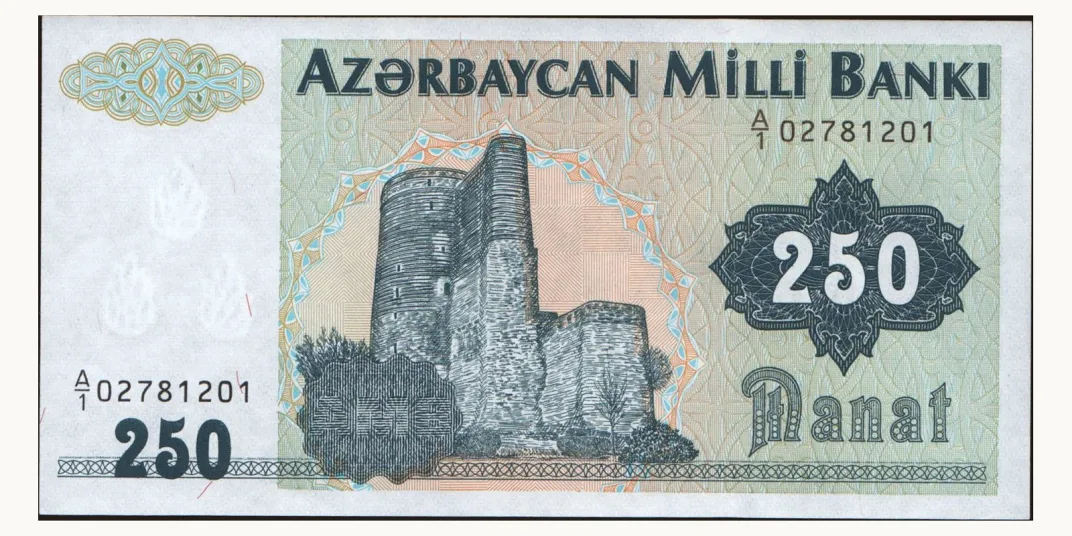
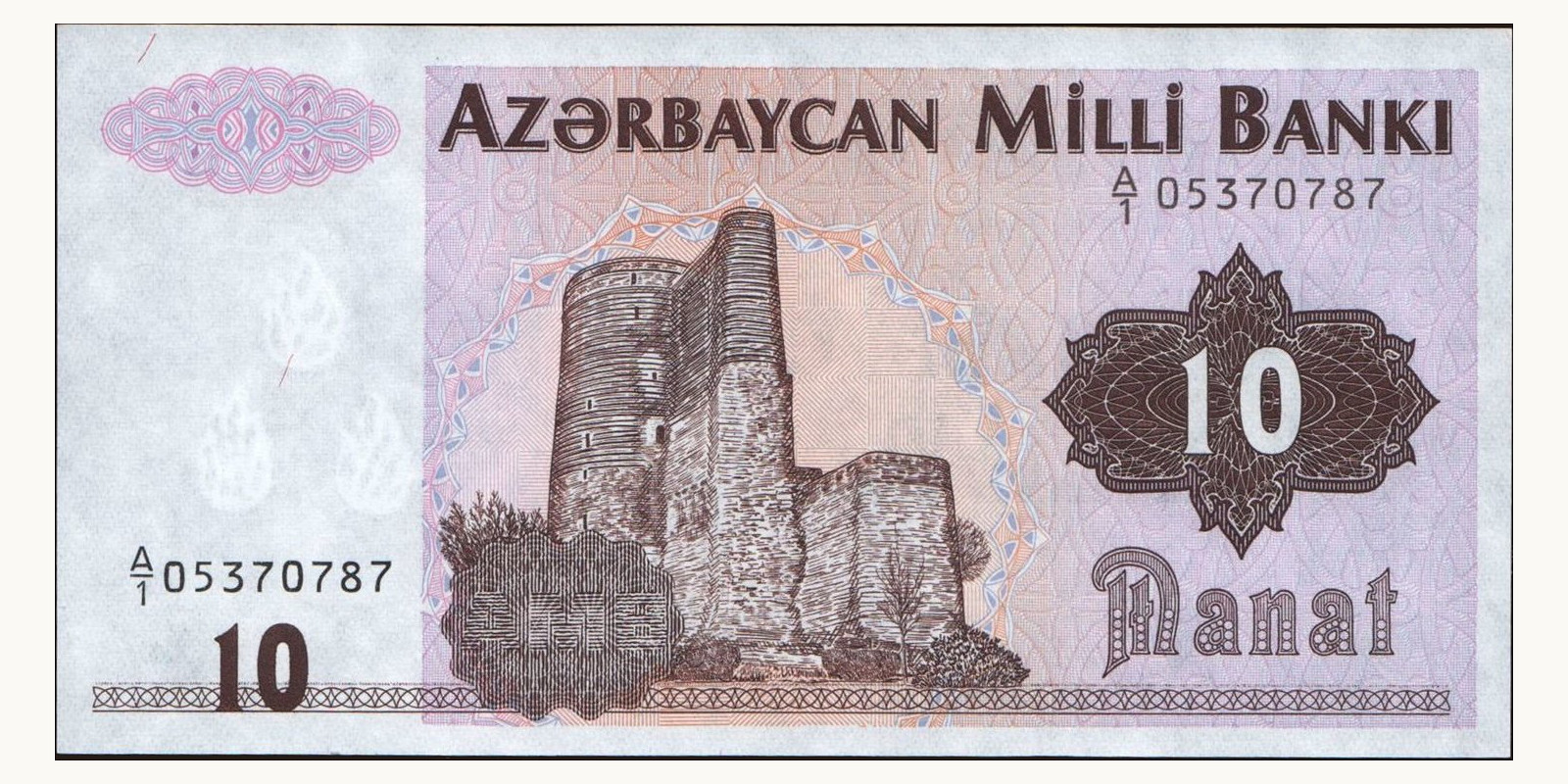
The first series of Azerbaijani banknotes included denominations such as 1, 10 and 250 manats. These notes were printed in France and represented the initial attempt to establish a national currency.
The design of these banknotes featured architectural landmarks and national symbols. One of the most recognizable images was the Maiden Tower in Baku, a historic monument representing the cultural heritage of Azerbaijan.
The reverse side often included traditional ornaments, reflecting the country’s artistic identity.
Security Features and Weaknesses
Despite being well designed, the early banknotes had certain vulnerabilities. While they included basic security features such as watermarks and security threads, they lacked advanced anti-counterfeiting technologies.
One significant issue was the absence of clear denomination indicators on certain parts of the banknote. This allowed counterfeiters to manipulate the value by altering digits.
As a result, these banknotes became targets for forgery, which further undermined public trust.
Second Issue and Design Improvements
To address these problems, Azerbaijan introduced a second series of banknotes with improved security and design.
The new notes included denominations such as 1, 5, 10, 50 and 100 manats. The design shifted toward urban landscapes and more structured layouts.
Security features were enhanced, including better placement of threads and improved print quality.
These changes marked a step forward in stabilizing the currency.
High Denominations and Inflation
Inflation played a major role in shaping Azerbaijan’s banknote system. As prices increased rapidly, higher denominations became necessary.
In the mid-1990s, banknotes of 500, 1000 and even 50,000 manats were introduced. This reflected the declining purchasing power of the currency.
The introduction of larger denominations was a common trend in post-Soviet economies experiencing inflation.
Portraits and National Identity
Later banknote issues began to feature portraits of prominent Azerbaijani figures. One notable example is the inclusion of poet Nizami Ganjavi on higher denomination notes.
These design choices reinforced national identity and cultural pride, transforming banknotes into carriers of historical memory.
Production and Printing
Azerbaijani banknotes were printed by international companies, including facilities in France and Germany.
This ensured a certain level of quality and consistency, although economic conditions still limited the overall effectiveness of the currency system.
Circulation and Public Perception
The early manat faced challenges in gaining public trust. Inflation and counterfeiting reduced confidence in the currency.
However, improvements in design and economic stabilization gradually strengthened its position.
Collector Value Today
Today, early Azerbaijani banknotes are popular among collectors. Their value depends on rarity, condition and specific varieties.
Uncirculated notes and complete series are especially desirable.
These banknotes provide insight into the economic transition of Azerbaijan in the 1990s.
Conclusion: A Currency in Transition
The banknotes of Azerbaijan from 1992 to 1995 illustrate the challenges of building a national currency during a period of economic transformation.
They combine historical significance, artistic design and economic lessons, making them an important subject for collectors and researchers alike.
| Period | 1992–1995 |
|---|---|
| Country | Azerbaijan |
| Currency | manat |
| Printer | France, Germany |
| Denominations | 1 to 50,000 manats |
| Context | post-Soviet transition and inflation |
When were manat banknotes introduced
1992
Why were high denominations issued
inflation
Are they collectible
yes, especially rare notes
Who printed them
European printing companies
Related Articles