Armenian Dram Banknotes 1998–1999: Design Evolution, Security Features and Monetary Stabilization
Introduction: A New Era of Armenian Currency
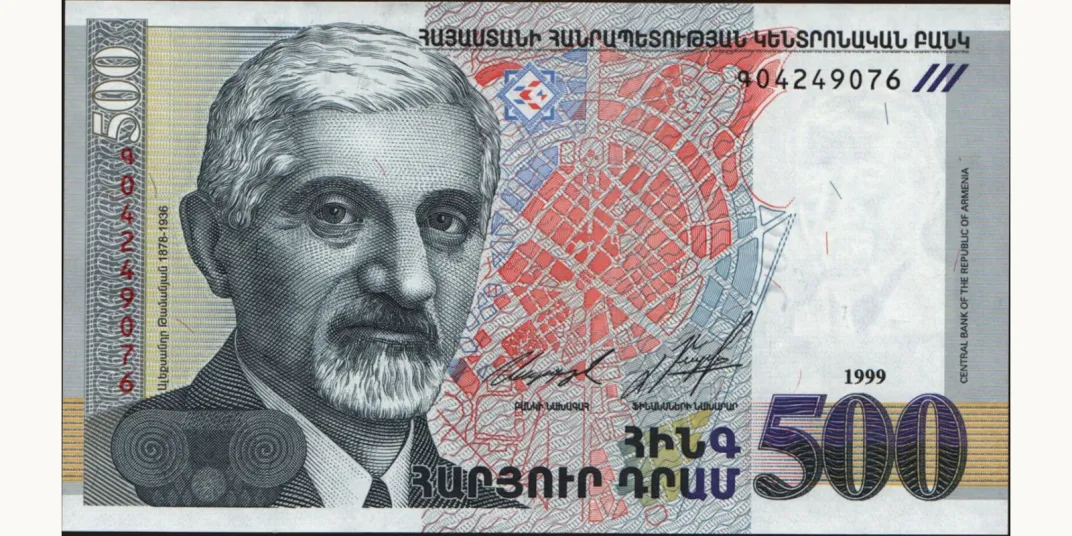
The late 1990s marked a critical turning point in the monetary history of Armenia. After gaining independence in 1991 and introducing its national currency in 1993, the country faced significant economic challenges, including inflation, institutional restructuring and the need to build trust in its financial system.
By 1998–1999, Armenia introduced a new series of dram banknotes that represented not only a technical upgrade but also a symbolic shift toward stability and national identity. These banknotes combined improved security features, refined artistic design and a clearer representation of Armenian cultural heritage.
The 1998–1999 banknote series stands as one of the most important milestones in the development of Armenia’s monetary system.
Economic Context: Post-Soviet Transition and Stabilization
Following the collapse of the Soviet Union, Armenia faced economic contraction, energy shortages and regional instability. Inflation eroded purchasing power and undermined confidence in the newly introduced dram.
The first series of Armenian banknotes issued between 1993 and 1995 fulfilled an urgent need for national currency but lacked advanced security features and modern design elements.
By the late 1990s, economic stabilization policies began to take effect. Inflation slowed, and the Central Bank of Armenia initiated reforms aimed at strengthening the currency.
The introduction of the 1998–1999 banknotes was part of this broader strategy to modernize the financial system and restore confidence.
Production and Printing: International Expertise
One of the most significant differences between the early and later series of Armenian banknotes was the involvement of international printing companies.
The 1998–1999 banknotes were produced by the British company Thomas De La Rue, one of the world’s leading banknote printers. This marked a shift from earlier issues printed by German firms.
As a result, the new banknotes demonstrated higher print quality, improved color richness and enhanced durability.
This collaboration ensured that Armenian currency met international standards and significantly reduced the risk of counterfeiting.
Denominations and Series Structure
The new banknote series included denominations of 50 and 100 dram issued in 1998, followed by higher denominations such as 1000 and 2000 dram introduced in 1999.
Each denomination was assigned a specific series designation and incorporated unique design elements.
The expansion of higher denominations reflected economic realities, including inflation and the need for more efficient transactions.
These banknotes were designed to function both as practical instruments of exchange and as representations of national identity.
Design Philosophy: Culture and Identity
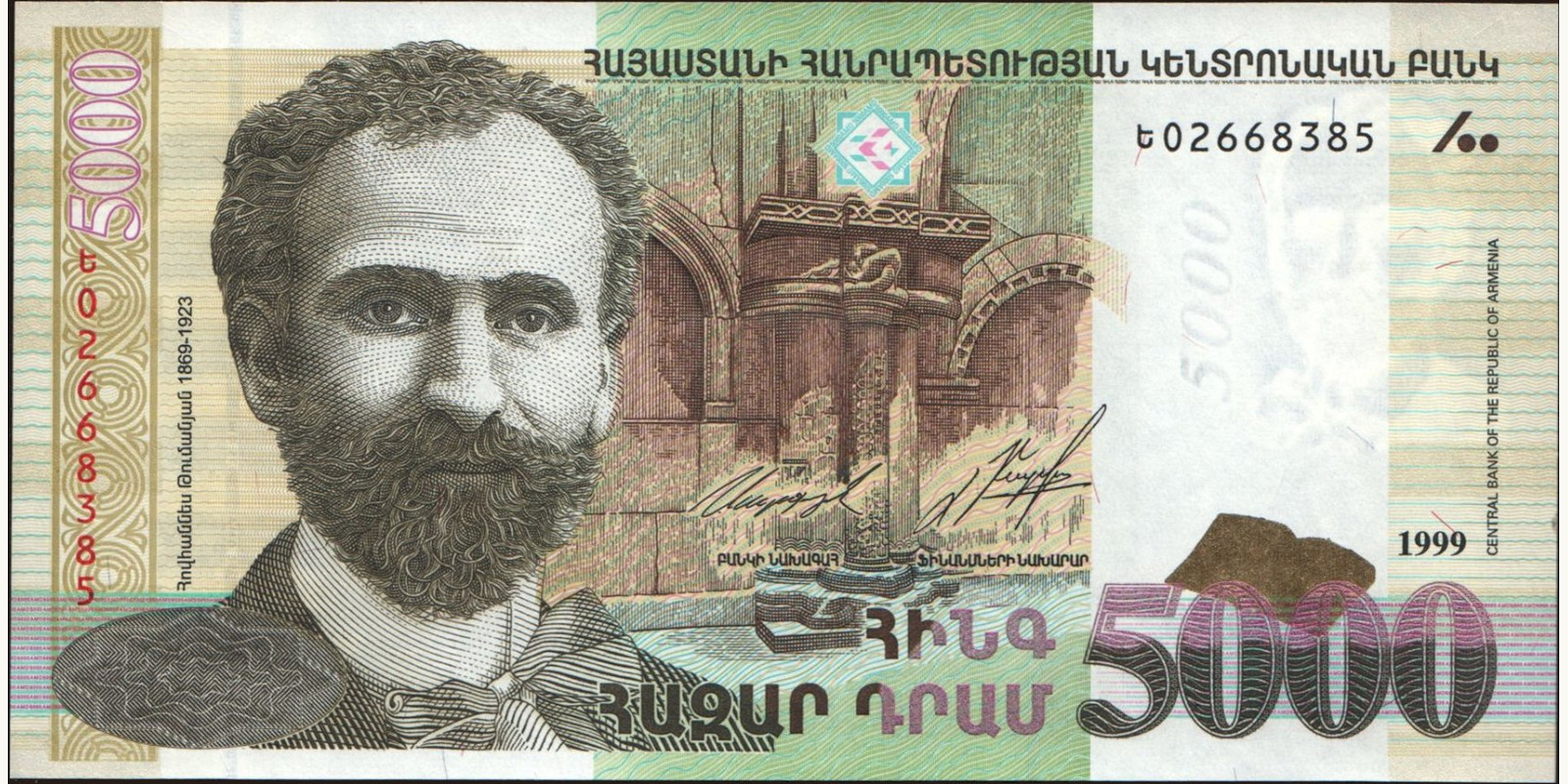
A defining feature of the 1998–1999 Armenian dram banknotes is their strong emphasis on cultural figures and national heritage.
Unlike earlier issues that focused more on architecture and ornamental elements, the new series prominently featured portraits of notable Armenian personalities.
This shift was significant. It transformed banknotes into tools of cultural expression, reinforcing national identity during a period of transformation.
The careful selection of historical figures added educational and symbolic value to the currency.
The 50 Dram Banknote (1998)
The 50 dram banknote issued in 1998 features the portrait of composer Aram Khachaturian, one of Armenia’s most renowned cultural figures.
The reverse side includes imagery associated with Armenian artistic heritage, including references to ballet and musical performance.
This banknote reflects the importance of cultural achievements in shaping national identity.
The 100 Dram Banknote (1998)
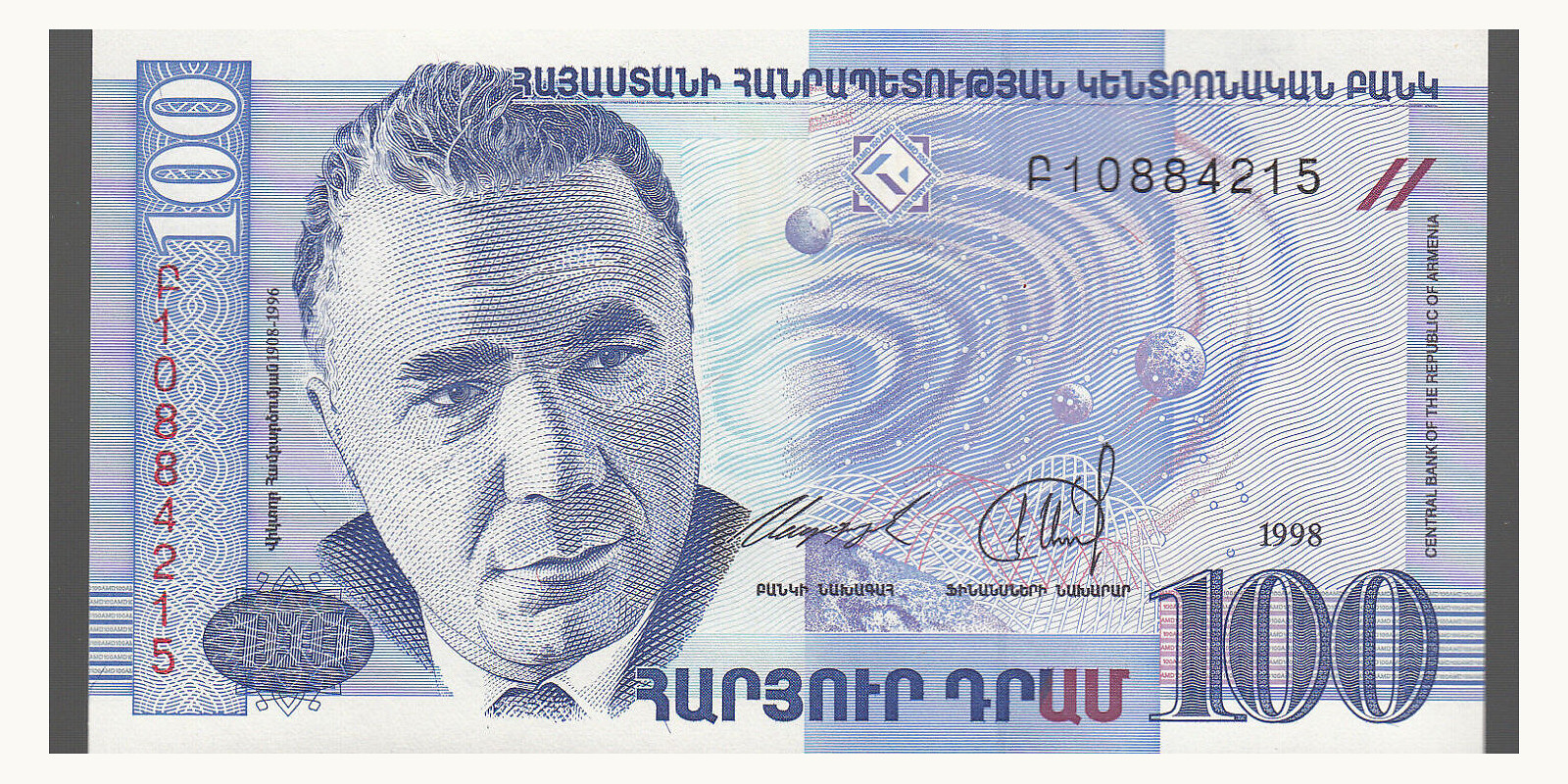
The 100 dram note depicts astrophysicist Viktor Ambartsumian, highlighting Armenia’s contributions to science.
The reverse side features the Byurakan Observatory, emphasizing the country’s role in astronomical research.
This combination of portrait and institutional imagery represents a balance between individual achievement and national infrastructure.
The 1000 Dram Banknote (1999)
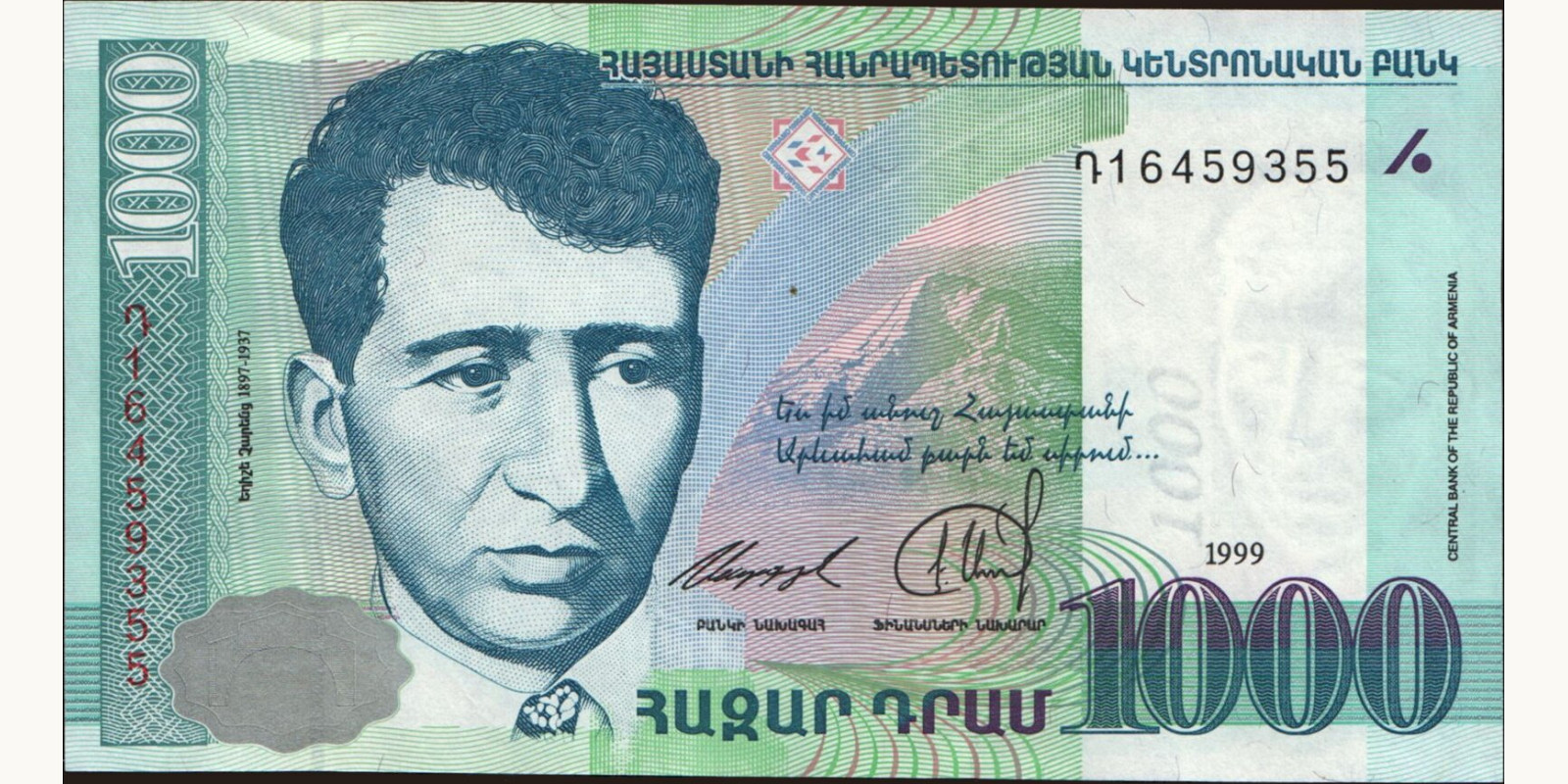
The 1000 dram banknote introduced in 1999 features the portrait of poet Yeghishe Charents, a central figure in Armenian literature.
The reverse side depicts urban scenes and cultural landscapes, reinforcing the connection between literature and everyday life.
This denomination became widely used in daily transactions, making it one of the most recognizable Armenian banknotes.
The 2000 Dram Banknote (1999)
The 2000 dram note features artist Martiros Saryan, whose works are closely associated with Armenian visual culture.
The reverse side includes elements from his paintings, creating a direct link between currency and artistic expression.
This banknote stands out for its vibrant design and advanced security features, including holographic elements.
Security Features and Anti-Counterfeiting
One of the main objectives of the new series was to improve security. The banknotes incorporated watermarks, microprinting and advanced printing techniques.
Higher denominations included holographic strips and additional protective elements.
These features significantly reduced the risk of counterfeiting and increased public confidence in the currency.
Differences from the 1993–1995 Series
Compared to earlier issues, the 1998–1999 banknotes were more sophisticated in both design and technology.
They featured improved color schemes, clearer typography and enhanced durability.
The shift toward portrait-based design marked a departure from earlier stylistic approaches.
Circulation and Public Reception
The new banknotes were well received by the public. Their improved quality and design contributed to increased trust in the dram.
The absence of major printing defects also highlighted the effectiveness of the new production process.
These banknotes quickly became an integral part of Armenia’s daily economic life.
Collector Value and Modern Interest
Today, Armenian dram banknotes from 1998–1999 are popular among collectors.
Their value depends on condition, rarity and specific series variations.
Complete sets and uncirculated examples are particularly desirable.
They represent an important stage in the evolution of Armenian currency.
Why These Banknotes Matter
The 1998–1999 Armenian dram banknotes are more than just currency. They represent a period of transition, stabilization and cultural affirmation.
They demonstrate how design, technology and policy can work together to strengthen a national currency.
For collectors and historians, they provide valuable insight into the economic and cultural development of post-Soviet Armenia.
| Years | 1998–1999 |
|---|---|
| Country | Armenia |
| Currency | Dram |
| Printer | Thomas De La Rue |
| Denominations | 50, 100, 1000, 2000 |
| Theme | Culture and science |
| Security | Watermarks, microtext, holograms |
What changed in 1998 Armenian banknotes
Improved design and security
Who printed the banknotes
Thomas De La Rue
What figures are featured
Cultural and scientific figures
Are these banknotes collectible
Yes, especially high-quality examples
Related Articles