Nikolai Kardakov: Collector, Systematist, and Chronicler of Russian Banknotes
Who Was Nikolai Kardakov?
Nikolai Ivanovich Kardakov was born on January 1, 1885 (some sources give 1884), in the village of Kardakovka near Vyatka, today the city of Kirov in Russia. He grew up in a prosperous merchant family, received a world-class scientific education, survived revolution and civil war, emigrated to Germany, became a published entomologist of international standing, and assembled one of the most significant collections of Russian paper money ever compiled. By the time of his death in Berlin on March 7, 1973 (some sources give 1975), he had produced a catalogue of Russian banknotes that remained the authoritative reference in its field for decades.
The story of Nikolai Kardakov is not only the story of one remarkable man. It is a story about the intersection of collecting, scholarship, and survival — about how a passion for systematic order, applied first to butterflies and later to banknotes, carried its owner through some of the most turbulent decades in modern history.
Gathering reliable information about Kardakov proved difficult for researchers. Much was deliberately suppressed because of family connections to anti-Bolshevik forces, which brought repression to several of his relatives. Some facts presented here are published for the first time.
A Family of Merchants and Entrepreneurs
The Kardakov family had been prominent in the commercial life of Kotelnich, Vyatka Province, since the nineteenth century. Nikolai's great-grandfather, Vasily Maksimovich Kardakov (1799–1866), was a state peasant of the village of Kardakovskaya. His grandfather Semyon Vasilyevich (1834–1879) traded under a merchant's license while remaining registered as a peasant, dealing in raw materials and serving as a delegate to the district zemstvo.
Nikolai's father, Ivan Semyonovich Kardakov (1856 – after 1918), took charge of the family business at the age of eighteen. When the price of linen goods collapsed, he moved the family to Vyatka and opened what became the city's first general store. He later obtained a license to trade in gold and silver goods. The shop he founded — its successor still operates on the same site, informally known as the "Kardakov shop" — became a Vyatka institution.
Ivan Semyonovich and his brothers built a grain-processing factory producing oat flour marketed under the brand "Russian Hercules." The product won multiple exhibition awards and, in 1910, the large silver medal of the Russian Ministry of Finance. In 1914 the trading house "Ivan Semyonovich Kardakov with Sons in Vyatka" was formally registered, trading across Russia and sourcing goods abroad.
When the firm closed in February 1918, Ivan Semyonovich departed with the armies of Admiral Kolchak and perished — either at Omsk or Chelyabinsk, depending on the source. The family that had built a commercial empire over three generations was swept away in the revolutionary tide.
Early Life: Between Commerce and Entomology
Nikolai was the eldest of six children. His siblings included brothers Arkady and Andrei, and sisters Vera, Nina, and Yulia. As the eldest son, he was expected to take a leading role in the family business, and for a time he did, managing the Vyatka fashion and haberdashery shop. But alongside this commercial responsibility ran a second, deeper passion: the study of insects.
In 1909 Kardakov became a member of the Russian Entomological Society. That same year he contributed insect specimens from the South Ussuri region — gathered during an early visit to the Russian Far East, facilitated by his elder sister Vera, who had lived there for six years after marrying into a Vladivostok merchant family in 1906. In 1909 he also collected butterflies in Ceylon and Indochina. In June–July 1912 he gathered specimens in the Altai, near Katon-Karagai and Altai Stanitsa.
These journeys were partly scientific and partly commercial: the family firm had interests in the Far East, and Kardakov could combine specimen collecting with business travel. He was already developing the twin habits of systematic observation and meticulous cataloguing that would define his life's work.
The Civil War Years and the Far East
The Russian Civil War scattered the Kardakov family. Nikolai ended up in Vladivostok, a detail he explained to Soviet authorities in Berlin in 1946: he had accompanied the Russian Military Academy of the General Staff, and from autumn 1919 to May 1920 he worked in Vladivostok as a hunter, clerk, and meteorologist, having been recruited by "Kolchak's agents." He insisted, with apparent success, that he had never acted as an enemy of the people.
He most likely arrived with the remnants of Kolchak's forces — the so-called Kappelites — together with his brother Andrei. These demoralized units received no supplies and were forced to seek any available work, including forming labor cooperatives. For Nikolai, collecting natural history specimens for sale offered a plausible livelihood: he had the skills, the contacts, and the knowledge of markets.
Between 1919 and 1921 the brothers collected insects across a wide area of the Ussuri region: Russky Island, Askold Island, the villages of Narva and Barabash, the stations of Sedanka and Okeanskaya, and Vladivostok itself. Kardakov's circle of fellow collectors during this period included Dr. A. K. Moltrecht, museum curator N. P. Krylov, local enthusiast Vladimir Borgert, a self-taught peasant entomologist from Anuchino named T. A. Kalugin, and others.
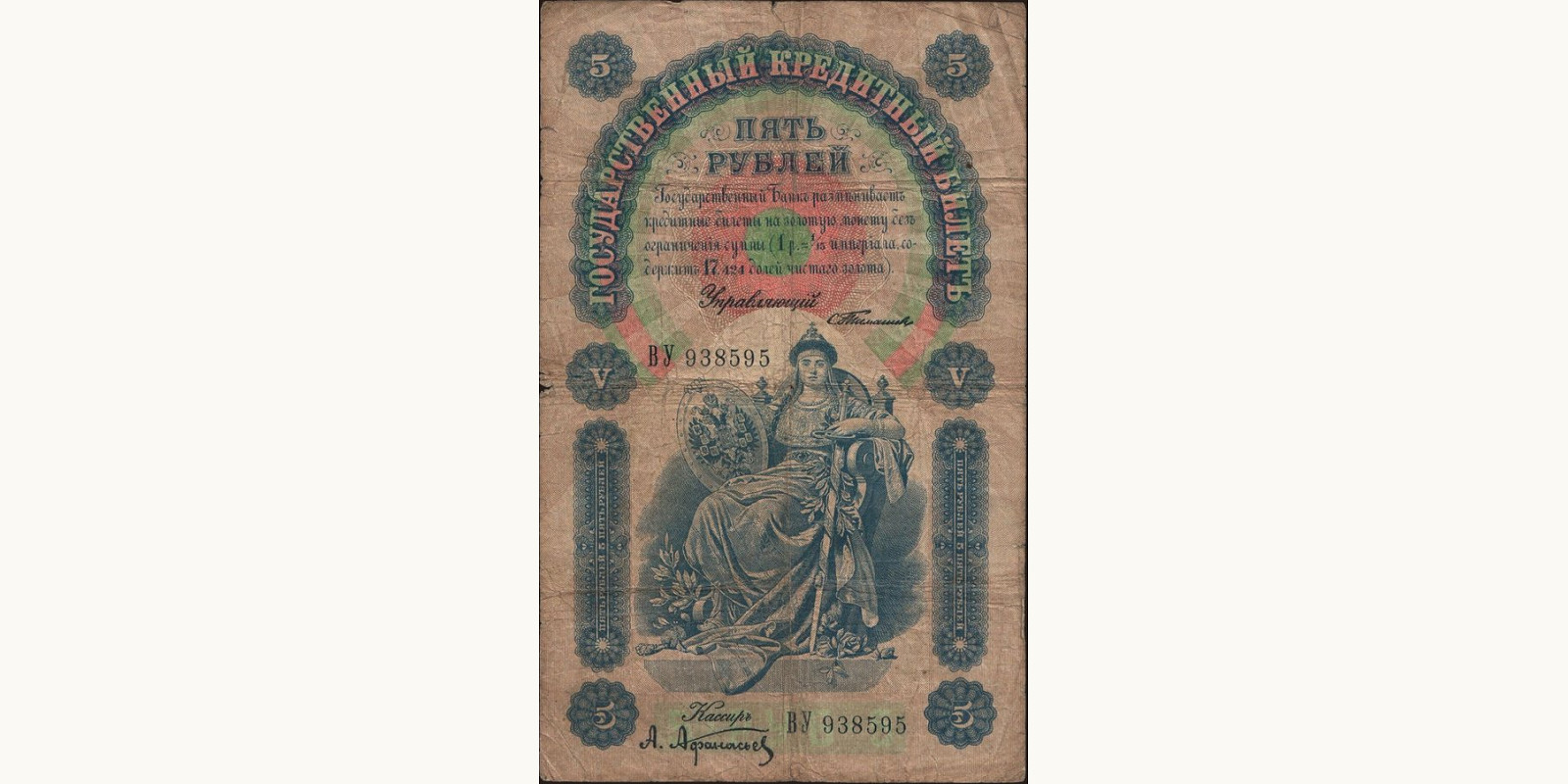
It was also during these chaotic years in Vladivostok that Kardakov became a bonist — a collector of paper money. He likely encountered fellow collector Lev Maksimovich Iolson (1891–1938), who was also living in Vladivostok at the time. The two would later collaborate on a major catalogue. The abundance of defunct monetary instruments left behind by revolution, occupation, and economic collapse gave Kardakov his raw material. When he left for Germany in 1922, his collection already numbered 2,300 banknotes.
The Catalogue That Made His Name
Kardakov's departure from Soviet Russia in 1922 was made possible by an unlikely mechanism. The young Soviet state, desperately short of foreign currency, created the Soviet Philatelic Association (SFA) to sell surplus stamps, coins, and paper money on international markets. Kardakov became the SFA's official representative in Berlin — and his collection of banknotes was his ticket out.
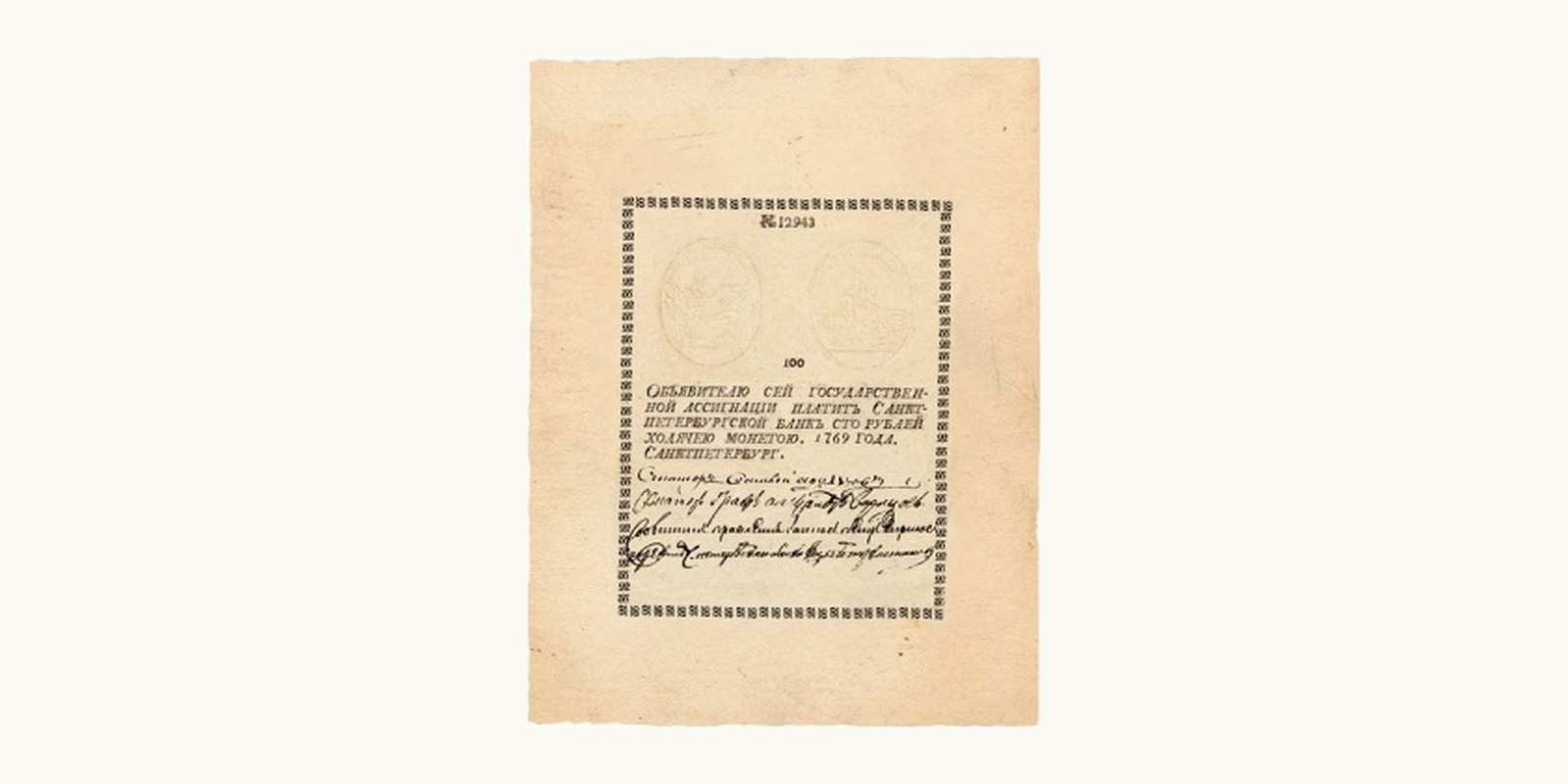
In Berlin he systematized his collection, researched the field exhaustively, and produced catalogues that became the standard references for collectors of Russian paper money. He worked both independently and in collaboration with Iolson (who held a collection of 7,000 items). His catalogue was recognized as one of the finest publications in the field; in the Soviet Union it was privately copied and circulated from the 1960s onward. He also published numerous articles in Russian émigré and German journals, writing under the pseudonym "N. Rosber" — which can be decoded as "Russian Berliner." By the 1960s his banknote collection had grown to approximately 10,000 items.
The value of Kardakov's work lies not merely in the quantity of items documented but in the systematic rigor of the cataloguing. He applied to paper money the same disciplined taxonomic thinking that he applied to butterflies — identifying, classifying, and describing each type with scientific precision. This methodological consistency made his catalogue genuinely useful as a research tool rather than merely an inventory.
The Entomologist: Butterflies, Berlin, and Nabokov
In Germany, Kardakov pursued his formal scientific education, graduating in entomology from the University of Gottingen. From 1922 onward he collaborated with the German Entomological Museum-Institute of the Kaiser Wilhelm Society in Berlin-Dahlem, working first as an unpaid external associate, then on a fee basis. From 1934 to 1943 he headed the section on Lepidoptera (butterflies and moths).
His scientific reputation was built on meticulous taxonomic work — the same systematic impulse that characterized his banknote collecting. He published extensively, described numerous new species, and named several after colleagues. In 1928, for example, he named newly described butterfly species in honor of his Berlin colleague M. Hering (Erich Martin Hering, 1893–1967), who had once taught him specimen preparation techniques.
Among the visitors to the Berlin-Dahlem institute on April 11, 1926, three signatures appear in the visitor log simultaneously: Kardakov, Moltrecht, and Vladimir Vladimirovich Nabokov. The future author of Lolita was then a young Russian emigre writer who shared Kardakov's passion for Lepidoptera. Nabokov considered Kardakov his "entomological friend" and dedicated a poem to him — written on the frontispiece of a book he gave Kardakov. The poem, a fragment from a longer work called "Butterflies," was discovered in 1977 in a Berkeley, California antiquarian bookshop by literary scholar Terry Myers. It describes the pursuit of a swallowtail butterfly with the intense, sensory precision characteristic of Nabokov's prose.
World War Two and the Postwar Years
During the Second World War, the German Entomological Institute was evacuated to Mecklenburg, but Kardakov remained in Berlin. At some point he apparently prepared to travel to Russia as a translator, but this plan came to nothing. In 1943 he found a position as assistant preparator — and later scientific associate — at the Berlin Natural History Museum under M. Hering, the same colleague in whose honor he had named butterflies fifteen years earlier.
The war years were dangerous and disruptive, but Kardakov survived. In 1946 he appeared before the Soviet commandant's office in Berlin to explain his wartime activities and his earlier association with Kolchak's forces. He evidently satisfied the authorities sufficiently to continue working.
In the postwar decade his scientific work received formal recognition. His publications were awarded prizes by the German Academy of Sciences in 1951 and 1953. In 1956 his work was nominated for the Nobel Prize — an extraordinary distinction for a scholar who had spent his career on the margins of institutional science, working without a permanent post for much of his life.
He retired from active work in 1951 due to ill health but continued to prepare a new edition of his banknote catalogue. His entomological collections were dispersed widely: Lepidoptera from Ceylon and Indochina went to the Zoological Institute in St. Petersburg in 1922; Ussuri beetles were deposited at the same institution; other portions went to museums in Leiden, London's Tring collection, the Berlin Zoological Museum, and the Carnegie Museum in Pittsburgh, among others.
The Kardakov Catalogue and Its Legacy in Paper Money Collecting
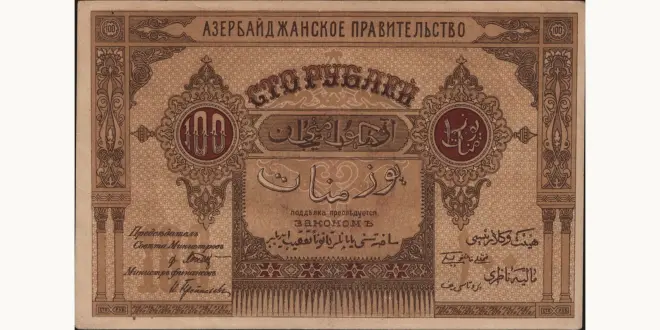
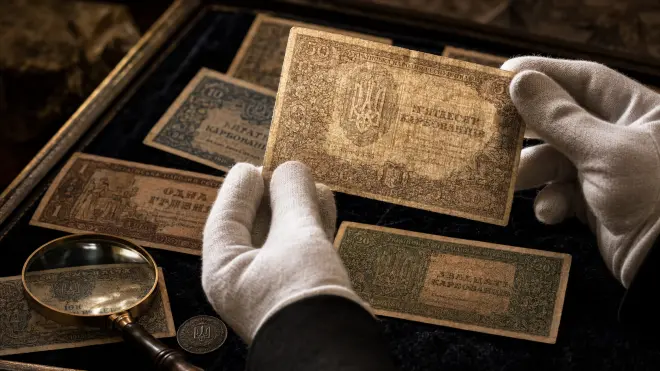
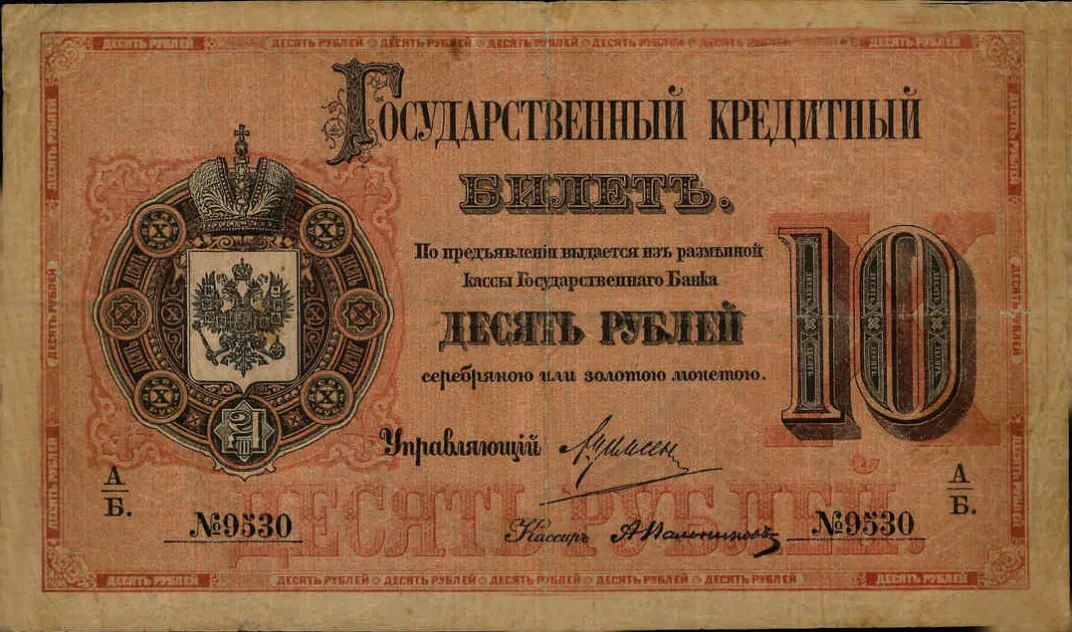
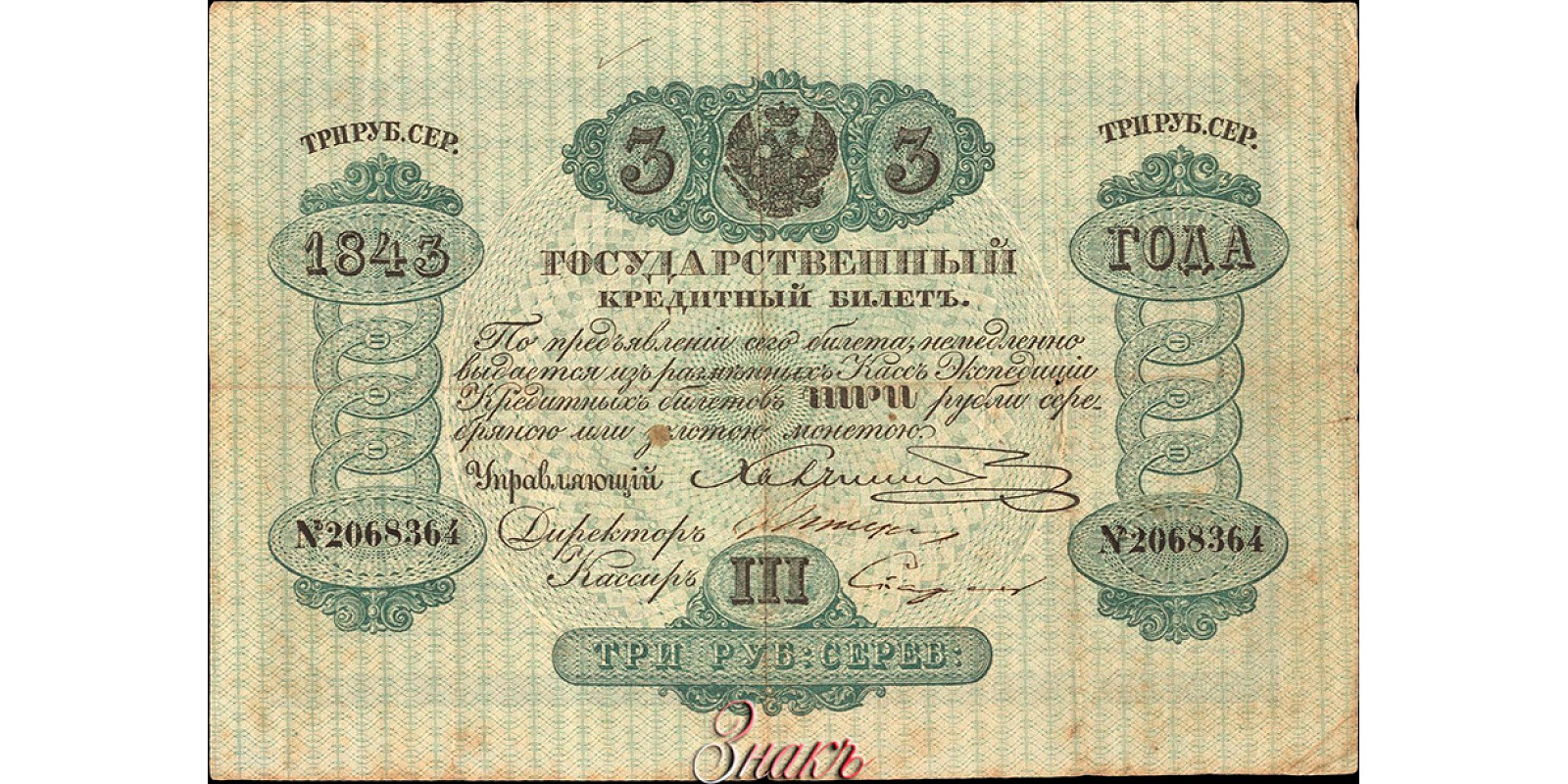
For collectors of Russian paper money, the name Kardakov is synonymous with the reference catalogue. The volume he produced — covering the enormous variety of monetary instruments issued before and after the revolution, by the imperial government, by regional authorities, by cities and towns, by armies and cooperatives, and by the scores of short-lived governments that appeared between 1917 and 1922 — remains a foundational document of the field.
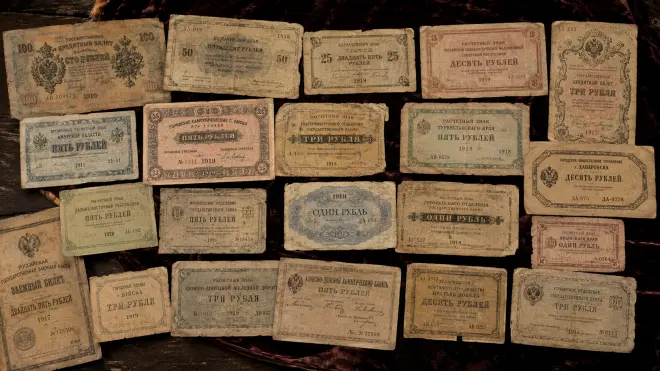
The chaos of the Russian revolutionary period created an extraordinary diversity of paper money. At one point, dozens of different monetary systems circulated simultaneously in the territory of the former empire. Imperial rubles competed with Kerensky notes, Soviet chervontsy, White Army issues, regional currencies of Siberia, Ukraine, the Caucasus, Central Asia, the Baltic states, and Finland. Local governments, military units, and even private enterprises issued their own notes. Documenting this proliferation required exactly the kind of systematic, taxonomic intelligence that Kardakov possessed.
His catalogue established a numbering system — what collectors call "Kardakov numbers" — that allowed precise identification of individual types. The same approach that gave a unique name to each butterfly species gave a unique designation to each banknote issue. The parallel was not accidental; it reflected a single, deeply held conviction that the world becomes knowable through systematic classification.
A Life Shaped by Collecting and Systematic Thought
Looking back across Kardakov's life, the unifying thread is clear: a passion for systematic order applied to the natural and material world. Whether he was pinning butterflies in the forests of Ussuri, sorting banknotes in a Berlin apartment, or writing catalogue entries for a museum drawer, he was doing the same thing — bringing method and clarity to a field of enormous complexity.
He came from a family of entrepreneurs who built their success on careful organization of trade networks. He trained at institutions — the Russian Entomological Society, the Stieglitz tradition of technical precision, the German university system — that valued rigor and method. He survived the disintegration of his world by turning his skills into something portable and marketable: the expertise of a collector who could identify, classify, and trade across national boundaries.
His life also illuminates a neglected chapter in the history of the Russian diaspora. The émigré communities of Berlin, Paris, and other European cities in the 1920s and 1930s included many former members of the Russian professional and commercial classes who rebuilt their lives through expertise and intellectual labor. Kardakov was one of the more successful of this group, building genuine international recognition in two separate fields simultaneously.
The Mystery of the Arsenyev Books and the Hidden Collection
No account of Nikolai Kardakov would be complete without the strange episode that his relatives recalled decades later. After the Second World War, his nephew Konstantin Arkadyevich Kardakov — a diplomat — tracked down surviving family members in Vladivostok and visited his uncle Nikolai in Berlin. On one visit to a relative in Vladivostok, Konstantin borrowed the family's first-edition copies of Vladimir Arsenyev's books, carefully preserved since the 1920s. They were returned by post — but with new covers.
No explanation was ever given. The researcher who uncovered this story speculated that the original covers may have concealed rare banknotes from Kardakov's collection, hidden there at some point during the turmoil of the revolutionary and civil war years. Whether this is true remains unknown. But the episode captures something essential about Kardakov's world: the intertwining of collecting, secrecy, and survival in an era when the wrong possession could cost a person their freedom or their life.
Kardakov's brother Andrei was arrested and shot in Khabarovsk on October 11, 1938. His name was suppressed within the family for decades. Even a cousin believed that Andrei had died during Arsenyev's expedition — not a decade after it ended, in a Soviet prison. The Kardakov story, like so many stories from this period, is built partly on deliberate forgetting.
Why Kardakov Matters to Collectors Today
For contemporary collectors of Russian and world paper money, Nikolai Kardakov matters on several levels. His catalogue remains the essential reference for identifying and describing the hundreds of monetary types produced during the revolutionary period. Auction houses, dealers, and serious collectors across the world still cite Kardakov numbers when describing items from this era. New editions and revisions of the catalogue continue to be produced, but all are built on his foundational work.
Beyond the catalogue, Kardakov represents a model of collecting as scholarship. He did not merely accumulate; he organized, described, and published. His approach transformed a private passion into a public resource available to all subsequent researchers. In this he exemplifies the highest ideal of the collector: someone who does not merely possess things but who makes their knowledge freely available.
His life also places Russian paper money collecting within a broader cultural and historical context. The banknotes he catalogued are not merely financial instruments; they are documents of political history, artistic culture, and social upheaval. Each issue tells a story about the government or authority that produced it, the crisis it was responding to, the artists who designed it, and the people who used it. Kardakov understood this, and his catalogue reflects that understanding.
For collectors interested in the intersection of entomology and numismatics — an unusual combination, certainly, but one with its own small community of enthusiasts — Kardakov's dual career is a source of endless fascination. The man who named new species of butterflies from the forests of Ussuri also gave names and numbers to the bewildering variety of paper money produced by one of history's most turbulent revolutions. Both projects were expressions of a single, extraordinary mind.
| Full Name | Nikolai Ivanovich Kardakov |
|---|---|
| Born | January 1, 1885 (or 1884), village of Kardakovka near Vyatka (now Kirov), Russia |
| Died | March 7, 1973 (or 1975), Berlin, Germany |
| Family Background | Merchant family from Kotelnich, Vyatka Province |
| Education | University of Gottingen, Germany (entomology) |
| Entomological Work | German Entomological Museum-Institute, Berlin-Dahlem (from 1922); Head of Lepidoptera Section 1934–1943 |
| Notable Encounter | Met Vladimir Nabokov at Berlin-Dahlem institute, April 11, 1926 |
| Nabokov Dedication | Nabokov wrote a poem dedicated to Kardakov, discovered in Berkeley, CA in 1977 |
| Bonist Career | Official SFA representative in Berlin from 1922; collection grew to 10,000 items by the 1960s |
| Key Publication | Catalogue of Russian paper money (co-authored with L. M. Iolson; also independent editions) |
| Pseudonym Used in Publications | N. Rosber (Russian Berliner) |
| Science Awards | German Academy of Sciences prizes (1951, 1953); Nobel Prize nomination (1956) |
| Collections Held By | Zoological Institute St. Petersburg, Rijksmuseum Leiden, Natural History Museum London, Carnegie Museum Pittsburgh, Berlin Zoological Museum |
| Category | Collector Guides |
Who was Nikolai Kardakov?
Nikolai Ivanovich Kardakov (1885–1973) was a Russian-born, German-based entomologist and bonist — a collector and cataloguer of paper money. He is best known for his authoritative catalogue of Russian banknotes, which remains a standard reference for collectors today.
What is the Kardakov catalogue?
The Kardakov catalogue is a systematic reference work documenting the hundreds of paper money types issued in Russia and the former Russian Empire, especially during the revolutionary and civil war period (1917–1922). It assigns unique reference numbers — Kardakov numbers — to each type, still used by collectors and dealers worldwide.
How did Kardakov end up in Germany?
In 1922 Kardakov left Soviet Russia as the official Berlin representative of the Soviet Philatelic Association, which sold surplus stamps and paper money on international markets to earn foreign currency. His expertise as a collector gave him both the credential and the means to emigrate.
What was Kardakov's connection to Vladimir Nabokov?
Both Kardakov and Nabokov were passionate about Lepidoptera and frequented the German Entomological Institute in Berlin. On April 11, 1926, their signatures appear simultaneously in the visitor log alongside that of Dr. Moltrecht. Nabokov called Kardakov his "entomological friend" and dedicated a poem to him.
Why are Russian civil war banknotes significant to collectors?
The period 1917–1922 produced an extraordinary diversity of paper money as dozens of governments, armies, cities, and cooperatives issued their own notes simultaneously. This proliferation makes the era one of the richest in world paper money collecting, and Kardakov's catalogue is the essential guide to it.
What happened to Kardakov's insect collections?
They were dispersed to institutions worldwide, including the Zoological Institute in St. Petersburg (1922), the Rijksmuseum in Leiden, the Natural History Museum in Tring (London), the Carnegie Museum in Pittsburgh, and the Berlin Zoological Museum, among others.
What is the mystery of the Arsenyev books?
After World War Two, Kardakov's nephew borrowed first-edition copies of writer Vladimir Arsenyev's books from relatives in Vladivostok. They were returned with new covers and no explanation. Researchers have speculated the original covers may have concealed rare banknotes hidden there during the civil war years.
Related Articles