Hidden Details in Banknotes: Harbin Ruble Mystery
Introduction to Hidden Details in Banknotes
Banknotes are far more than simple tools for economic exchange. They are complex works of art that combine engraving, symbolism, history, and security features. For collectors and researchers, banknotes often reveal layers of meaning that go beyond their face value.
One particularly fascinating aspect of banknote design is the presence of so-called hidden details. These are elements within the artwork that are not immediately obvious but become visible upon closer inspection. Sometimes these details are intentionally placed by designers. In other cases, they are the result of artistic techniques that unintentionally create recognizable shapes.
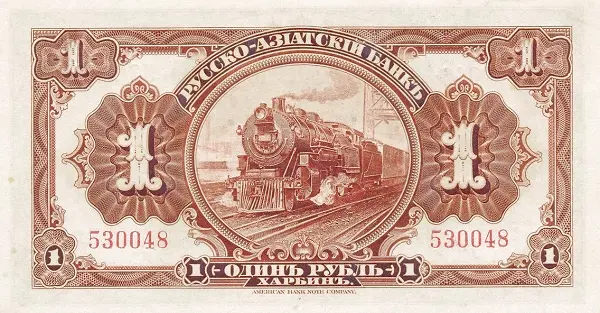
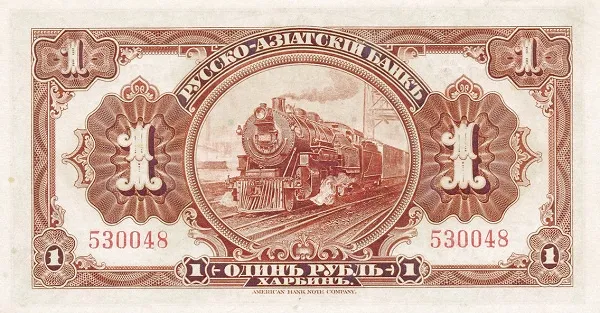
Among the most intriguing examples is the Harbin Ruble, a currency issued by Russian emigrant communities in China. Some collectors believe that within the smoke of a locomotive depicted on certain notes, a hidden face or figure can be seen. This phenomenon has sparked discussion, debate, and curiosity within the numismatic community.
The Historical Context of the Harbin Ruble
To understand the mystery, it is important to first understand the historical context of the Harbin Ruble. Following the Russian Revolution of 1917, millions of people were displaced. Many fled to neighboring countries, and one of the most important centers of Russian emigration became the city of Harbin in northeastern China.
Harbin had strong Russian connections due to the Chinese Eastern Railway, which had been built and operated by Russian interests. As a result, the city developed into a cultural and economic hub for Russian emigrants. However, the collapse of the Russian Empire also meant the collapse of its financial system.
Without access to stable currency, local institutions began issuing their own money. The Harbin Ruble emerged as a practical solution to support daily economic activity. These banknotes were not centrally controlled, which led to a wide variety of designs and printing qualities.
Design Features of Harbin Ruble Banknotes
The design of Harbin Ruble banknotes reflects both necessity and artistic tradition. Some notes were produced with considerable attention to detail, featuring ornate borders, Cyrillic text, and symbolic imagery. Others were printed quickly and with limited resources, resulting in simpler designs.
One of the most recognizable motifs found on certain Harbin Ruble notes is the locomotive. This image represents the Chinese Eastern Railway, which was central to the identity and economy of Harbin. The locomotive is typically depicted in motion, with smoke rising dramatically into the sky.
It is within this smoke that collectors have reported seeing unusual shapes, including what appears to be a human face or profile. This observation has become one of the most discussed aspects of these banknotes.
The Locomotive Smoke Phenomenon
The idea that a hidden image exists in the smoke of the locomotive is not officially documented. There is no evidence from engravers or issuing institutions suggesting that such a feature was intentionally included.
However, when the banknote is examined closely, especially under magnification, the smoke appears to form complex patterns. These patterns can resemble facial features such as eyes, nose, and mouth. Different observers report seeing different shapes, which adds to the mystery.
Some collectors claim to consistently see the same face, while others interpret the shapes differently. This variability suggests that the phenomenon is not a fixed image but rather a subjective visual experience.
Pareidolia: The Science Behind the Illusion
The most widely accepted explanation for this phenomenon is pareidolia. Pareidolia is a psychological effect in which the human brain perceives familiar patterns, such as faces, in random or ambiguous stimuli.
This effect is extremely common. People often see faces in clouds, shadows, or natural formations. The brain is wired to recognize faces quickly, which was historically important for survival. As a result, it tends to interpret random patterns as meaningful images.
In the case of the Harbin Ruble, the detailed engraving of smoke creates a complex visual texture. The brain attempts to organize this texture into recognizable forms, leading to the perception of a hidden face.
Intentional Design or Coincidence
One of the most debated questions is whether the image was intentionally created. Some collectors believe that engravers may have included subtle artistic signatures or hidden elements as a form of expression.
However, there is no concrete evidence to support this theory. Most experts agree that the effect is accidental. The engraving techniques used at the time often involved dense line work, which can easily produce unintended shapes.
Despite the lack of proof, the possibility of intentional design continues to intrigue collectors. The ambiguity itself adds to the appeal of the banknote.
Collector Interest and Market Impact
The mystery of the hidden image has significantly increased interest in Harbin Ruble banknotes. Collectors are naturally drawn to unusual features and stories. A banknote that appears to contain a hidden face becomes more than just a historical object. It becomes a conversation piece.
While the hidden image does not officially affect catalog value, it can influence demand. Notes associated with interesting stories often attract more attention in auctions and private sales.
This demonstrates how narrative and perception can enhance the desirability of collectible items.
Comparisons with Other Banknotes
The Harbin Ruble is not the only banknote associated with hidden imagery. Collectors have reported similar phenomena in various currencies around the world.
However, the locomotive smoke example stands out due to its clarity and consistency. It is one of the few cases where a large number of collectors report seeing a similar effect.
This makes it a particularly strong example of how artistic detail and human perception can interact.
Why This Matters for Collectors
Understanding this phenomenon is important for collectors for several reasons. First, it highlights the importance of closely examining banknotes. Small details can reveal new insights and add depth to a collection.
Second, it shows how perception can influence value. Even when a feature is not officially recognized, it can still affect how collectors view an item.
Finally, it reinforces the idea that collecting is not only about catalog numbers and prices. It is also about discovery, curiosity, and personal interpretation.
Conclusion
The Harbin Ruble mystery is a perfect example of how art, history, and psychology intersect in the world of banknote collecting. Whether the hidden image is real or imagined, it adds a layer of intrigue that enhances the collecting experience.
For collectors, these details transform a simple banknote into a story. They invite closer inspection, discussion, and appreciation.
In the end, the true value of such a mystery lies not in its resolution, but in the curiosity it inspires.
Key Facts
| Phenomenon | Pareidolia |
|---|---|
| Object | Harbin Ruble banknotes |
| Feature | Locomotive smoke illusion |
| Intentional | Not proven |
| Collector interest | Very high |
FAQ
Is the hidden face real?
It is most likely an optical illusion.
Why do people see faces?
Because of pareidolia, the brain recognizing patterns.
Does it increase value?
Not officially, but it increases interest.
Is it unique to Harbin Ruble?
No, but this is one of the most famous cases.
Related Articles