Microdetails in Banknotes: What Collectors Miss
Introduction to Microdetails in Banknotes
Banknotes are among the most complex printed objects in everyday use. While most people focus on obvious features such as portraits, denominations, and colors, there exists an entire hidden layer of detail that often goes unnoticed. These microdetails are essential for both security and artistic expression.
For collectors, understanding microdetails opens a new dimension of appreciation. It transforms a simple banknote into a highly sophisticated object full of intricate elements. These details are often invisible to the naked eye and require magnification to be properly examined.
Microdetails are not random. They are carefully designed and integrated into the banknote to serve specific purposes, including anti-counterfeiting and aesthetic refinement.
What Are Microdetails
Microdetails refer to extremely small design elements embedded within the structure of a banknote. These include microtext, fine line engravings, tiny symbols, and complex patterns.
At first glance, these elements may appear as simple lines or textures. However, under magnification, they reveal a high level of precision and complexity.
Microdetails are created using advanced printing techniques that allow for extremely fine resolution. This makes them difficult to replicate without specialized equipment.
The Role of Microtext
Microtext is one of the most common types of microdetail. It consists of very small text that is usually unreadable without magnification.
This text often contains repeating phrases, denomination values, or the name of the issuing authority.
Microtext serves as a powerful security feature because it is extremely difficult to reproduce accurately. Even high-quality counterfeit notes often fail to replicate microtext correctly.
Collectors often use magnifying tools to discover and read these hidden texts, adding an interactive aspect to collecting.
Fine Line Engraving
Another important microdetail is fine line engraving. This technique involves the use of extremely thin lines arranged in complex patterns to create images and textures.
These lines can form shading, depth, and intricate decorative elements.
Fine engraving requires a high level of skill and precision. It also contributes to the visual richness of the banknote.
Under magnification, these lines reveal the craftsmanship involved in banknote production.
Guilloche Patterns and Geometry
Guilloche patterns are highly complex geometric designs created by overlapping curves and lines.
These patterns are not only decorative but also serve as security features. Their mathematical precision makes them extremely difficult to reproduce.
Guilloche designs often contain hidden structures and repeating patterns that become visible only upon close inspection.
They are a key example of how art and mathematics combine in currency design.
Latent Images and Hidden Features
Some microdetails are designed to be visible only under specific conditions. These include latent images that appear when the banknote is tilted or viewed at a certain angle.
Other features may be visible only under ultraviolet light or magnification.
These elements add an additional layer of security and complexity.
Collectors often enjoy discovering these hidden features as part of the exploration process.
Why Many Collectors Miss Microdetails
Many collectors focus primarily on visible characteristics such as condition, rarity, and design. As a result, microdetails are often overlooked.
Another reason is the lack of proper tools. Without magnification, these details remain hidden.
In addition, some collectors may not be aware of the importance of microdetails.
However, once discovered, these elements often become a major point of interest.
Tools for Exploring Microdetails
To fully appreciate microdetails, collectors use a variety of tools. Magnifying glasses and microscopes are the most common.
Ultraviolet lamps can reveal hidden security features.
Digital scanning and high-resolution photography allow for detailed analysis and comparison.
These tools transform the study of banknotes into a more technical and engaging activity.
Real Examples of Microdetails
Modern banknotes from many countries include extensive microdetails.
For example, US dollars contain microtext in various locations, including around portraits and borders.
Euro banknotes include advanced security features such as microprinting and color-shifting elements.
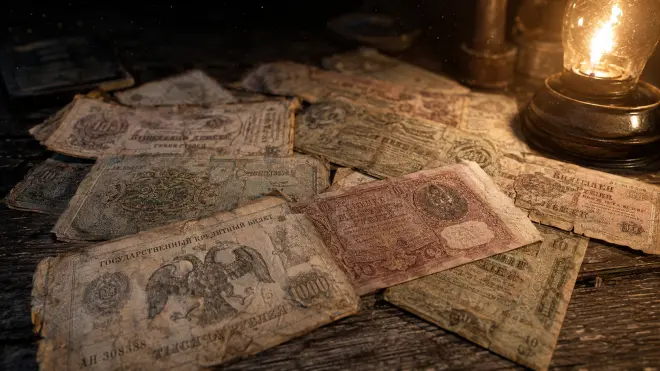
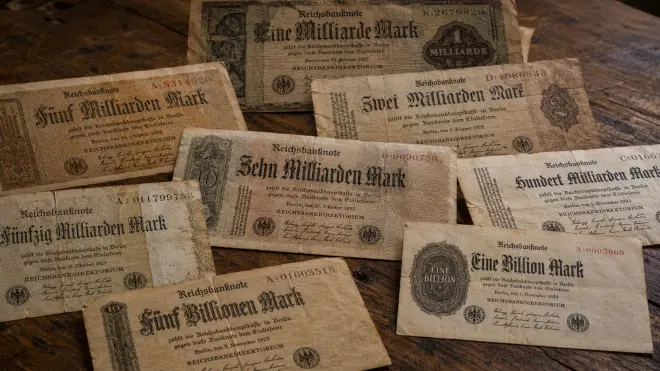
Older banknotes, including those from Germany and the Soviet Union, also contain intricate engraving details that can be studied under magnification.
The Role of Microdetails in Security
Microdetails play a crucial role in preventing counterfeiting.
Because they require high precision and specialized equipment, they are difficult to replicate accurately.
Even small errors in microdetails can indicate a counterfeit banknote.
This makes them an important tool for authentication.
Collector Value and Interest
While microdetails do not directly determine the catalog value of a banknote, they significantly enhance its appeal.
Collectors who appreciate fine details often value notes with exceptional engraving and microfeatures.
These elements add depth and complexity to a collection.
Why Microdetails Matter
Microdetails reveal the hidden craftsmanship behind banknote design.
They demonstrate the level of precision and technology involved in currency production.
For collectors, they provide an opportunity to explore banknotes beyond surface-level observation.
They also highlight the importance of careful examination and curiosity.
Conclusion
Microdetails in banknotes represent an essential but often overlooked aspect of currency design.
By studying these elements, collectors can gain a deeper understanding of both the artistic and technical aspects of banknotes.
This transforms collecting into a more detailed and rewarding experience.
Key Facts
| Microdetails | Microtext, engraving, patterns |
|---|---|
| Purpose | Security and design |
| Tools | Magnification, UV light |
| Visibility | Often hidden |
| Collector interest | High |
FAQ
What are microdetails?
Very small design elements in banknotes
How can I see them?
Use magnification tools
Are they important?
Yes, for security and study
Do all banknotes have them?
Most modern ones do
Related Articles