German Inflation 1923
Introduction to German Inflation 1923
The German hyperinflation of 1923 is one of the most famous economic events in history. During this period, the value of the German mark collapsed, and prices increased at an extreme rate. As a result, banknotes with very high denominations were issued in large quantities.
This period is of great interest to collectors because of the unique designs, large numbers, and historical significance of the banknotes.
What Caused Hyperinflation
Hyperinflation in Germany was caused by a combination of economic and political factors. After World War I, Germany faced heavy reparations and economic instability. The government printed large amounts of money to cover debts, which led to a rapid decrease in the value of the currency.
As more money entered circulation, prices increased dramatically. Eventually, banknotes were issued in millions, billions, and even trillions of marks.
Inflation Banknotes
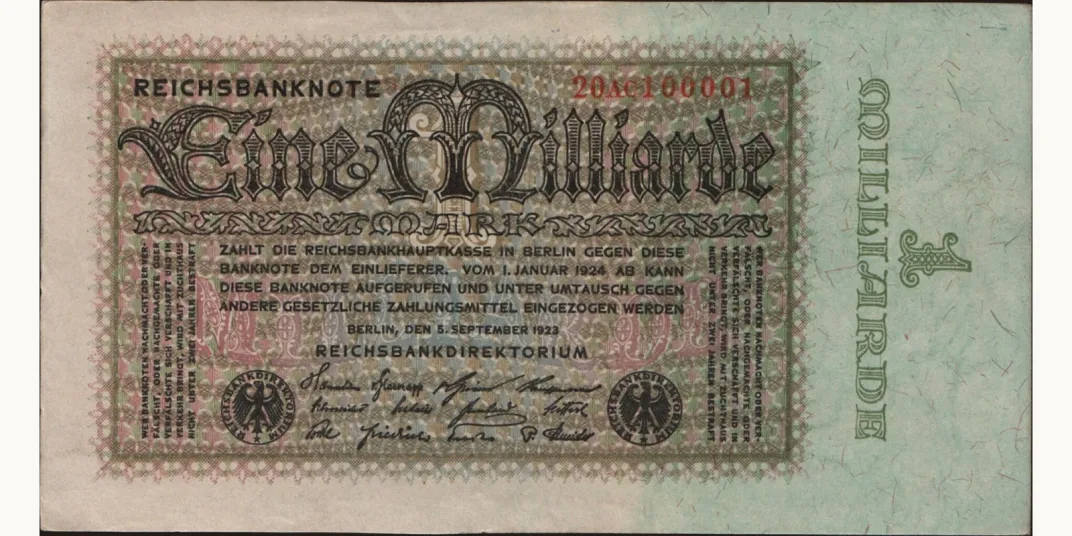
German inflation banknotes are known for their extremely high denominations. Notes such as 1 million, 10 million, and 1 billion marks became common. These notes were often printed quickly and in large volumes, sometimes with simple designs.
Despite their high face value at the time, many of these notes are now affordable for collectors.
Key Features
| Hyperinflation | Extremely rapid increase in prices |
|---|---|
| Large denominations | Millions, billions, trillions of marks |
| Mass printing | Huge quantities produced quickly |
| Historical value | Important economic event |
Why Values Became So High
The reason for such high values was the rapid loss of purchasing power. Prices could double within days or even hours. Workers were paid multiple times a day so they could spend money before it lost value.
This created a situation where larger and larger banknotes were needed just to buy basic goods.
Collecting Inflation Notes
Today, German inflation banknotes are popular among collectors. They are relatively easy to obtain and provide insight into a dramatic period of history.
Collectors often focus on specific series, denominations, or printing variations.
Conclusion
German inflation banknotes from 1923 are a powerful reminder of how economic instability can affect currency. They are both historically significant and accessible to collectors.
FAQ
Why were values so high?
Because of hyperinflation and rapid loss of currency value.
Are these banknotes rare?
Many are common due to mass production.
Are they expensive?
Most are affordable for beginners.
Related Articles