Don Region Banknotes of 1918: Emergency Issues and Rare Civil War Currency
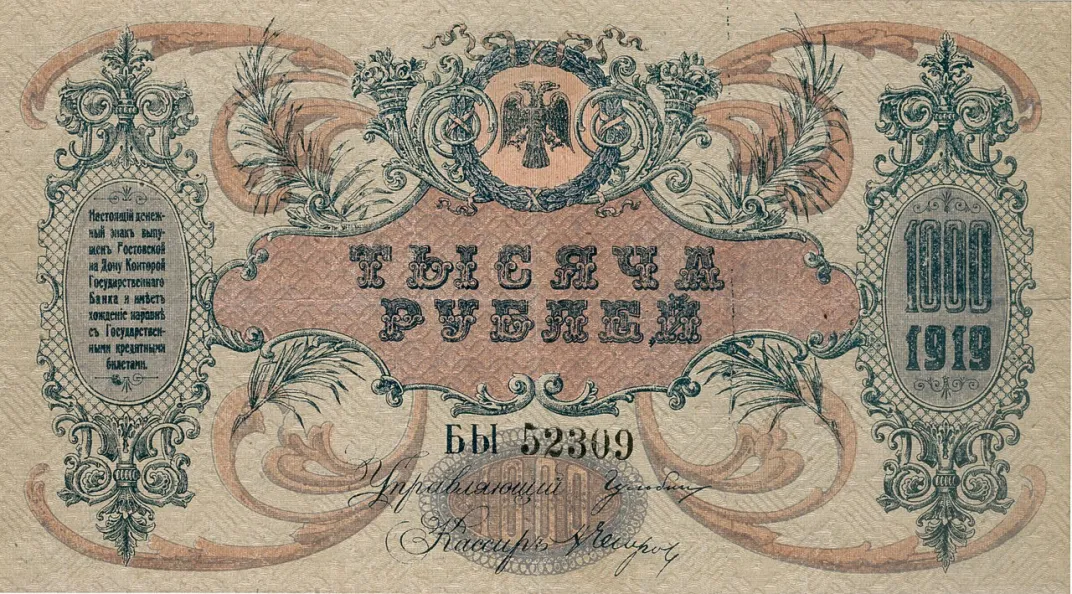
Introduction to Don Banknotes of the Civil War Period
The year 1918 marked a turning point not only in political history but also in the monetary system of the Don region. Amid the collapse of financial institutions and a severe shortage of cash, local authorities were forced to create their own currency almost from scratch.
The banknotes issued in the Don region during this period represent a unique phenomenon. They were not part of a planned monetary policy but rather an emergency response to an economic collapse.
Today, these issues are among the most fascinating and rare items for collectors, as they reflect the chaos and instability of the Russian Civil War.
Why Local Banknotes Became Necessary
After the fall of the Russian Empire, the centralized financial system stopped functioning.
The region was cut off from supplies of official banknotes. Banks quickly ran out of cash, and existing money began disappearing from circulation as people started hoarding it.
Under these conditions, the economy nearly came to a halt. Trade became impossible without a reliable medium of exchange.
As a result, local authorities decided to issue their own banknotes.
First Issues of Don Currency
The first Don banknotes appeared in early 1918.
They were produced rapidly and often without a unified standard, resulting in a wide variety of designs and denominations.
The primary goal was to introduce a functioning means of payment as quickly as possible, rather than to create a perfect monetary system.
Despite these limitations, the new banknotes were quickly accepted and became an essential part of the regional economy.
Printing Technology and Production Features
Banknote production took place under severe resource constraints.
Available printing houses were used, sometimes without adequate security capabilities.
As a result, the quality of the banknotes varied significantly, ranging from relatively well-produced issues to very simple ones.
Basic security elements such as signatures, stamps, and serial numbers were commonly used.
This variability makes each banknote unique and interesting from a research perspective.
Variety of Denominations and Types
One of the defining features of Don banknotes is their diversity.
Different denominations were issued to support both large transactions and everyday purchases.
Some notes were fully developed currency, while others were adapted financial instruments such as bonds or coupons.
This diversity reflects the absence of a unified monetary policy.
Signatures, Series, and Rare Variants
Signatures and series play a crucial role for collectors.
Different issues carried signatures of various officials, allowing precise dating and classification.
Rare variants exist with differences in numbering, design, and even color.
Some series were printed in limited quantities, making them especially valuable.
Political Instability and Its Impact
The Civil War created a highly unstable political environment in the Don region.
Control over the territory changed multiple times.
Each new authority could introduce its own currency or invalidate previous issues.
This led to confusion and reduced trust in money.
As a result, multiple types of currency often circulated simultaneously.
Why These Banknotes Are Rare
The rarity of Don banknotes can be explained by several factors.
First, many issues were produced in limited quantities.
Second, due to instability, a large number of notes were lost or destroyed.
Additionally, people often used them until they were completely worn out.
Well-preserved examples are therefore extremely rare today.
Collector Value
Today, Don banknotes from 1918 are highly sought after by collectors.
They attract both beginners and experienced numismatists.
Key factors influencing their value include rarity, condition, historical significance, and visual appeal.
Some specimens can reach high prices at auctions.
Investment Potential
Interest in Civil War banknotes continues to grow.
This is driven by the limited number of surviving pieces and increasing collector demand.
Don issues are considered a promising investment segment.
Their value is likely to increase over time.
How to Identify Authentic Banknotes
Due to their popularity, counterfeit examples can appear on the market.
To verify authenticity, collectors should examine the paper, printing quality, signatures, and serial numbers.
Using catalogs and trusted sources is essential.
Experienced collectors recommend buying from reliable dealers.
Connection to the Money Shortage
Don banknotes are directly linked to the monetary crisis of 1918.
They were created as a response to the severe shortage of currency.
Without this crisis, such issues would likely never have existed.
Therefore, these banknotes are not only financial instruments but also historical evidence.
Conclusion
Don banknotes of 1918 represent a unique example of an emergency monetary system created under extreme conditions.
They combine economic necessity, political instability, and historical significance.
For collectors and researchers, they remain one of the most fascinating areas of banknote collecting.
Key Facts
| Region | Don |
|---|---|
| Year | 1918 |
| Type | Local banknotes |
| Cause | Monetary crisis |
| Value | High |
FAQ
Why were Don banknotes issued?
Due to a shortage of money
Were they official?
Partially, at a local level
Why are they rare?
Low print runs and losses
Are they worth collecting?
Yes, they have strong potential
Related Articles