
5 Krooni 1994 — Estonia ( Pick: 76 )
Region:
Europe
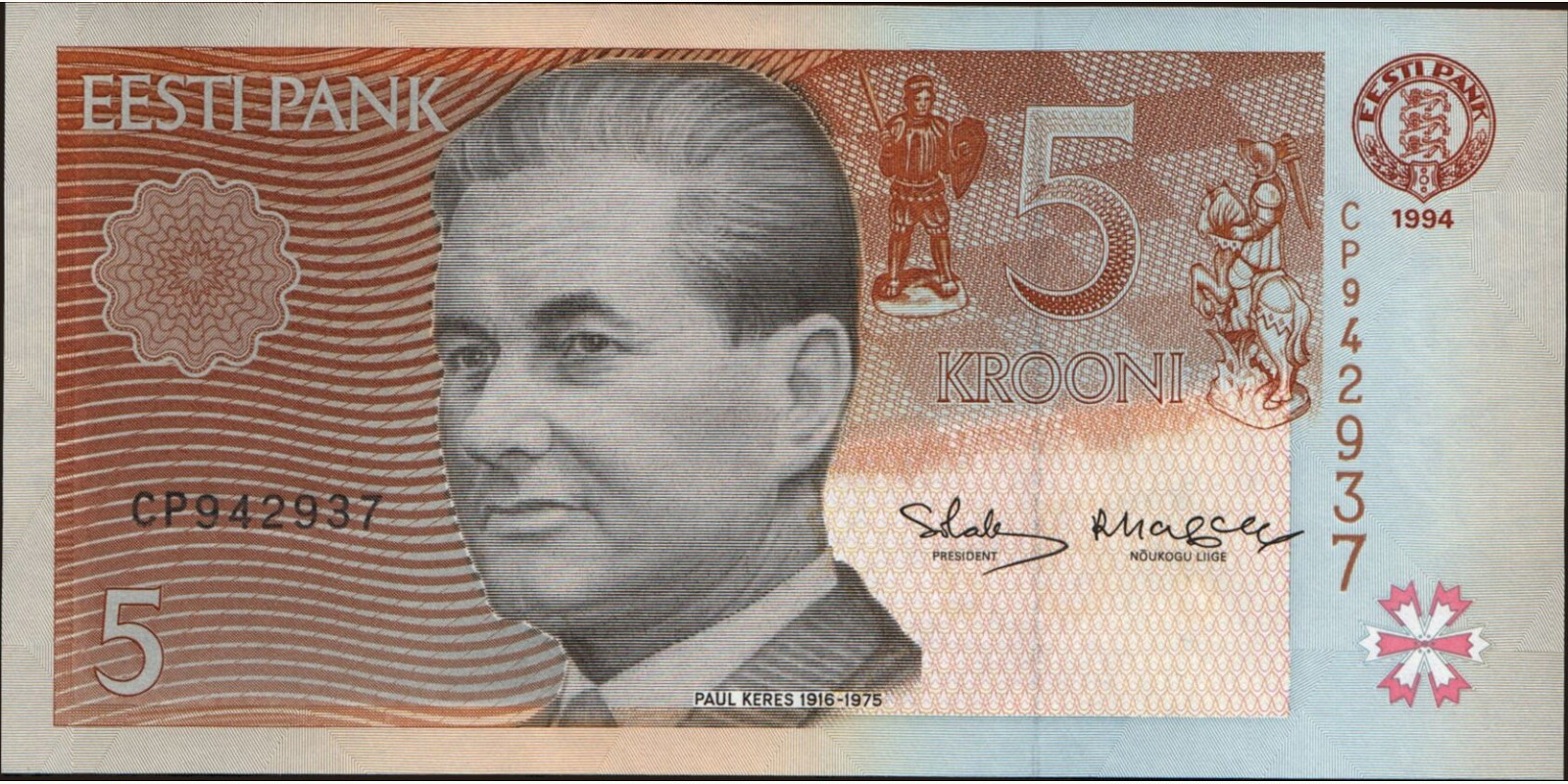
Front side
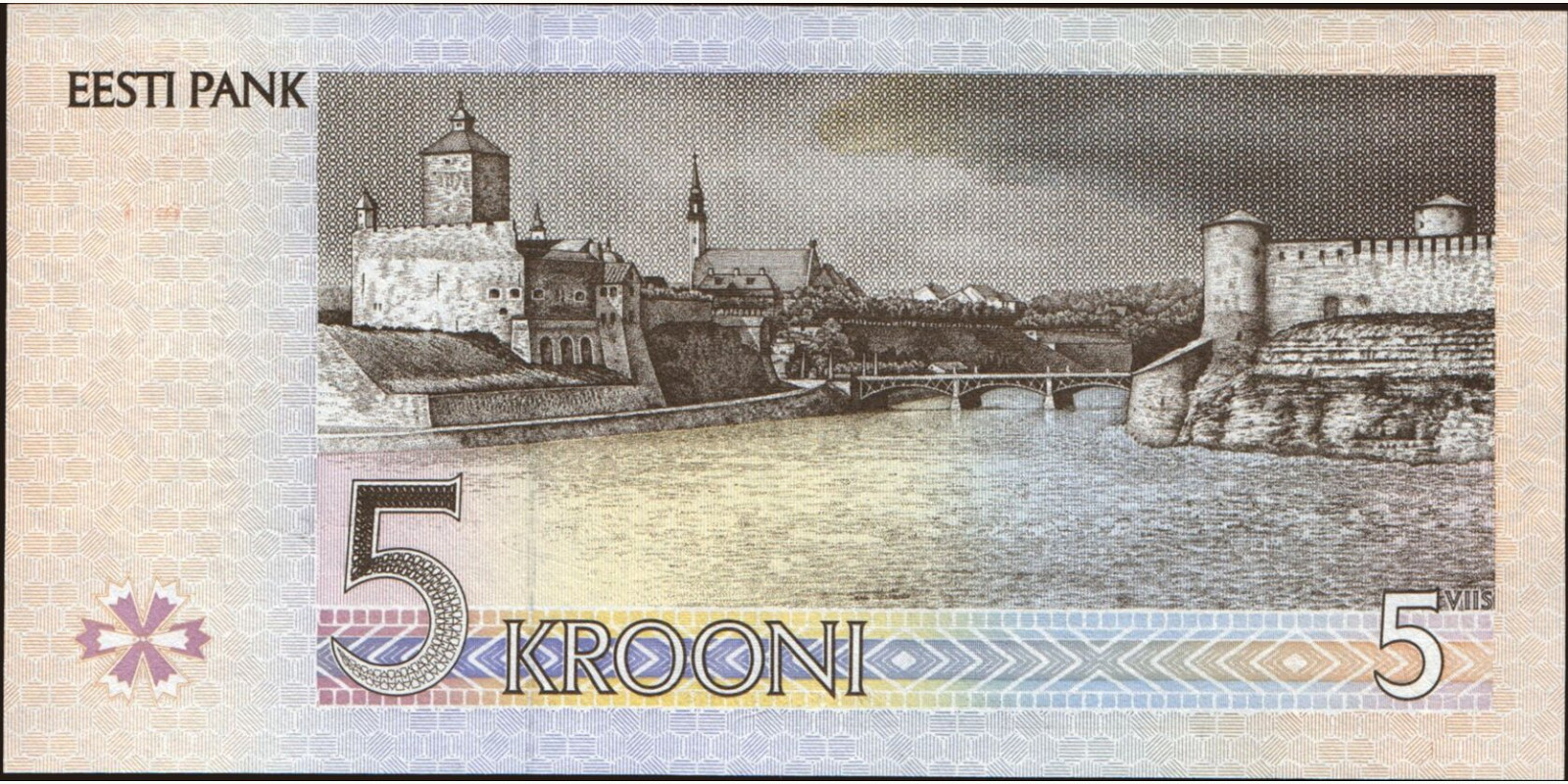
Back side
Banknote description
The 5 Krooni banknote issued by Estonia in 1994 reflects a pivotal moment in the nation's monetary history, post-independence from the Soviet Union. This period marked Estonia's re-establishment as a sovereign state, conducting its own economic policies and exploring a new identity in the global marketplace. As the country transitioned from a centrally planned economy to a market-oriented one, the introduction of the Krooni signified a break from the Russian rouble and represented hope for economic stability and growth.
Visually, the 5 Krooni banknote is a striking blend of artistry and national symbolism, featuring vibrant hues and intricate designs that reflect Estonian culture. The front of the note may incorporate elements that are emblematic of Estonia's rich heritage, possibly depicted through natural motifs or historical icons. Decorative borders and stylized text contribute to its overall aesthetic appeal, enhancing its value not only as legal tender but also as a piece of art. The craftsmanship evident in its printing showcases the advancements in security features that were becoming increasingly vital in currency design during this period.
For collectors, the 5 Krooni banknote offers significant historical importance as it embodies Estonia's journey towards independence and economic renewal. Its introduction in the early 1990s also places it within a transformative era in Eastern Europe, making it a captivating addition to any collection focused on post-Soviet currencies. This note serves as a tangible reminder of a country reclaiming its identity and navigating the challenges of a new monetary landscape.
Visually, the 5 Krooni banknote is a striking blend of artistry and national symbolism, featuring vibrant hues and intricate designs that reflect Estonian culture. The front of the note may incorporate elements that are emblematic of Estonia's rich heritage, possibly depicted through natural motifs or historical icons. Decorative borders and stylized text contribute to its overall aesthetic appeal, enhancing its value not only as legal tender but also as a piece of art. The craftsmanship evident in its printing showcases the advancements in security features that were becoming increasingly vital in currency design during this period.
For collectors, the 5 Krooni banknote offers significant historical importance as it embodies Estonia's journey towards independence and economic renewal. Its introduction in the early 1990s also places it within a transformative era in Eastern Europe, making it a captivating addition to any collection focused on post-Soviet currencies. This note serves as a tangible reminder of a country reclaiming its identity and navigating the challenges of a new monetary landscape.
Specifications
- Pick catalog
- 76
About this banknote
The Bank of Estonia (Eesti Pank) issued the 5-krooni banknote in 1994 as part of the reestablishment of the national currency following Estonia's regained independence in 1991. This series was introduced to replace earlier issues and to enhance the security features of the banknotes in circulation.
The obverse of the banknote features a portrait of Estonian chess grandmaster Paul Keres (1916–1975) at the center, with a chessboard in the background to his right. The reverse depicts Hermann Castle and Ivangorod Fortress along the Narva River. The watermark consists of the Estonian coat of arms, featuring three lions. The banknote measures 140 x 70 mm and was printed by De La Rue in London.
Related banknotes
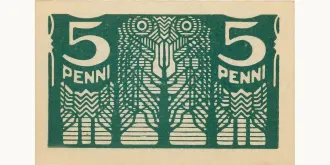
5 Penni
Estonia
· 1918
Treasury and Bank Notes of 1918–1923
·
Treasury Notes of 1918
Specimen
P-45s
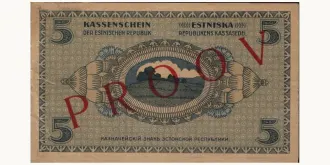
5 Mark
Estonia
· 1919
Treasury and Bank Notes of 1918–1923
·
Treasury Notes of 1919
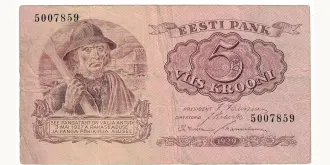
5 Krooni
Estonia
· 1929
Bank Notes of 1928–1940 (First Estonian Kroon)
·
Bank Notes of 1929
Specimen
P-62s
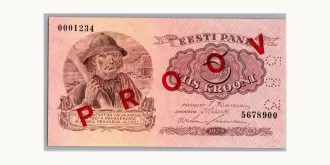
5 Krooni
Estonia
· 1929
Bank Notes of 1928–1940 (First Estonian Kroon)
·
Bank Notes of 1929
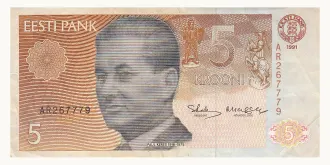
5 Krooni
Estonia
· 1991
Second Estonian Kroon (1992–2010)
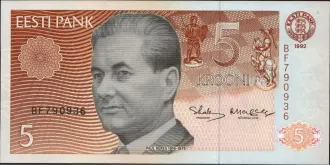
5 Krooni
Estonia
· 1992
Second Estonian Kroon (1992–2010)