25000 Marka 1920 — Estonia ( Pick: 38J )
Banknote description
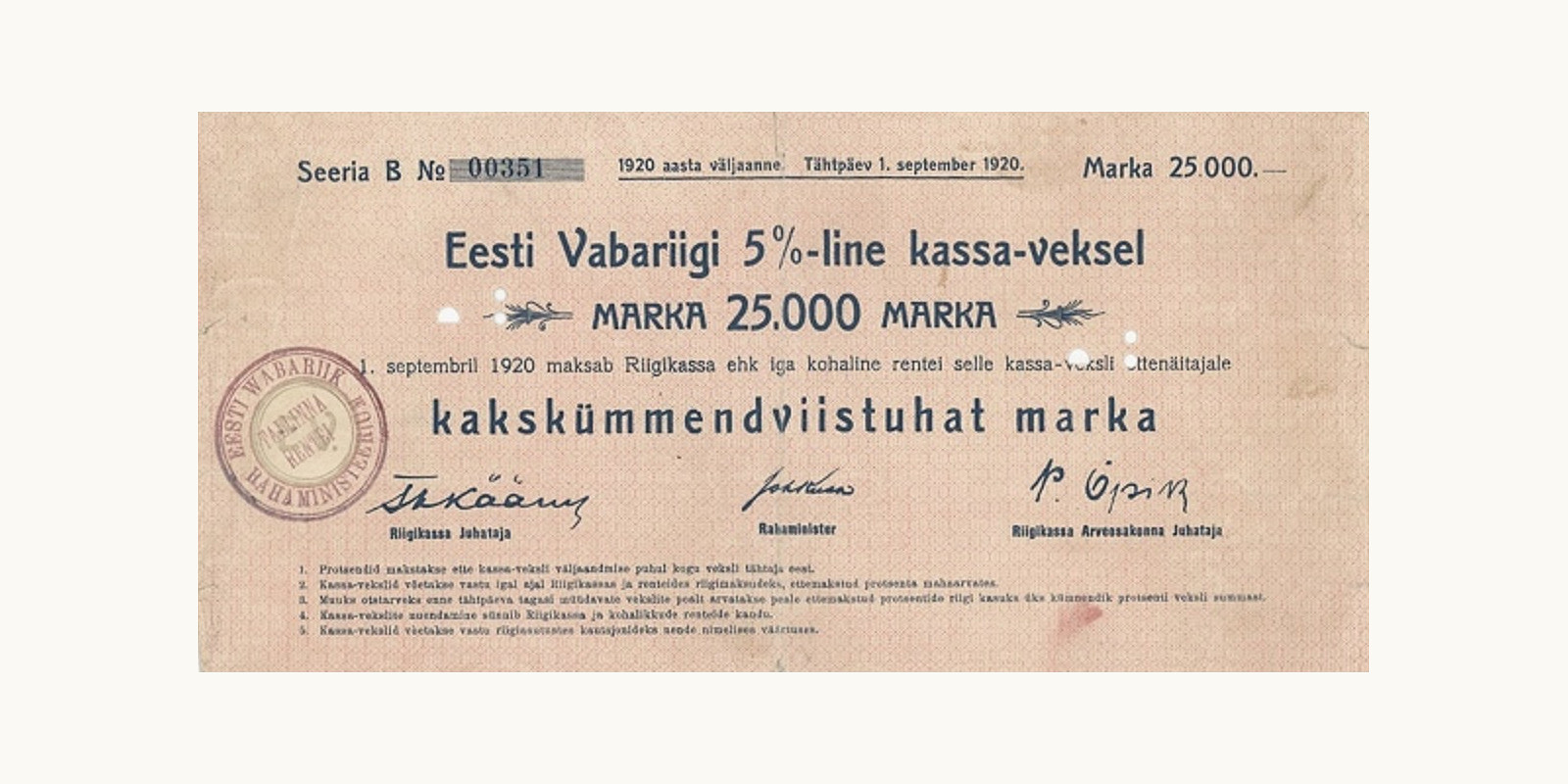
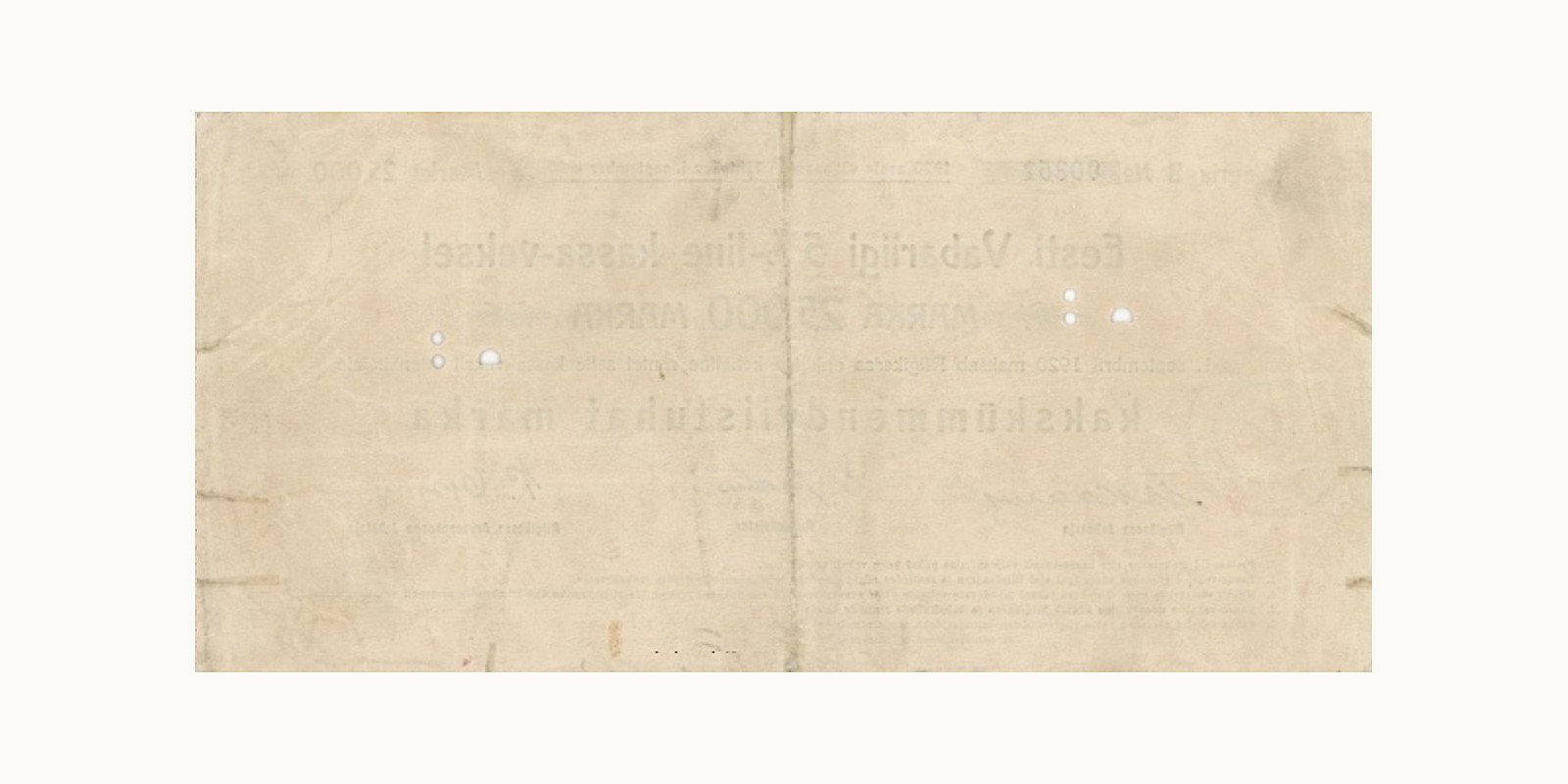
This note is cataloged under Pick number 38J. It features a pink coloration and was printed on paper sourced from Räpina, Estonia. The dimensions of the banknote are approximately 236 mm by 119 mm. It bears the signatures of T. Käärik, J. Kukk, and P. Õpik, and was produced by the State Printing Office in Tallinn, Estonia. A total of 400 pieces were produced.
The banknote’s classification under Pick number 38J and its detailed production attributes establish its position within the documented issue of promissory notes from this period. Its specifications and the limited production run contribute to its identification in the catalog of Estonian banknotes.
Specifications
- Signed by
- T. Käärik; J. Kukk; P. Õpik
- Numbering
- B 1 x 5
- Date of issue
- 10.04.1920
- Printing office
- State Printing Office, Tallinn, Estonia
- Paper
- Räpina, Estonia
- Colour
- Pink
- Dimensions
- ca 236 (336) x 119 mm
- Amount produced
- 400
- Pick catalog
- 38J
About this banknote
The 25,000 mark promissory note was issued by the Estonian State Treasury in 1920 as part of a series of high-denomination notes introduced to address severe inflation and a shortage of currency following Estonia's independence in 1918. This note, printed in pink and measuring approximately 236 x 119 mm, was signed by T. Käärik, J. Kukk, and P. Õpik, and produced by the State Printing Office in Tallinn. Only 400 such notes were printed, reflecting the limited circulation due to the economic instability of the period.
A notable feature of this series is the use of the Räpina paper mill in Estonia for printing, highlighting the country's efforts to establish domestic production capabilities post-independence. The 25,000 mark note was part of a broader strategy to stabilize the national currency, the Estonian mark, which had been introduced in 1919 but suffered from rapid devaluation due to economic challenges. This series of promissory notes was among the last issued before the introduction of the Estonian kroon in 1928, which replaced the mark at a rate of 100 marks to 1 kroon.
Related banknotes