2 rupees 1952 — Sri Lanka ( Pick: 83a )
Region:
Middle East & Asia
Front side
Back side
Banknote description
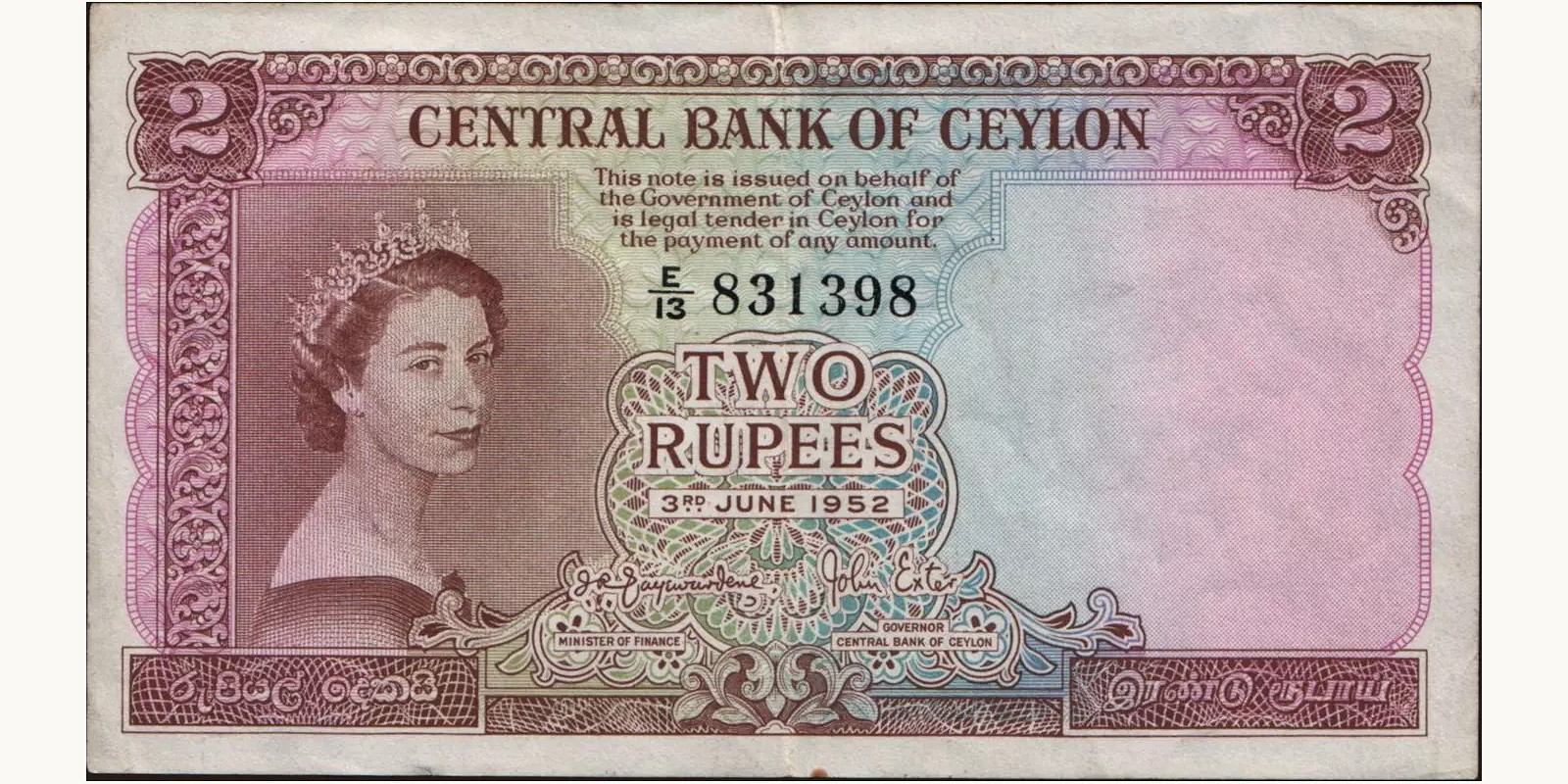
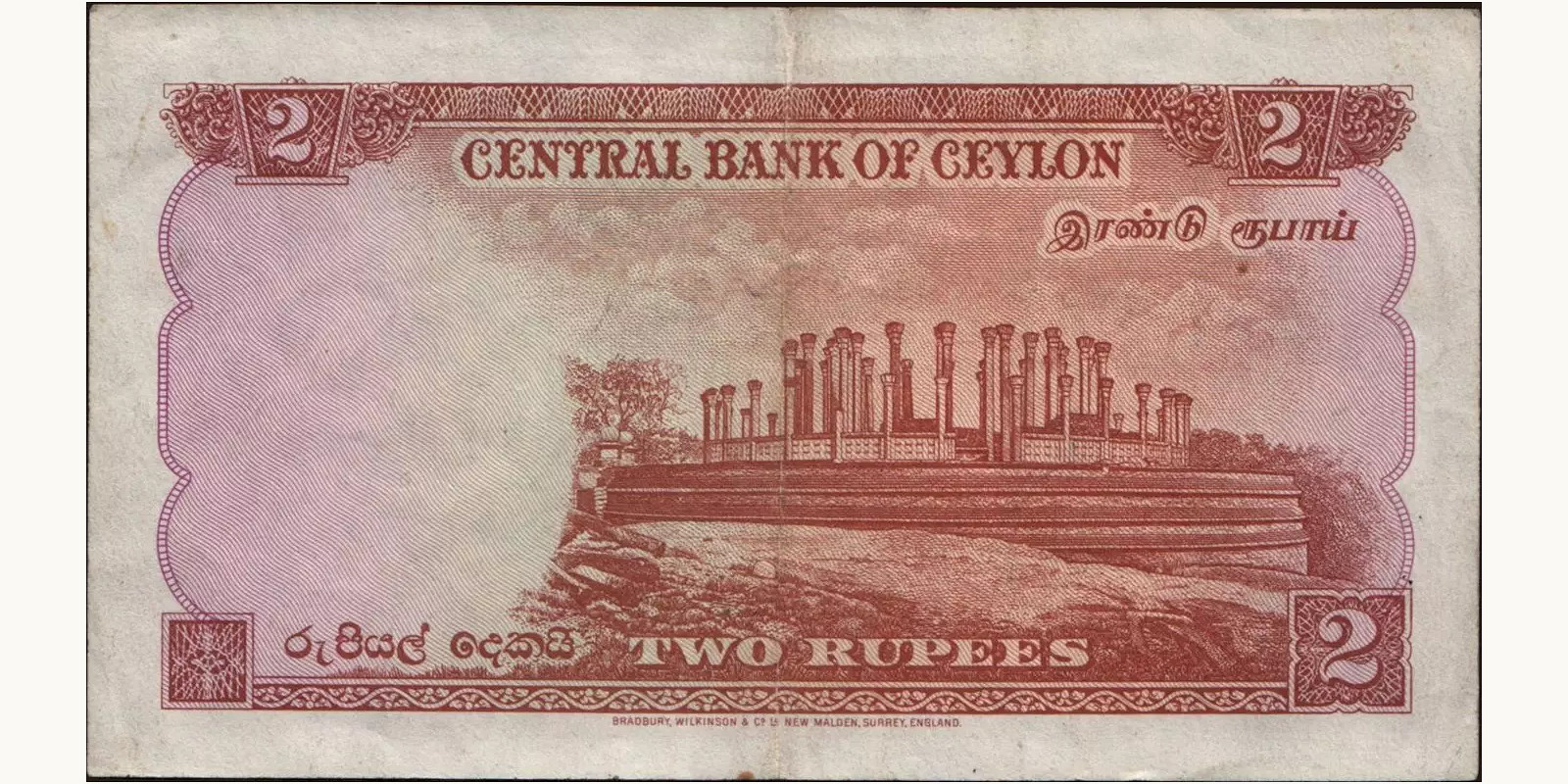
The banknote is a 2 rupees issued in Sri Lanka in 1952. It is cataloged under Pick number 83a. The banknote features a front design described simply as "Issued note."
The dimensions of the note are 120 x 66 mm. It is printed on paper and showcases a color palette of purple, green, orange, and blue. The banknote is signed by J.R. Jayewardene and John Exter. The printing office responsible for its production is Bradbury Wilkinson and Company, located in the United Kingdom, which operated from 1856 to 1990.
Sri Lanka produced this denomination for its monetary system in 1952. The specific details of the series and period are not provided.
The dimensions of the note are 120 x 66 mm. It is printed on paper and showcases a color palette of purple, green, orange, and blue. The banknote is signed by J.R. Jayewardene and John Exter. The printing office responsible for its production is Bradbury Wilkinson and Company, located in the United Kingdom, which operated from 1856 to 1990.
Sri Lanka produced this denomination for its monetary system in 1952. The specific details of the series and period are not provided.
Specifications
- Signed by
- J.R. Jayewardene and John Exter
- Date of issue
- 3 June 1952
- Printing office
- Bradbury Wilkinson and Company, United Kingdom (1856-1990)
- Colour
- purple, green, orange, blue
- Dimensions
- 120 x 66 mm
- Pick catalog
- 83a
About this banknote
The Central Bank of Ceylon issued this series of banknotes in 1952. This issuance marked the transition from the previous currency system to a more centralized monetary system under the newly established Central Bank, which began operations in 1950.
The front side of the 2 rupees banknote, Pick 83a, features a design in purple, green, orange, and blue, incorporating intricate patterns typical of this period. It was printed by Bradbury Wilkinson and Company in the United Kingdom. The note bears the signatures of J.R. Jayewardene and John Exter, emphasizing its official status during their tenures.