
100 Mark 1921 — Estonia ( Pick: 56a )
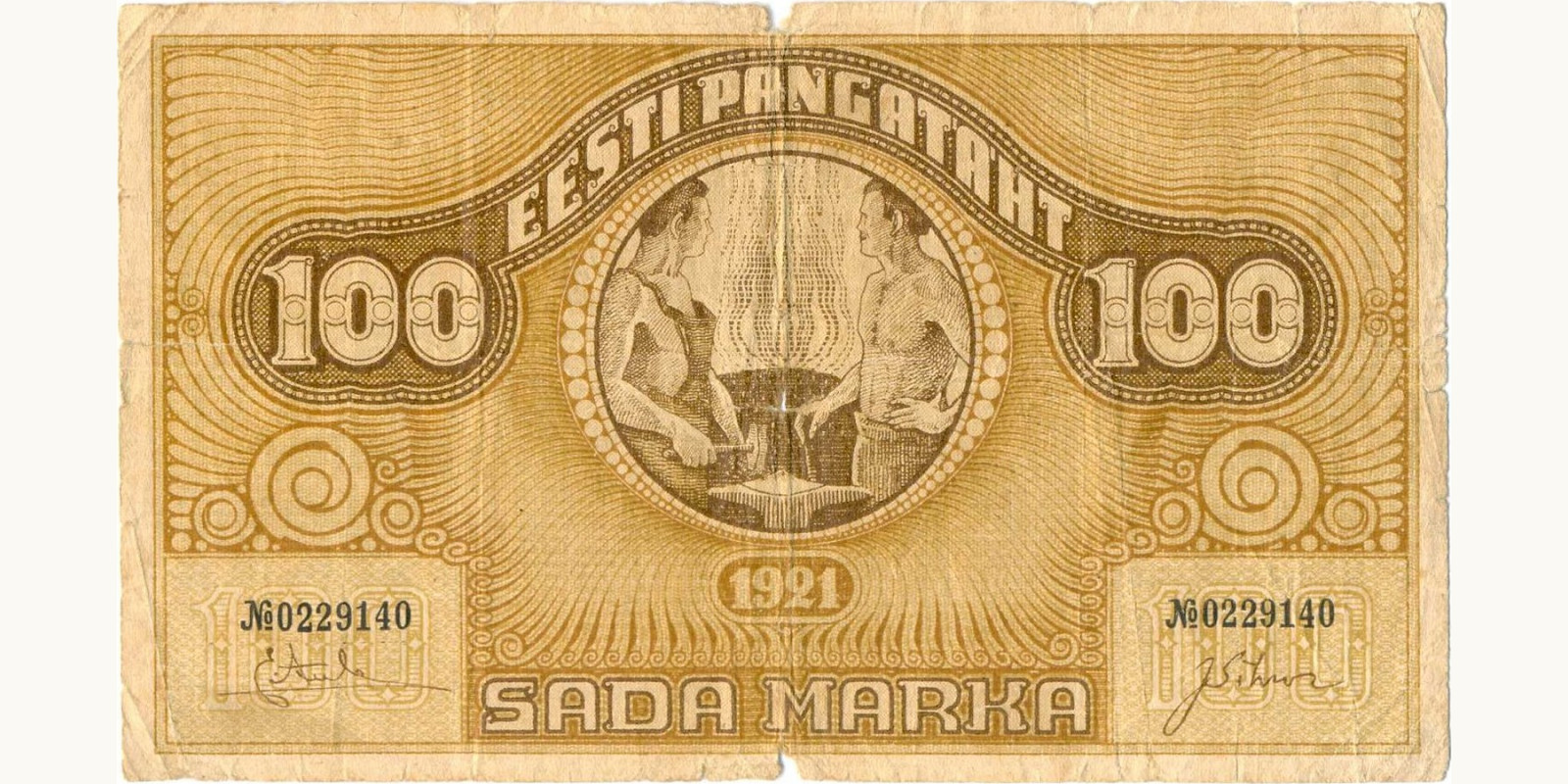
Front side
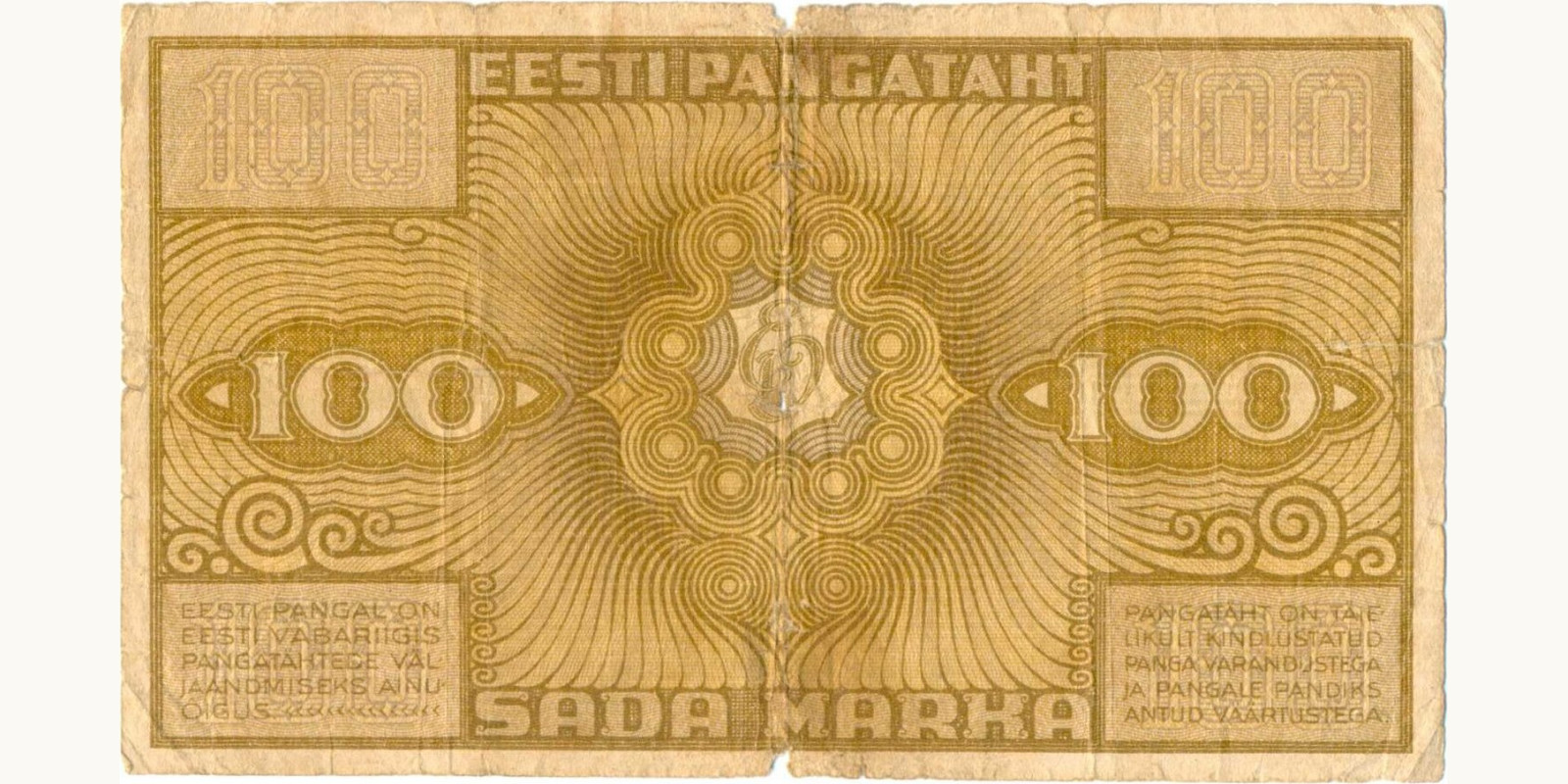
Back side
Banknote description
This 100 Mark banknote from Estonia, issued in 1921, captures a pivotal moment in the nation’s history following its declaration of independence in 1918. The early 1920s were marked by Estonia's efforts to establish a strong national identity and economic stability after years of political turmoil. This period saw the introduction of a new currency system, replacing the previous Russian rubles and showcasing the Estonian government’s commitment to creating an independent monetary policy.
The design of the banknote reflects the distinctive Estonian cultural heritage. The note features intricate decorative elements that combine national symbols and artistic motifs, often associated with the country's folklore. Dominant colors highlight the richness of Estonian art, and the careful engraving showcases the craftsmanship of the era. The inscriptions are executed in a clear and elegant typeface, adding to the note's aesthetic appeal and historical value. Such artistic details not only enhance its visual attractiveness but also serve as a testament to the artistic aspirations during the early years of nationhood.
For collectors, this 100 Mark note represents more than just currency; it symbolizes Estonia's quest for sovereignty and economic independence. Its historical significance is particularly noteworthy, as it originated during a time of national rebirth, making it a valuable piece for those interested in the narrative of Estonia's development. The combination of its artistic design and historical context makes this banknote a fascinating addition to any collection, reflecting the broader themes of nation-building and cultural identity in post-war Europe.
The design of the banknote reflects the distinctive Estonian cultural heritage. The note features intricate decorative elements that combine national symbols and artistic motifs, often associated with the country's folklore. Dominant colors highlight the richness of Estonian art, and the careful engraving showcases the craftsmanship of the era. The inscriptions are executed in a clear and elegant typeface, adding to the note's aesthetic appeal and historical value. Such artistic details not only enhance its visual attractiveness but also serve as a testament to the artistic aspirations during the early years of nationhood.
For collectors, this 100 Mark note represents more than just currency; it symbolizes Estonia's quest for sovereignty and economic independence. Its historical significance is particularly noteworthy, as it originated during a time of national rebirth, making it a valuable piece for those interested in the narrative of Estonia's development. The combination of its artistic design and historical context makes this banknote a fascinating addition to any collection, reflecting the broader themes of nation-building and cultural identity in post-war Europe.
Specifications
- Signed by
- E. Aule; J. Sihver
- Numbering
- 2 x 7
- Date of issue
- 31.03.1921
- Invalid from
- 01.03.1924
- Printing office
- Tilgmann, Helsinki, Finland
- Paper
- Tervakoski, Finland
- Colour
- Yellow
- Dimensions
- 154 x 92 mm
- Amount produced
- 2005000
- Pick catalog
- 56a
About this banknote
The Bank of Estonia issued the 100 Mark note in 1921 as part of the Pangatäht Banknotes series. This series was introduced during the period of Treasury and Bank Notes from 1918 to 1923, amid efforts to stabilize the newly independent Estonian economy following World War I.
The front side of the note features the inscription "EESTI PANGATÄHT" and depicts two male figures at work, symbolizing industry and labor. Produced by Tilgmann in Helsinki, Finland, the note measures 154 x 92 mm and was printed on Tervakoski paper. It was signed by E. Aule and J. Sihver, with a production of 2,005,000 units.
Related banknotes

5 Penni
Estonia
· 1918
Treasury and Bank Notes of 1918–1923
·
Treasury Notes of 1918
10 Penni
Estonia
· 1918
Treasury and Bank Notes of 1918–1923
·
Treasury Notes of 1918
10 Penni
Estonia
· 1918
Treasury and Bank Notes of 1918–1923
·
Treasury Notes of 1918

20 Penni
Estonia
· 1918
Treasury and Bank Notes of 1918–1923
·
Treasury Notes of 1918
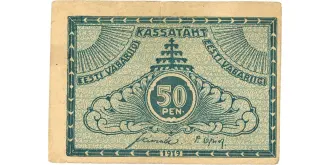
50 Penni
Estonia
· 1919
Treasury and Bank Notes of 1918–1923
·
Treasury Notes of 1919
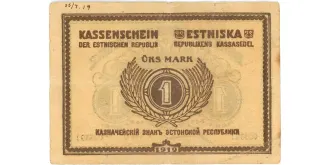
1 Mark
Estonia
· 1919
Treasury and Bank Notes of 1918–1923
·
Treasury Notes of 1919