
100 Krooni 1994 — Estonia ( Pick: 79 )
Region:
Europe
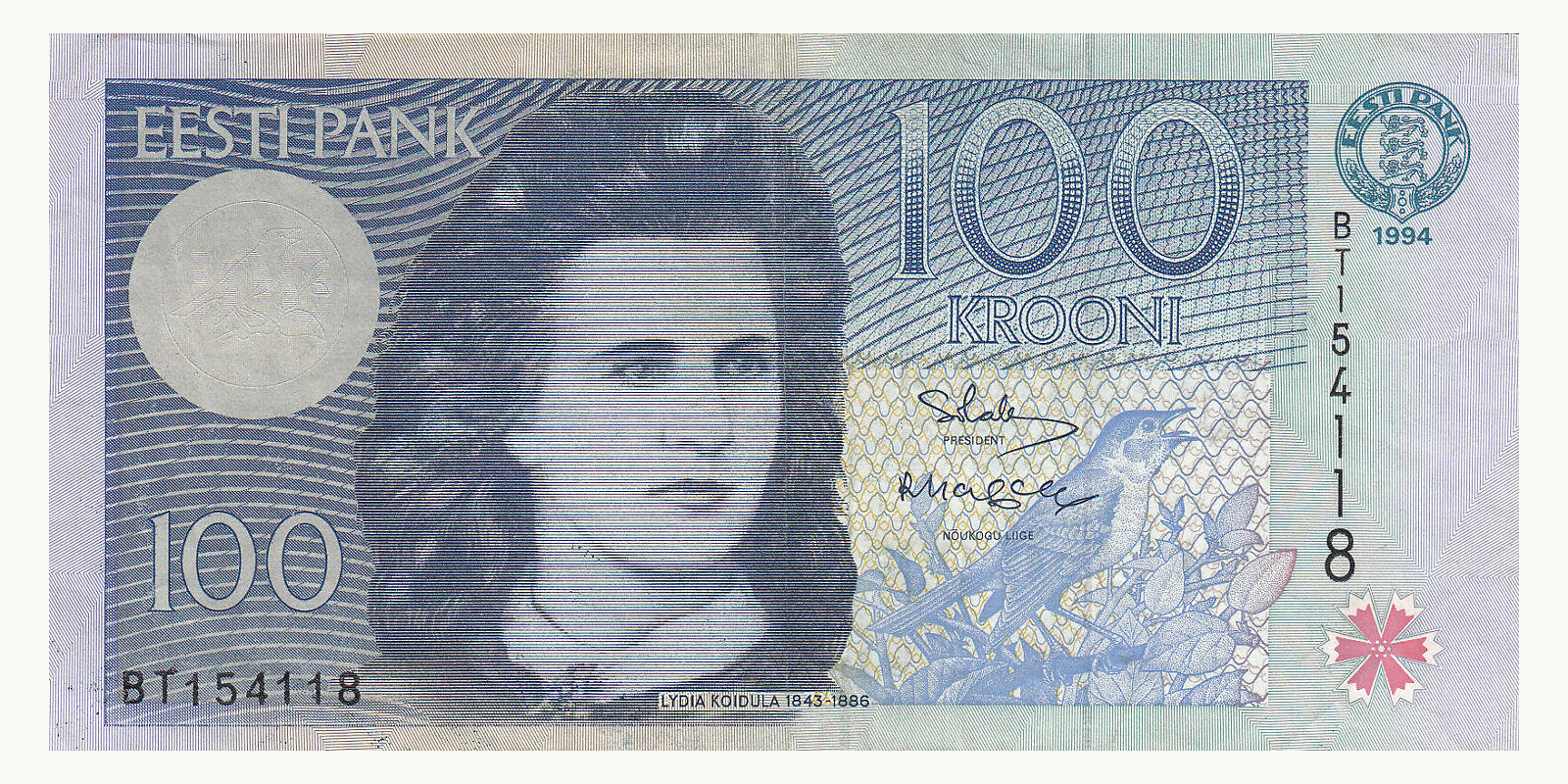
Front side
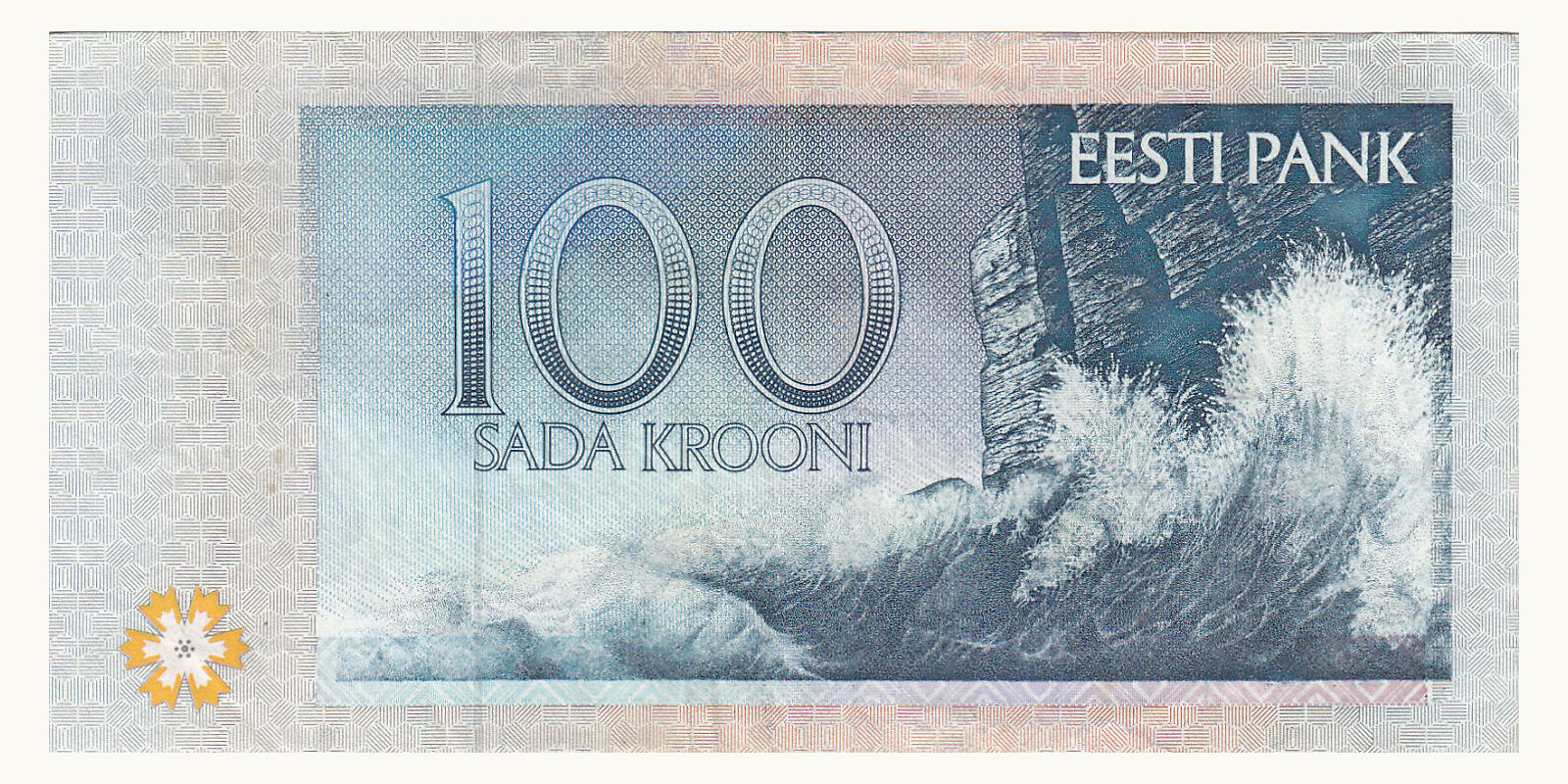
Back side
Banknote description
The 100 Krooni banknote from Estonia, issued in 1994, reflects a significant period in the nation's history as it transitioned from Soviet rule to independence. This era marked Estonia's revitalization of its own currency, symbolizing both economic renewal and national identity. Following the restoration of independence in 1991, the introduction of the Krooni represented a decisive move towards establishing a market economy and asserting sovereignty after decades of foreign dominance.
Visually, the 100 Krooni note is striking, characterized by its rich color palette and intricate design elements. The banknote features detailed illustrations, including images that represent Estonia's cultural heritage and natural beauty. The use of vibrant colors along with symbols that resonate with Estonian identity creates a visual narrative synonymous with national pride. Decorative borders enhance its aesthetic appeal, while careful attention to printing details reflects the era's commitment to quality and security in currency design.
Collectors find the 100 Krooni banknote particularly interesting due to its historical significance and the circumstances surrounding Estonia’s re-emergence on the world stage. As a key part of the early post-Soviet financial system, this note offers insights into the challenges and aspirations faced by the nation during a transformative time. Its connection to Estonia's journey towards modernity makes it a prized piece for numismatists and historians alike, providing a tangible connection to a pivotal moment in European history.
Visually, the 100 Krooni note is striking, characterized by its rich color palette and intricate design elements. The banknote features detailed illustrations, including images that represent Estonia's cultural heritage and natural beauty. The use of vibrant colors along with symbols that resonate with Estonian identity creates a visual narrative synonymous with national pride. Decorative borders enhance its aesthetic appeal, while careful attention to printing details reflects the era's commitment to quality and security in currency design.
Collectors find the 100 Krooni banknote particularly interesting due to its historical significance and the circumstances surrounding Estonia’s re-emergence on the world stage. As a key part of the early post-Soviet financial system, this note offers insights into the challenges and aspirations faced by the nation during a transformative time. Its connection to Estonia's journey towards modernity makes it a prized piece for numismatists and historians alike, providing a tangible connection to a pivotal moment in European history.
Specifications
- Pick catalog
- 79
About this banknote
The Bank of Estonia (Eesti Pank) issued the 100-kroon banknote in 1994 as part of the reestablishment of the national currency following the country's regained independence in 1991. This series aimed to replace the Soviet ruble with the Estonian kroon, reinstating monetary sovereignty.
The obverse of the banknote features a portrait of Lydia Koidula (1843–1886), an esteemed Estonian poet and playwright. The reverse depicts stormy waves crashing against a limestone cliff, representing the north Estonian coastline. The note measures 140 × 69 mm and was demonetized on 15 January 2011, following Estonia's adoption of the euro.
Related banknotes
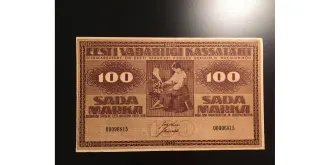
100 Mark
Estonia
· 1919
Treasury and Bank Notes of 1918–1923
·
Treasury Notes of 1919
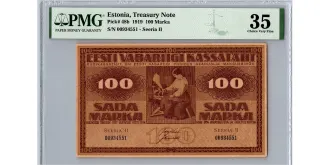
100 Mark
Estonia
· 1919
Treasury and Bank Notes of 1918–1923
·
Treasury Notes of 1919
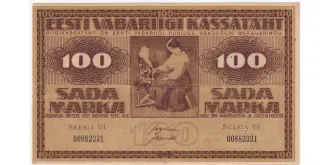
100 Mark
Estonia
· 1919
Treasury and Bank Notes of 1918–1923
·
Treasury Notes of 1919
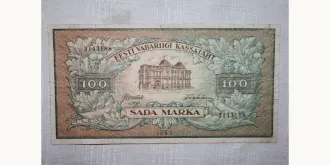
100 Mark
Estonia
· 1923
Treasury and Bank Notes of 1918–1923
·
Treasury Notes of the Republic of Estonia
A
P-51b
100 Mark
Estonia
· 1923
Treasury and Bank Notes of 1918–1923
·
Treasury Notes of the Republic of Estonia
Specimen
P-51s
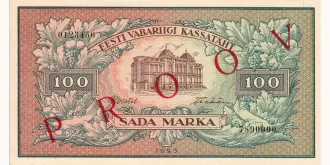
100 Mark
Estonia
· 1923
Treasury and Bank Notes of 1918–1923
·
Treasury Notes of the Republic of Estonia