100 francs 1969 — France ( Pick: 149 )
Region:
Europe
Front side
Back side
Banknote description
The banknote is a 100 francs issued in France in 1969. It is cataloged under Pick number 149, which identifies it within the issue. Its denomination and year place it among documented banknotes.
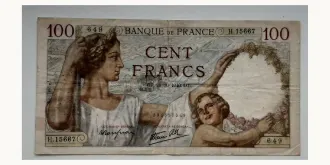
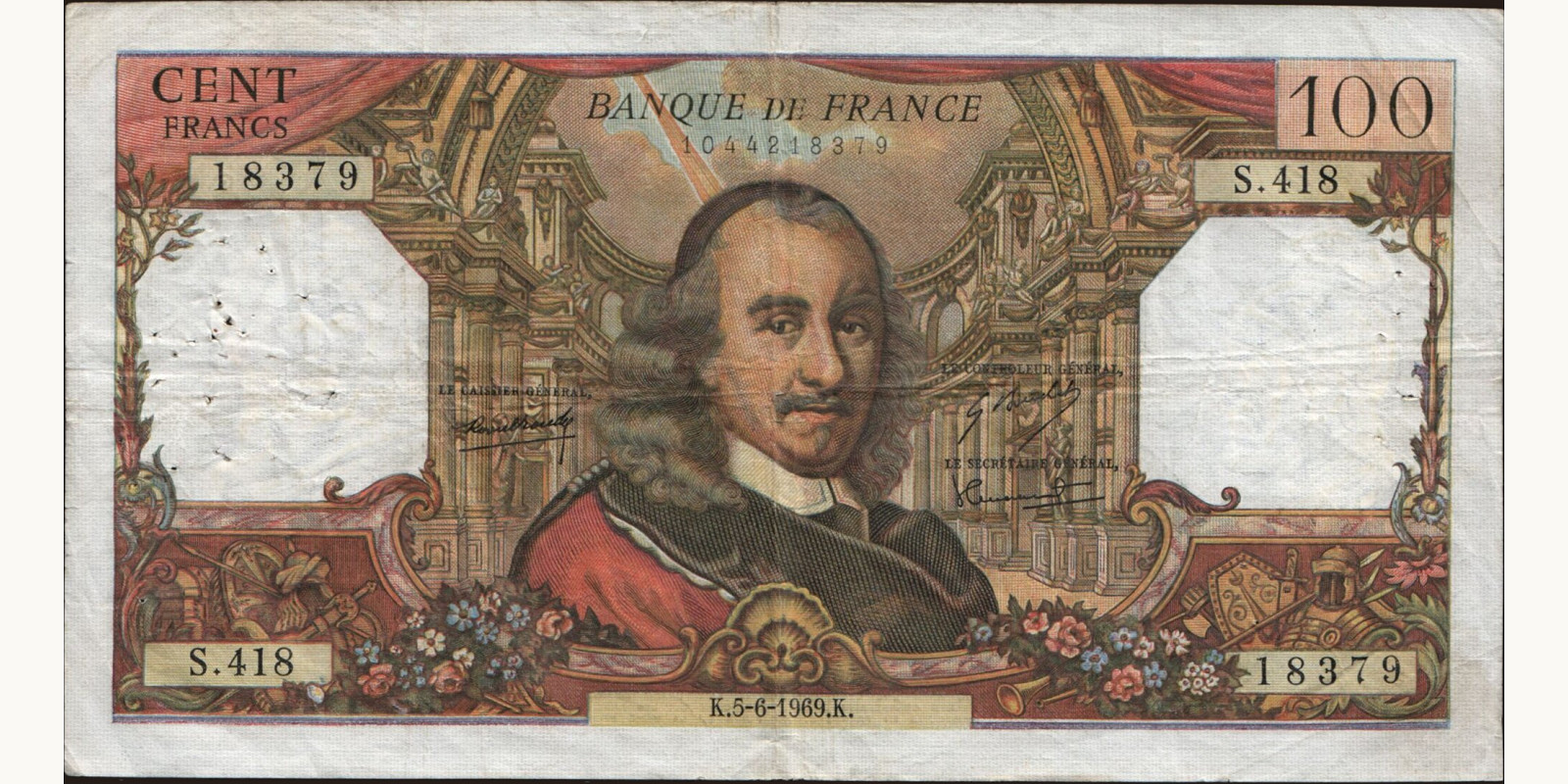
The front side design features Pierre Corneille prominently at the center. The banknote is presented in a multicolor format, highlighting the artistic elements of its design. Additional recorded attributes include the signatures of R. Tondu, G. Bouchet, and H. Morant.
The note's multicolor design reflects the artistic trends of the late 1960s. It is worth noting that significant changes occurred in France's currency system during the late 20th century, impacting various banknote designs.
The front side design features Pierre Corneille prominently at the center. The banknote is presented in a multicolor format, highlighting the artistic elements of its design. Additional recorded attributes include the signatures of R. Tondu, G. Bouchet, and H. Morant.
The note's multicolor design reflects the artistic trends of the late 1960s. It is worth noting that significant changes occurred in France's currency system during the late 20th century, impacting various banknote designs.
Specifications
- Signed by
- R. Tondu, G. Bouchet, H. Morant
- Date of issue
- 1964-1979
- Colour
- Multicolor
- Pick catalog
- 149
About this banknote
The Banque de France issued the 100 francs "Corneille" banknote series from April 2, 1964, to February 1, 1979. This series was introduced to replace the previous 100 francs note and remained in circulation until its withdrawal on March 1, 1985.
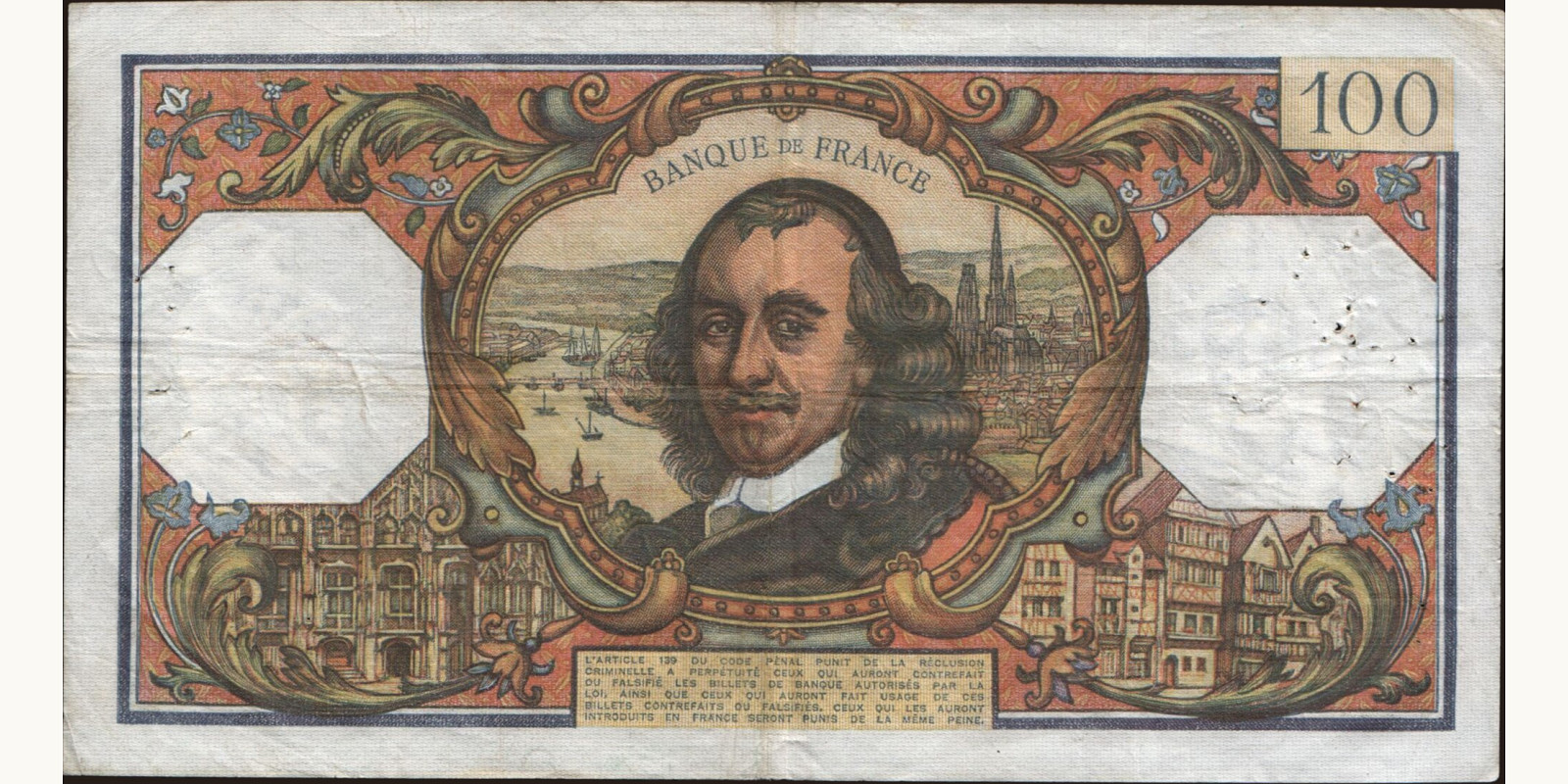
The front of the banknote features a portrait of the playwright Pierre Corneille at the center, with the Théâtre du Château de Versailles depicted in the background. The reverse side presents Corneille's bust within a cartouche at the center, accompanied by a view of the city of Rouen, including the Palais de Justice and his birthplace. This multicolored note measures 92 x 172 mm and includes a watermark of a laureate-headed man.