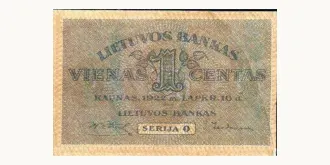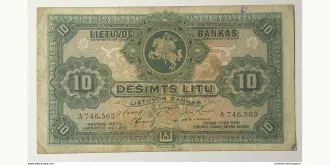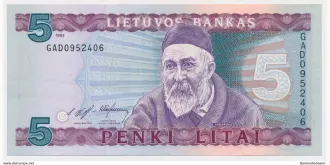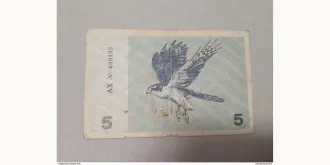
5 litas 1922 — Lithuania ( Pick: 34 )
Region:
Europe
Front side
Back side
Banknote description
In the post-World War I era, Lithuania emerged as a sovereign nation, establishing its own identity and financial independence. The issuance of the 5 litas banknote in 1922 reflects this significant period in Lithuanian history, as the country sought to rebuild and redefine its economy after years of turmoil and foreign occupation. This was a time of national fervor and cultural revival, with a desire to consolidate Lithuania’s monetary system and assert its presence on the global stage. The 5 litas note served not only as a medium of exchange but also as a symbol of national pride during the formative years following independence.
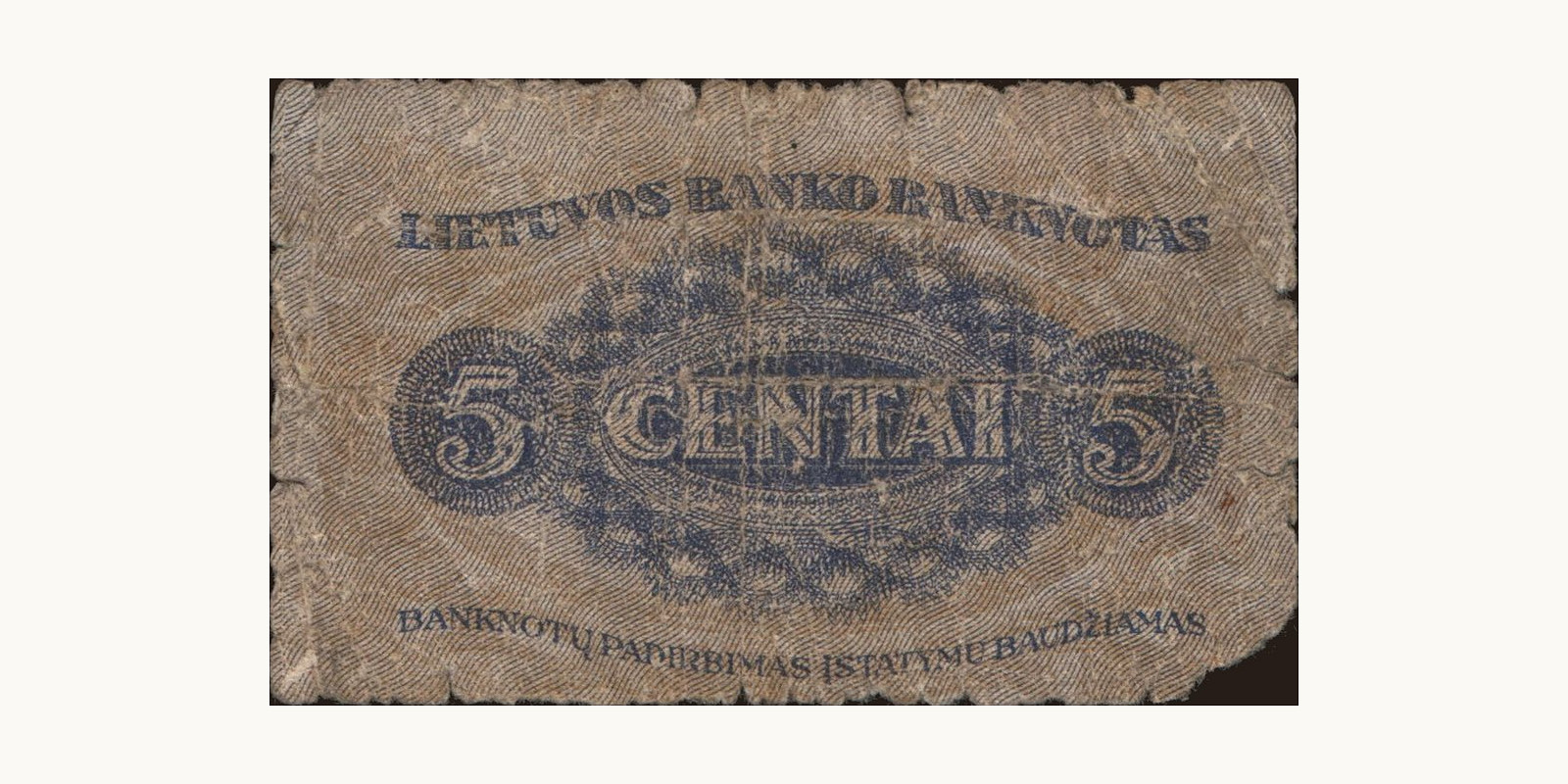
The design of the 5 litas banknote is both striking and elegant, featuring intricate details that resonate with the artistic styles of the time. The predominant colors create a vivid presentation, while the imagery encapsulates key cultural and historical elements significant to Lithuania. Decorative borders and inscriptions adorn the note, enhancing its visual appeal and underscoring its value as a crafted piece. The note embodies the craftsmanship of its era, highlighting printing techniques that aimed to protect against counterfeiting while showcasing artistic innovation.
For collectors, this banknote represents more than a monetary artifact—it is a tangible connection to Lithuania's tumultuous journey toward self-determination. The limited issuance of currency from this transitional period enhances its rarity and appeal, making it a noteworthy addition for those interested in European history and numismatics.
The design of the 5 litas banknote is both striking and elegant, featuring intricate details that resonate with the artistic styles of the time. The predominant colors create a vivid presentation, while the imagery encapsulates key cultural and historical elements significant to Lithuania. Decorative borders and inscriptions adorn the note, enhancing its visual appeal and underscoring its value as a crafted piece. The note embodies the craftsmanship of its era, highlighting printing techniques that aimed to protect against counterfeiting while showcasing artistic innovation.
For collectors, this banknote represents more than a monetary artifact—it is a tangible connection to Lithuania's tumultuous journey toward self-determination. The limited issuance of currency from this transitional period enhances its rarity and appeal, making it a noteworthy addition for those interested in European history and numismatics.
Specifications
- Signed by
- V. Jurgutis, A. Prusas, P. Grajauskas, J. Paknys, Julius Kaupas
- Date of issue
- 1922-11-16
- Printing office
- Andreas Haase, Prague
- Colour
- green, red-brown, purple, blue, black
- Dimensions
- 110 x 65 mm
- Pick catalog
- 34
About this banknote
The Bank of Lithuania issued the 5 litas banknote in 1922 as part of its monetary reform efforts following the country's declaration of independence in 1918. This series was introduced to establish the Lithuanian litas as the official currency, replacing the German ostmark and Russian ruble used post-World War I.
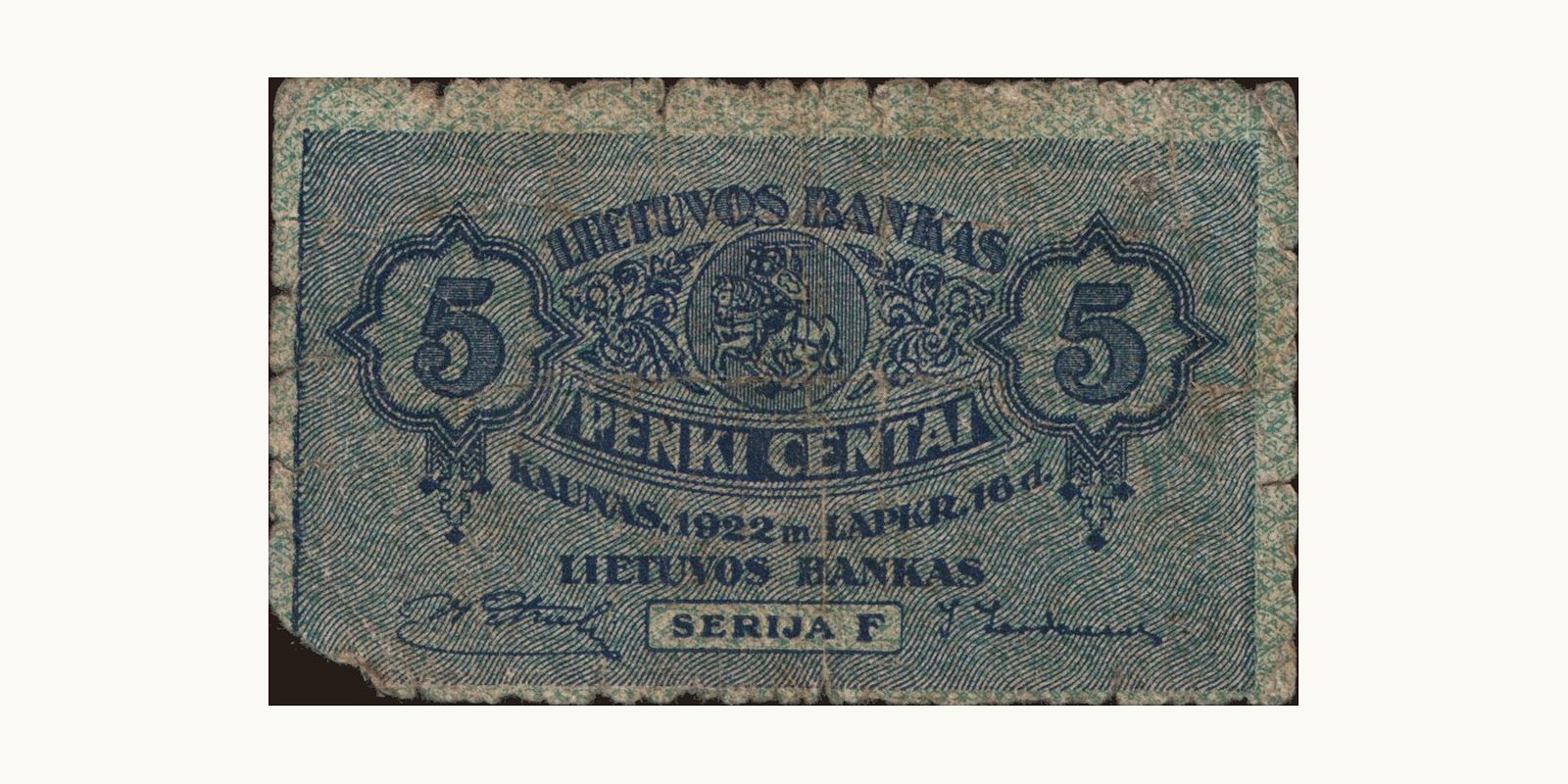
The banknote features a central motif of a knight on horseback, surrounded by floral patterns. The note prominently displays the denomination "5" and the inscriptions “LIETUVOS BANKAS” and “PENKI CENTAI.” Printed by Andreas Haase in Prague, it bears signatures of officials including V. Jurgutis and Julius Kaupas. The Pick number is 34.