2500 rupiah 1957 — Indonesia ( Pick: 54 )
Region:
Middle East & Asia
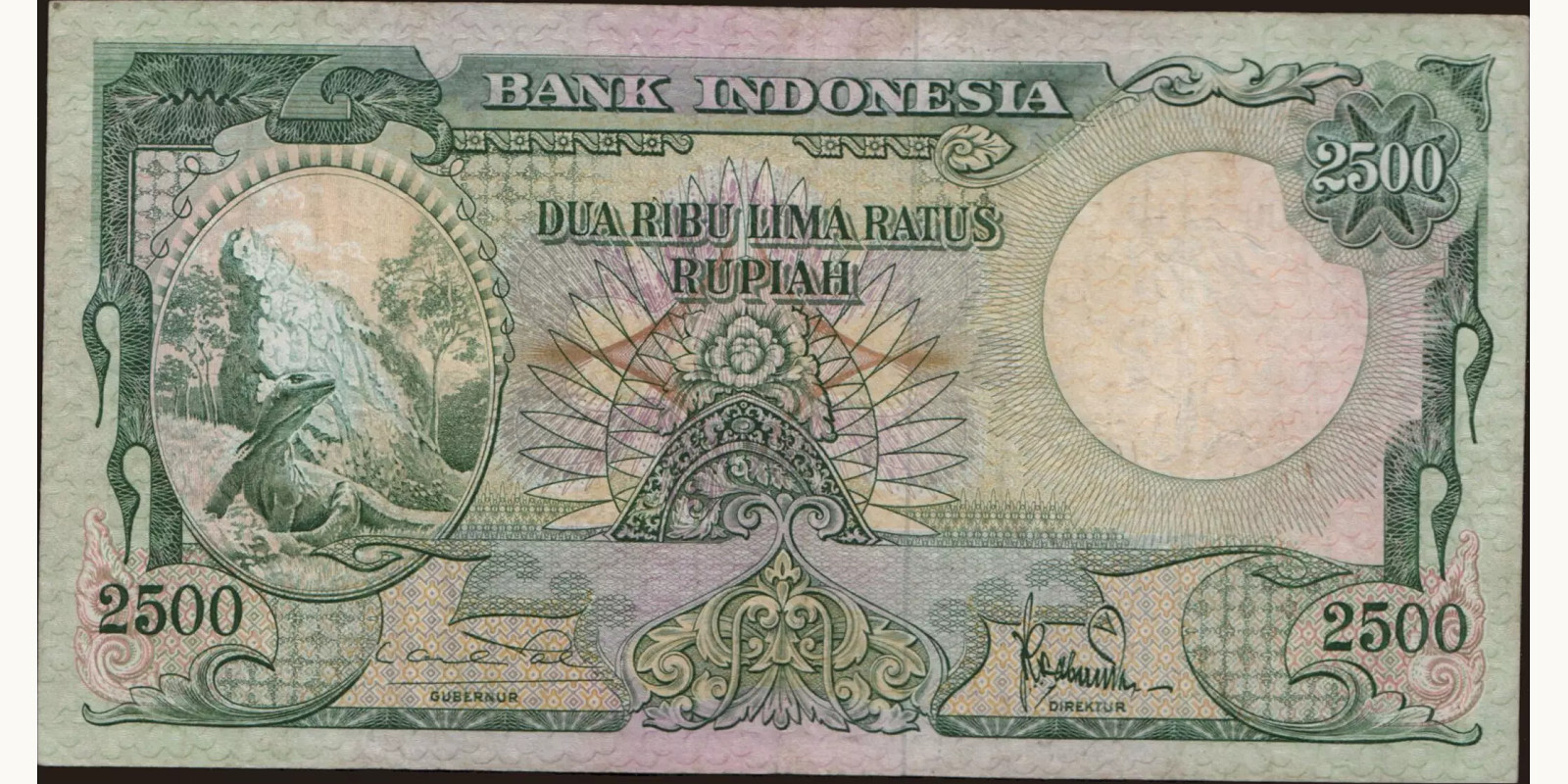
Front side
Back side
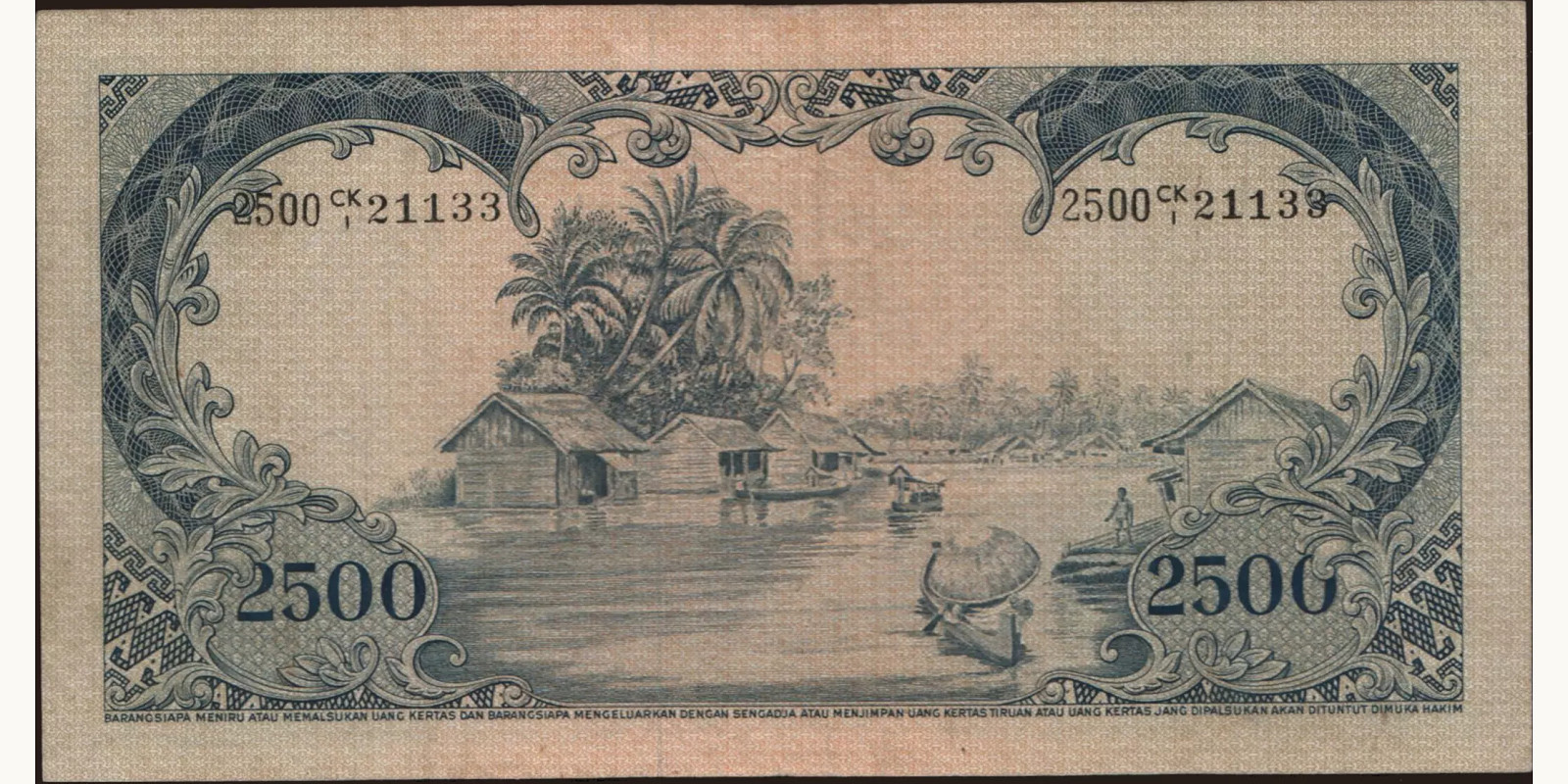
Banknote description
The banknote is a 2500 rupiah issued in Indonesia in 1957. It falls under Pick number 54. Its denomination, year, and catalog reference position it among documented banknotes from this issue.
The front design features "Bank Indonesia" along with "1952 Issue" and "1957 Issue," presented in green. An image of a leguan is positioned on the left side. The back displays a village at a lakeshore, with markings indicating it as an issued note and a specimen.
This note is printed on paper and has dimensions of 181 x 92 mm. It is signed by Lukman Hakim and T.R.B. Sabaroedin, and the printing office responsible for this note is Thomas De La Rue.
The front design features "Bank Indonesia" along with "1952 Issue" and "1957 Issue," presented in green. An image of a leguan is positioned on the left side. The back displays a village at a lakeshore, with markings indicating it as an issued note and a specimen.
This note is printed on paper and has dimensions of 181 x 92 mm. It is signed by Lukman Hakim and T.R.B. Sabaroedin, and the printing office responsible for this note is Thomas De La Rue.
Specifications
- Signed by
- Lukman Hakim, T.R.B. Sabaroedin
- Date of issue
- 1957
- Printing office
- Thomas De La Rue
- Colour
- green, yellow, pink, and blue
- Dimensions
- 181 x 92 mm
- Amount produced
- unknown
- Pick catalog
- 54
About this banknote
Bank Indonesia issued the 2,500 rupiah banknote in 1957 as part of its efforts to establish a national currency following Indonesia's independence. This denomination was introduced to facilitate larger transactions during a period of economic development.
The front of the note features a Komodo dragon (Varanus komodoensis) on the left side. The reverse depicts a fishing village along the Martapura River, complete with straw huts, palm trees, and boats. The banknote measures 181 x 92 mm and was printed by Thomas De La Rue. It includes a watermark of Prince Diponegoro.