1000 rupiah 2011 — Indonesia ( Pick: 141k )
Region:
Middle East & Asia
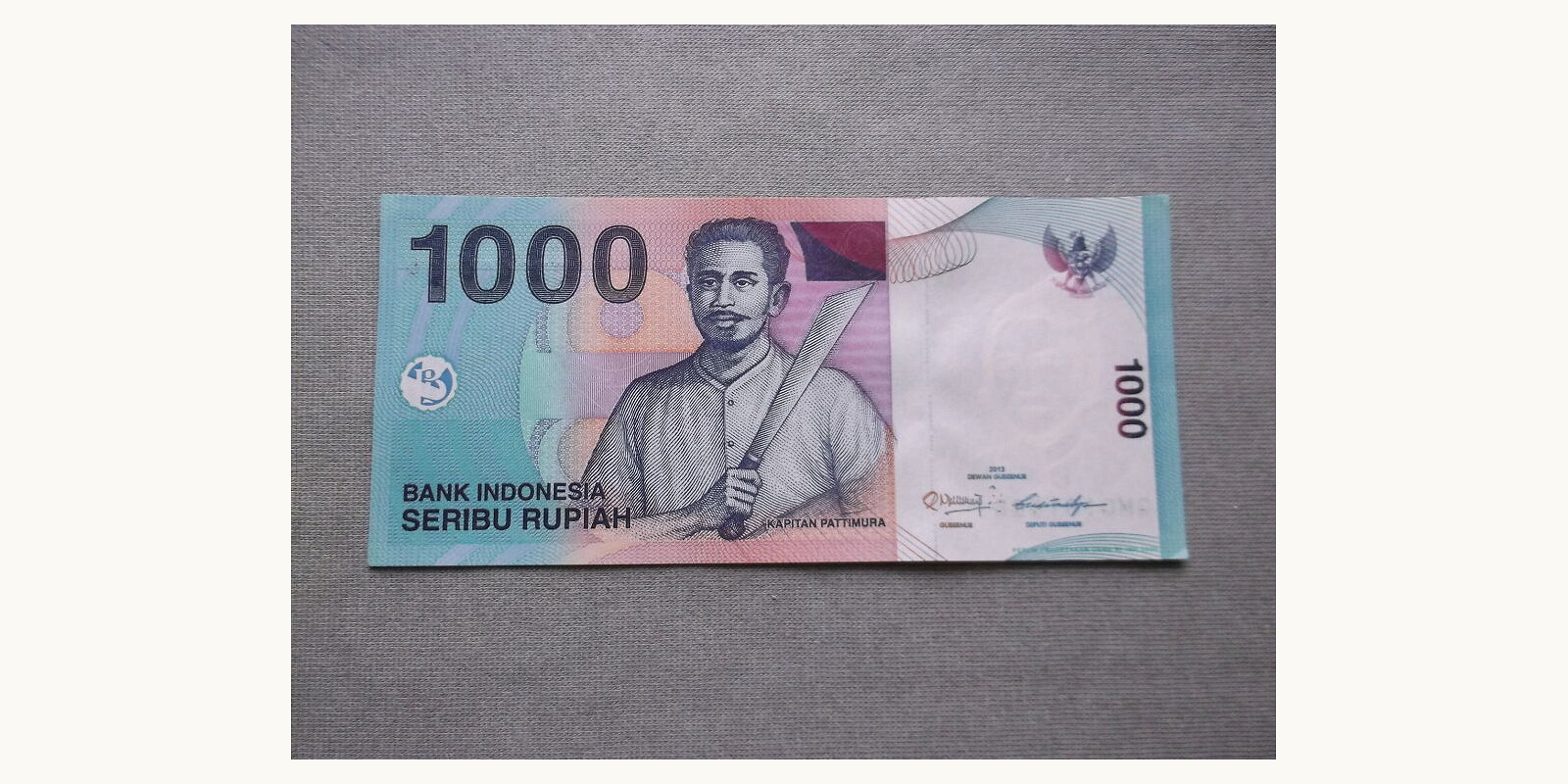
Front side
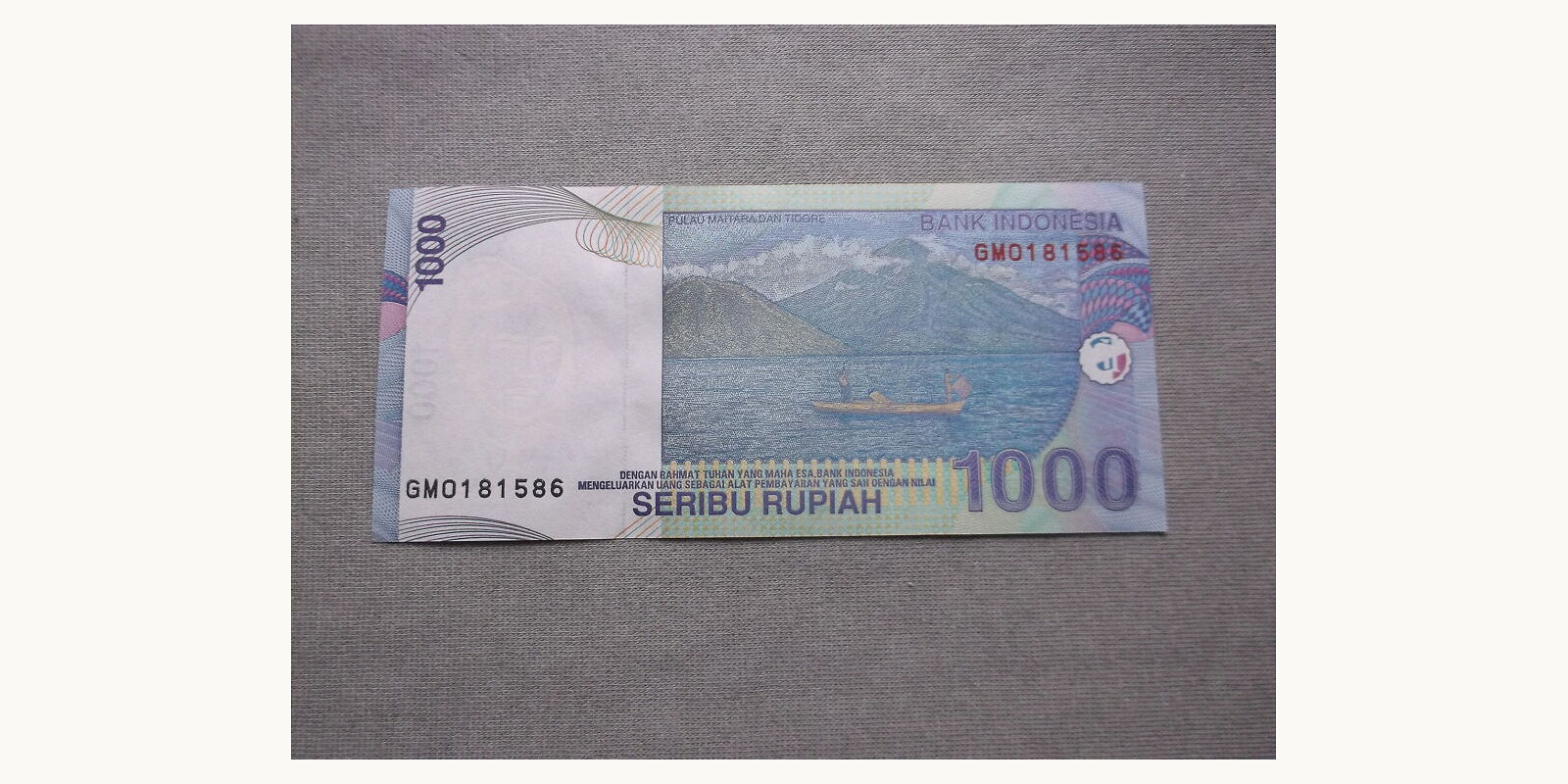
Back side
Banknote description
The banknote is a 1000 rupiah issued in Indonesia in 2011. It is cataloged under Pick number 141k, which identifies it within the issue. Its denomination and year place it among documented banknotes.
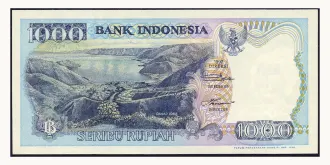
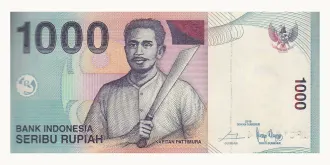
The front side design features a blue-green and red color scheme on a multicolor underprint, depicting Kapitan Pattimura at the center. The back side design showcases a fishing boat and a volcano. The note is printed on paper, measures 141 x 65 mm, and includes a watermark labeled "Tjut."
No information is available regarding the signature, printing office, or amount produced. The 1000 rupiah denomination was part of a broader category of Indonesian notes issued from 1995 to 2013.
The front side design features a blue-green and red color scheme on a multicolor underprint, depicting Kapitan Pattimura at the center. The back side design showcases a fishing boat and a volcano. The note is printed on paper, measures 141 x 65 mm, and includes a watermark labeled "Tjut."
No information is available regarding the signature, printing office, or amount produced. The 1000 rupiah denomination was part of a broader category of Indonesian notes issued from 1995 to 2013.
Specifications
- Signed by
- Not specified
- Date of issue
- 2000/2011
- Printing office
- Not specified
- Colour
- Red on multicolor underprint
- Dimensions
- 141 x 65 mm
- Amount produced
- Not specified
- Pick catalog
- 141k
About this banknote
The issuing authority for the 1000 rupiah note is Bank Indonesia. This series was issued between 1995 and 2011. It was introduced gradually over the years with a consistent design to maintain continuity in the national currency's security features and aesthetic design.
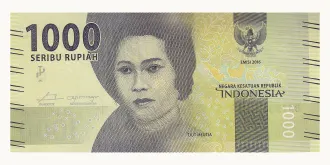
The front side of the 2011 note, Pick number 141k, features Kapitan Pattimura in the center, with a color scheme of blue-green and red on a multicolor underprint. The back side showcases a fishing boat and volcano. The watermark used is Tjut Nyak Dien.