1000 lira 1971 — Italy ( Pick: 101b )
Region:
Europe
Front side
Back side
Banknote description
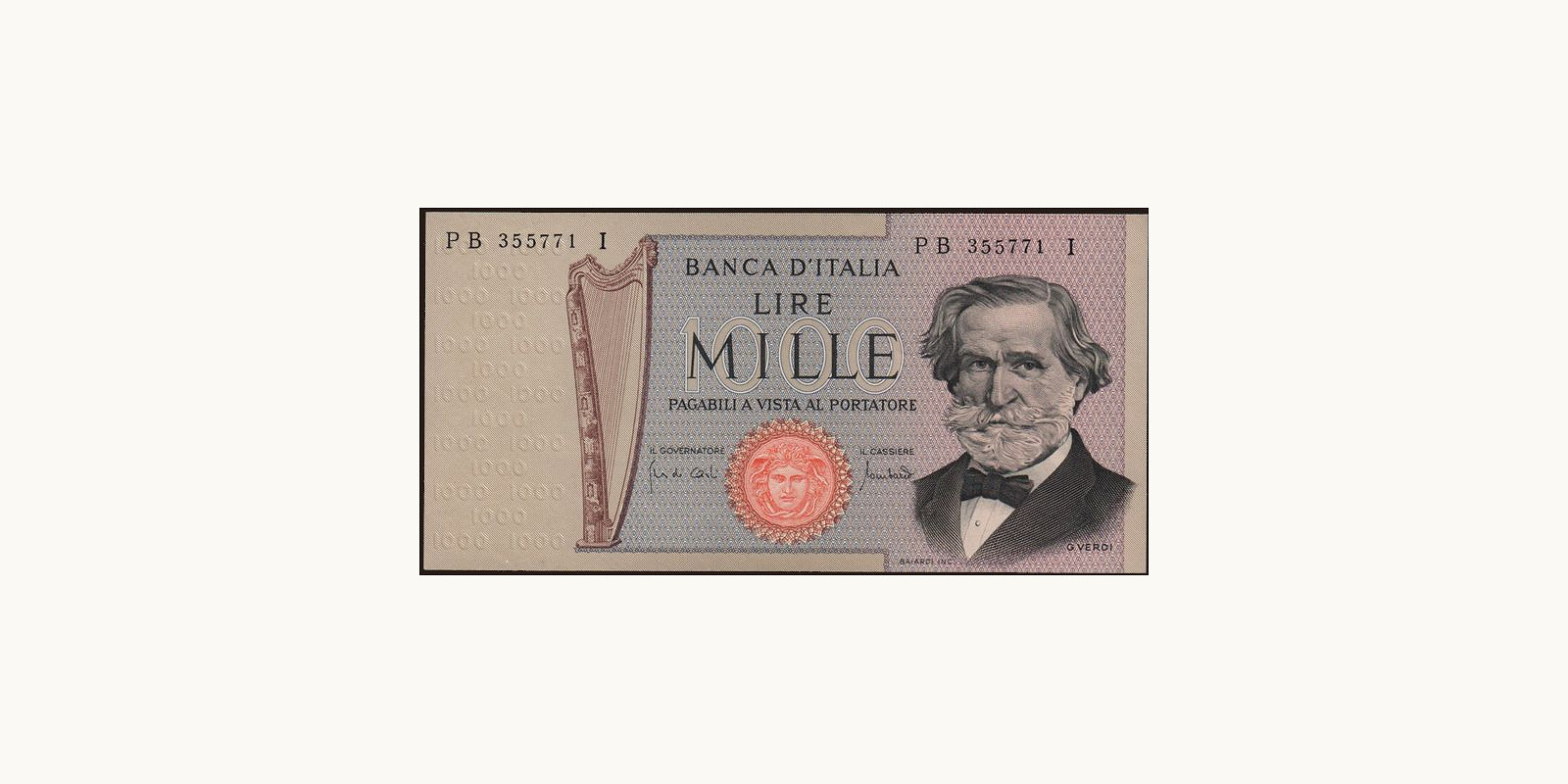
The banknote is a 1000 lira issued in Italy in 1971. It is cataloged under Pick number 101b. The note measures 125 x 62 mm and is printed on paper. It features designs in black and brown on a light blue and lilac underprint.
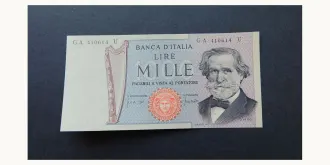
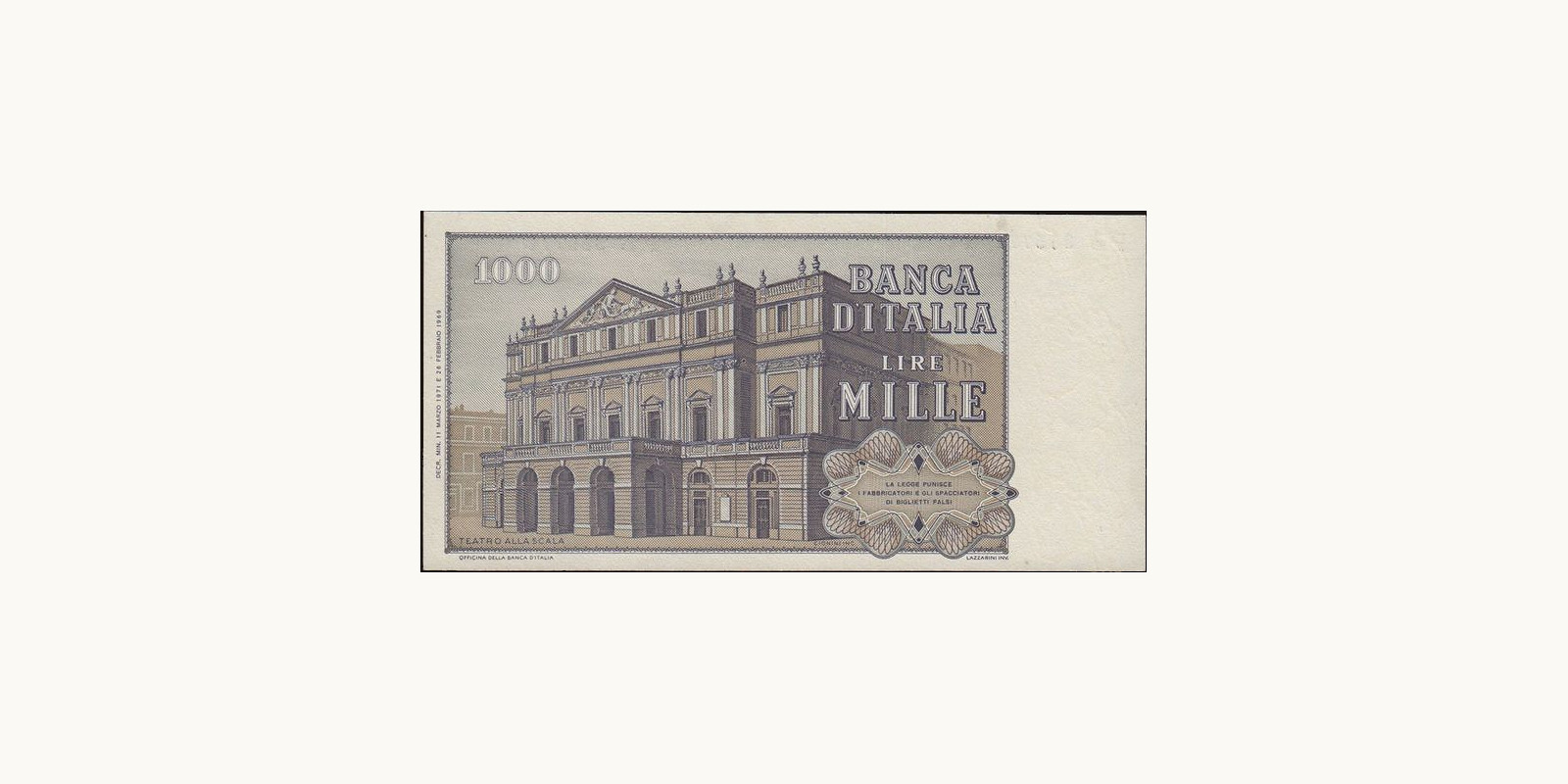
The front side design includes a harp at the left center and G. Verdi at the right, accompanied by a Type B seal. The back side design showcases Milan's La Scala opera house at the left center. The banknote also contains a watermark with a vertical row of laureate heads and a security thread.
A total of 300,000,000 units were produced by the Banca d'Italia in Rome. This banknote is signed by Carli and Lombardo.
The front side design includes a harp at the left center and G. Verdi at the right, accompanied by a Type B seal. The back side design showcases Milan's La Scala opera house at the left center. The banknote also contains a watermark with a vertical row of laureate heads and a security thread.
A total of 300,000,000 units were produced by the Banca d'Italia in Rome. This banknote is signed by Carli and Lombardo.
Specifications
- Signed by
- Carli and Lombardo
- Date of issue
- March 11, 1971
- Printing office
- Banca d'Italia, Rome, Italy
- Colour
- Black and brown on light blue and lilac underprint
- Dimensions
- 125 x 62 mm
- Amount produced
- 300,000,000
- Pick catalog
- 101b
About this banknote
The Banca d'Italia issued the 1000 Lira banknote series in 1969. This series included the portrait of renowned composer Giuseppe Verdi, serving as part of a modernization effort designed to update Italian currency designs with culturally significant figures.
The front of the banknote features Verdi at the right and a harp at the left center. The back displays Milan's La Scala opera house, a notable landmark in Italy. This specific note, cataloged as Pick 101b, includes the signatures of Carli and Lombardo and was first issued on March 11, 1971. The banknote was printed by Banca d'Italia, Rome, with a production of 300,000,000 pieces.