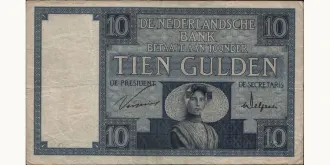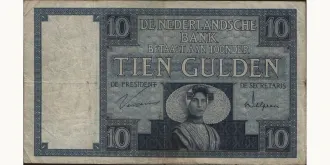
10 gulden 1944 — Netherlands ( Pick: 59 )
Region:
Europe
Front side
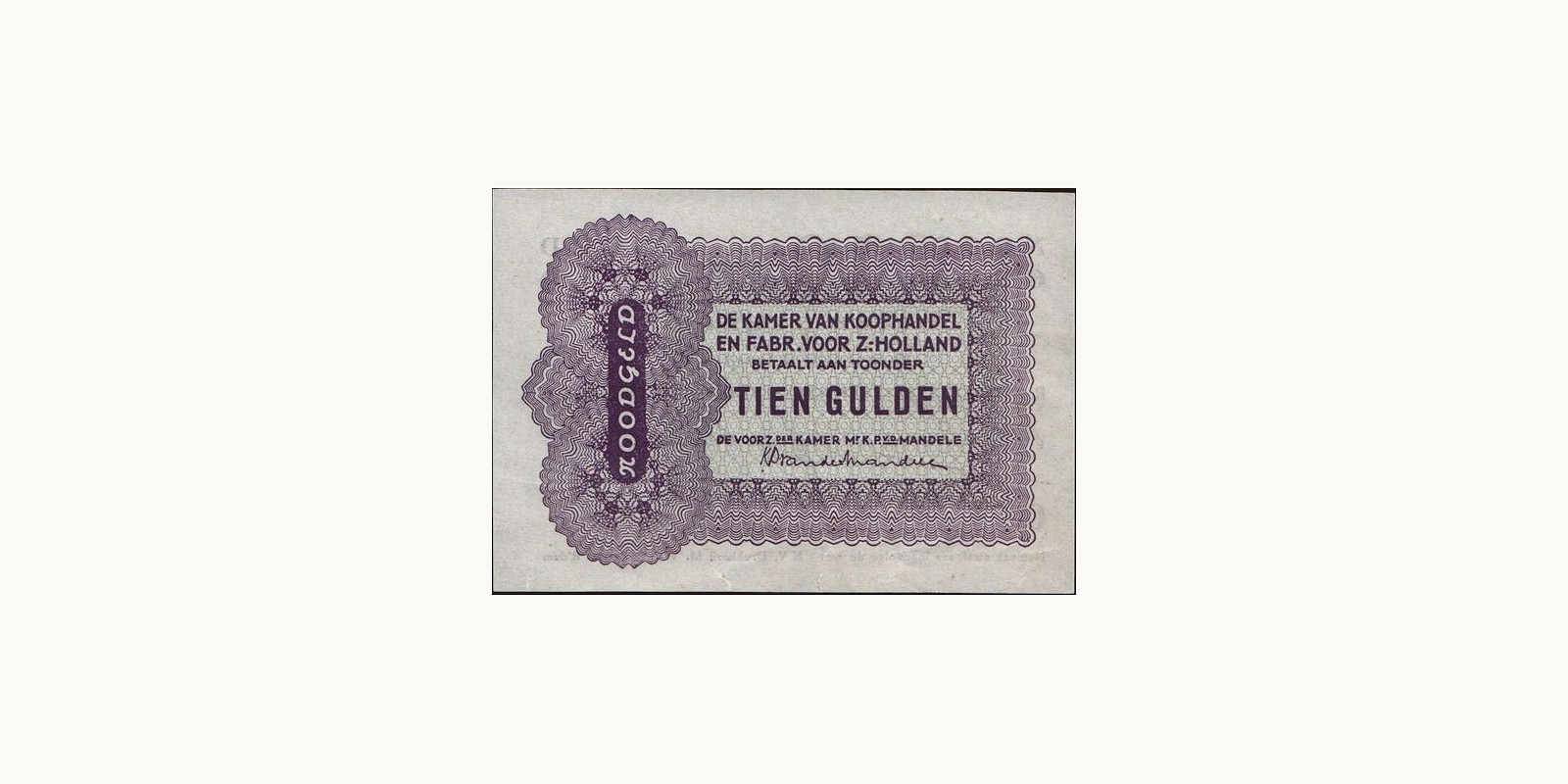
Back side
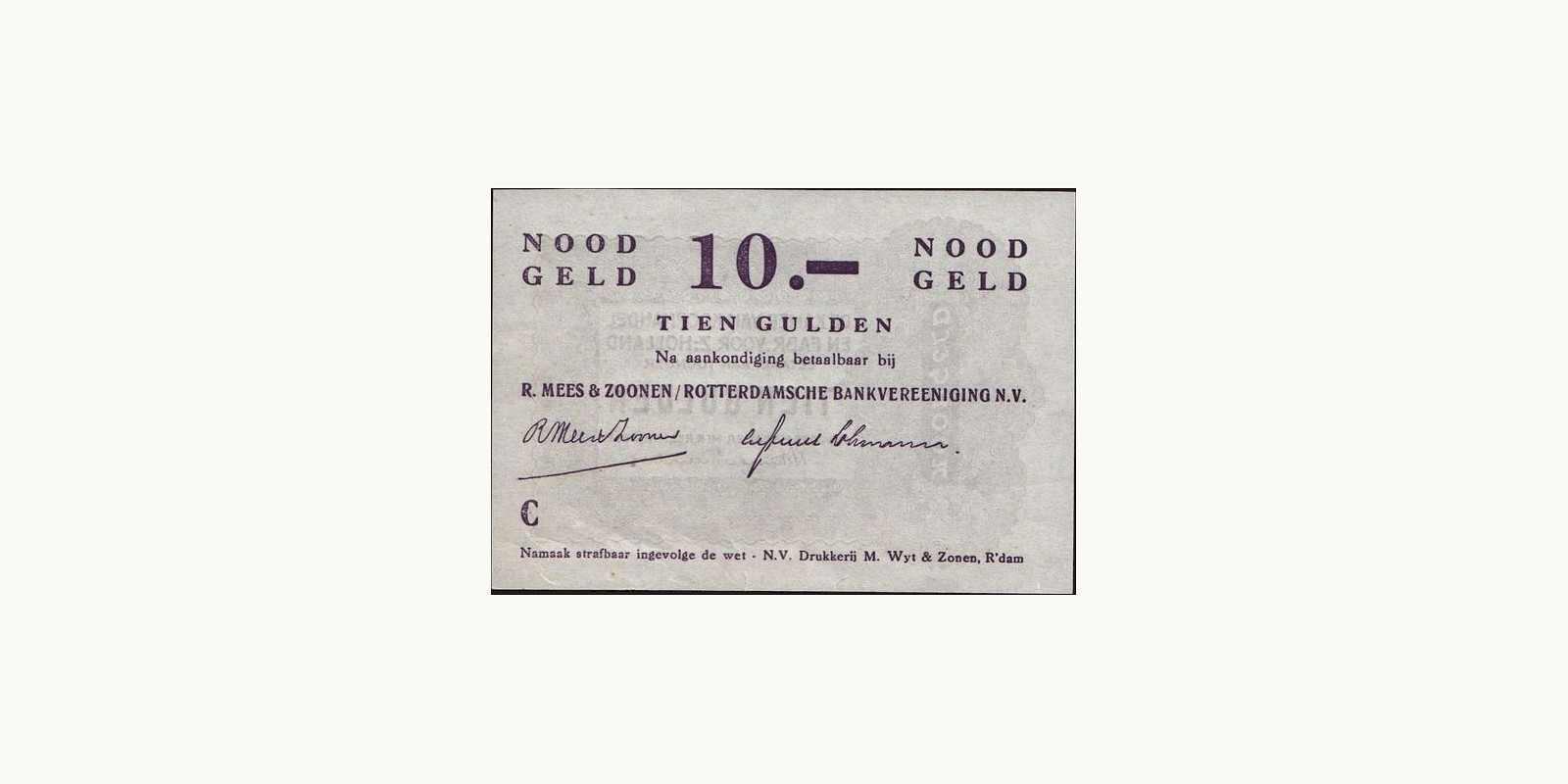
Banknote description
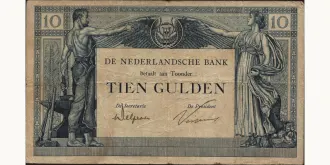
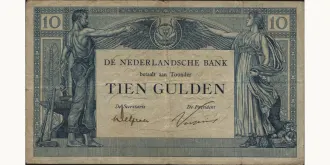
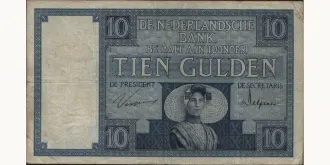
The banknote is a 10 gulden issued in the Netherlands in 1944. It is cataloged under Pick number 59. The dimensions of the note are 143 x 68 mm.
The obverse features colors of blue, violet-blue, and green, while the reverse displays multicolored geometric designs. It is signed by Jan Robertson (Secretary) and Meinoud Marinus Rost van Tonningen (President). The printing office is Joh. Enschedé en Zonen.
This note is made of paper. The Netherlands issued a variety of gulden denominations during the 1940s, reflecting the country's monetary system at the time.
The obverse features colors of blue, violet-blue, and green, while the reverse displays multicolored geometric designs. It is signed by Jan Robertson (Secretary) and Meinoud Marinus Rost van Tonningen (President). The printing office is Joh. Enschedé en Zonen.
This note is made of paper. The Netherlands issued a variety of gulden denominations during the 1940s, reflecting the country's monetary system at the time.
Specifications
- Signed by
- Jan Robertson (Secretary) and Meinoud Marinus Rost van Tonningen (President)
- Date of issue
- Various dates between January 4, 1943, and April 22, 1944
- Printing office
- Joh. Enschedé en Zonen
- Colour
- Blue, violet-blue, and green on the obverse; multicolor with geometric designs on the reverse
- Dimensions
- 143 x 68 mm
- Pick catalog
- 59
About this banknote
The 10 gulden banknote was issued by the Chamber of Commerce and Factories for Southern Holland in 1944. This emergency currency, known as "noodgeld," was circulated due to cash shortages during World War II. The notes were essential for maintaining commerce in the region during the wartime economy.
The front of the banknote features intricate geometric patterns in blue, violet-blue, and green. The text includes the denomination and authority signatures of Jan Robertson and Meinoud Marinus Rost van Tonningen. Printed by Joh. Enschedé en Zonen, the note measures 143 x 68 mm and served as a temporary monetary solution during the crisis period.