1 pesos 1962 — Bolivia ( Pick: 152 )
Region:
South America
Front side
Back side
Banknote description
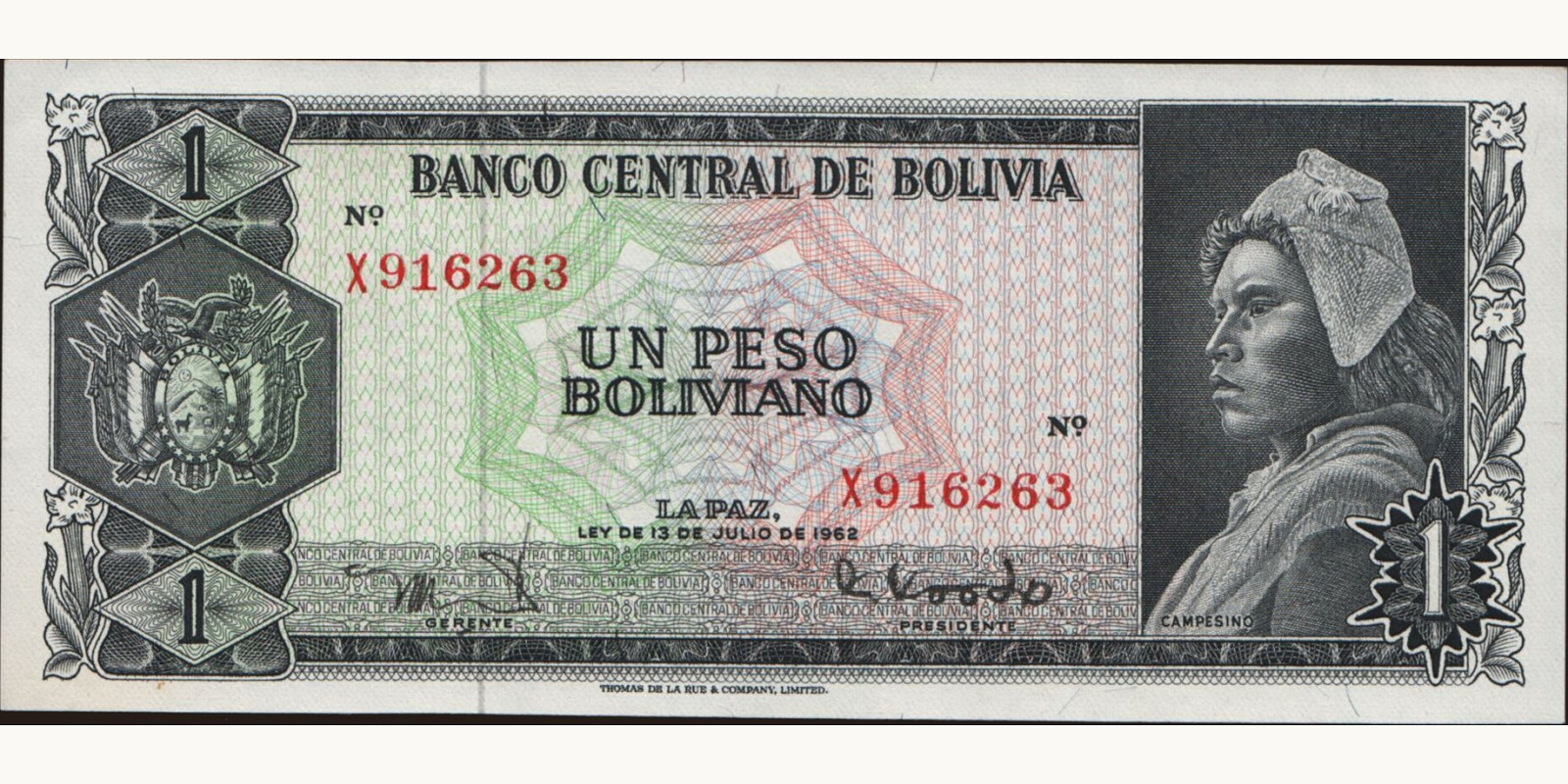
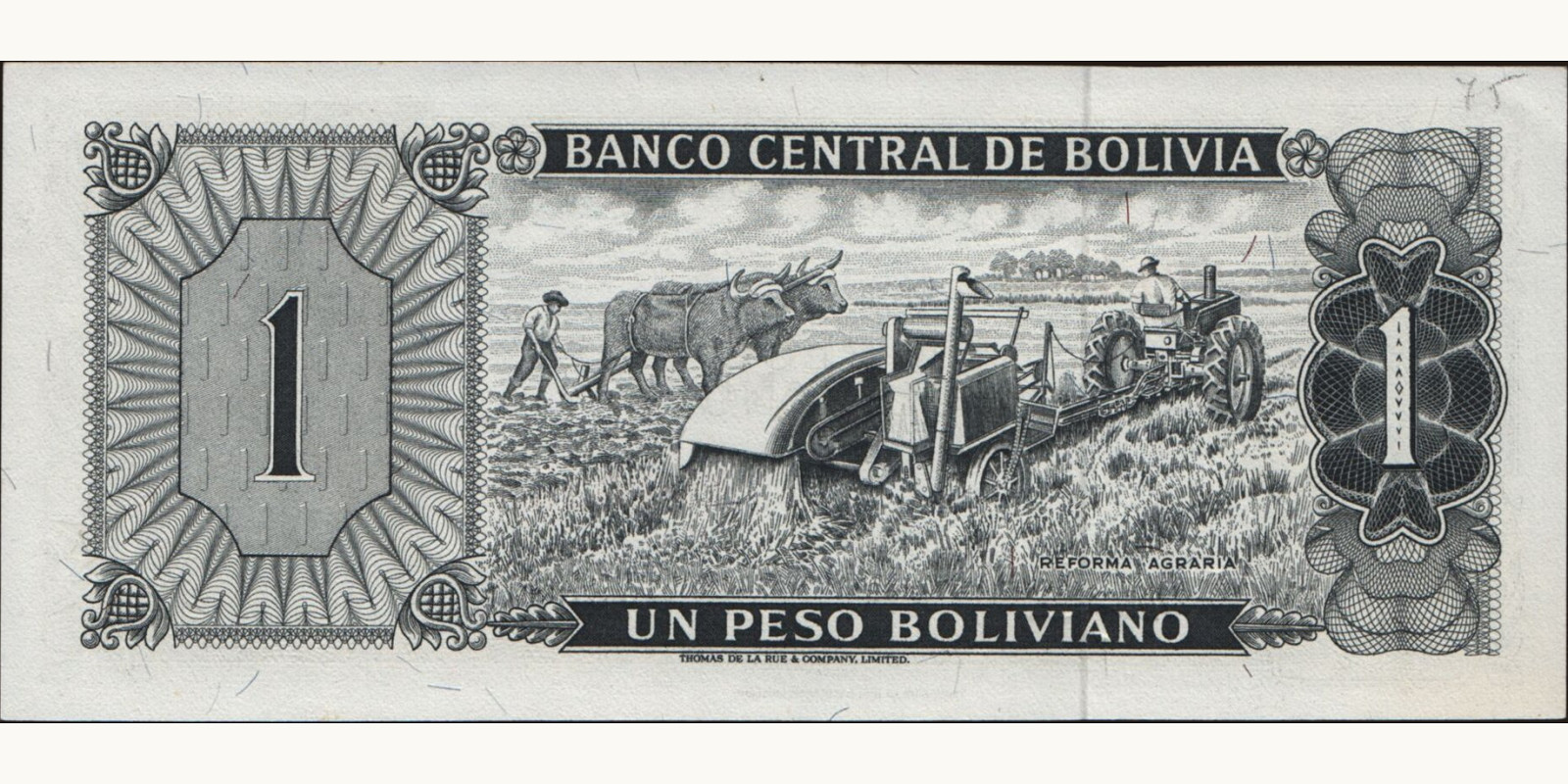
The banknote is a 1 peso issued in Bolivia in 1962. It is cataloged under Pick number 152. The note features a portrait of a campesino on the front, positioned at the right, with the national arms displayed on the left. The design is printed in black on a multicolor underprint, and includes signature varieties for Claudio Calderón, the Manager, and Raúl Lema Palaéz, the President. The reverse side shows an agricultural scene at the center right, along with old and new denomination figures at the bottom, and identifies the printer as TDLR.
This note measures 156 x 65 mm and is printed on paper. The printing office responsible for this banknote is De La Rue, based in London, United Kingdom.
The 1 peso banknote represented a form of currency in Bolivia during 1962, coinciding with a time of significant agricultural development and economic change in the country.
This note measures 156 x 65 mm and is printed on paper. The printing office responsible for this banknote is De La Rue, based in London, United Kingdom.
The 1 peso banknote represented a form of currency in Bolivia during 1962, coinciding with a time of significant agricultural development and economic change in the country.
Specifications
- Signed by
- Claudio Calderón (Manager), Raúl Lema Palaéz (President)
- Date of issue
- July 13, 1962
- Printing office
- De La Rue, London, United Kingdom
- Colour
- Black on multicolor underprint
- Dimensions
- 156 x 65 mm
- Pick catalog
- 152
About this banknote
The Central Bank of Bolivia issued this banknote series in 1962. This series was introduced to update the national currency system and was printed by De La Rue in London. It features security enhancements and new design elements to reflect contemporary printing standards.
The front side of the banknote showcases a campesino's portrait to the right and national arms to the left, with signature varieties across Series A-E. The back displays an agricultural scene at the center right, with the old and new denominations inscribed at the bottom.