1 pesos 1953 — Cuba ( Pick: NL )
Region:
North America
Front side
Back side
Banknote description
The banknote is a 1 pesos issued in Cuba in 1953. This note is cataloged under Pick number NL. Its denomination and year place it among documented banknotes.
The front side features a black design on a blue underprint, while the back is printed in blue. The banknote dimensions are 156 x 67 mm. It is signed by Joaquín Martínez Sáenz, President of the National Bank of Cuba, and Marino López Blanco, Minister of Finance. Additionally, a total of 1,000,000 notes were produced by the American Banknote Corporation.
The 1 pesos note is made of paper. The American Banknote Corporation was established in 1793.
The front side features a black design on a blue underprint, while the back is printed in blue. The banknote dimensions are 156 x 67 mm. It is signed by Joaquín Martínez Sáenz, President of the National Bank of Cuba, and Marino López Blanco, Minister of Finance. Additionally, a total of 1,000,000 notes were produced by the American Banknote Corporation.
The 1 pesos note is made of paper. The American Banknote Corporation was established in 1793.
Specifications
- Signed by
- Joaquín Martínez Sáenz (President of National Bank of Cuba); Marino López Blanco (Minister of Finance)
- Date of issue
- 1953
- Printing office
- American Banknote Corporation
- Colour
- Black on blue underprint; blue on back
- Dimensions
- 156 x 67 mm
- Amount produced
- 1,000,000
- Pick catalog
- NL
About this banknote
The banknote was issued by the "Movimiento 26 de Julio" in Cuba in 1953. This series was introduced amidst revolutionary activities focused on overthrowing the existing government. The issuance was intended to support and finance these movements.
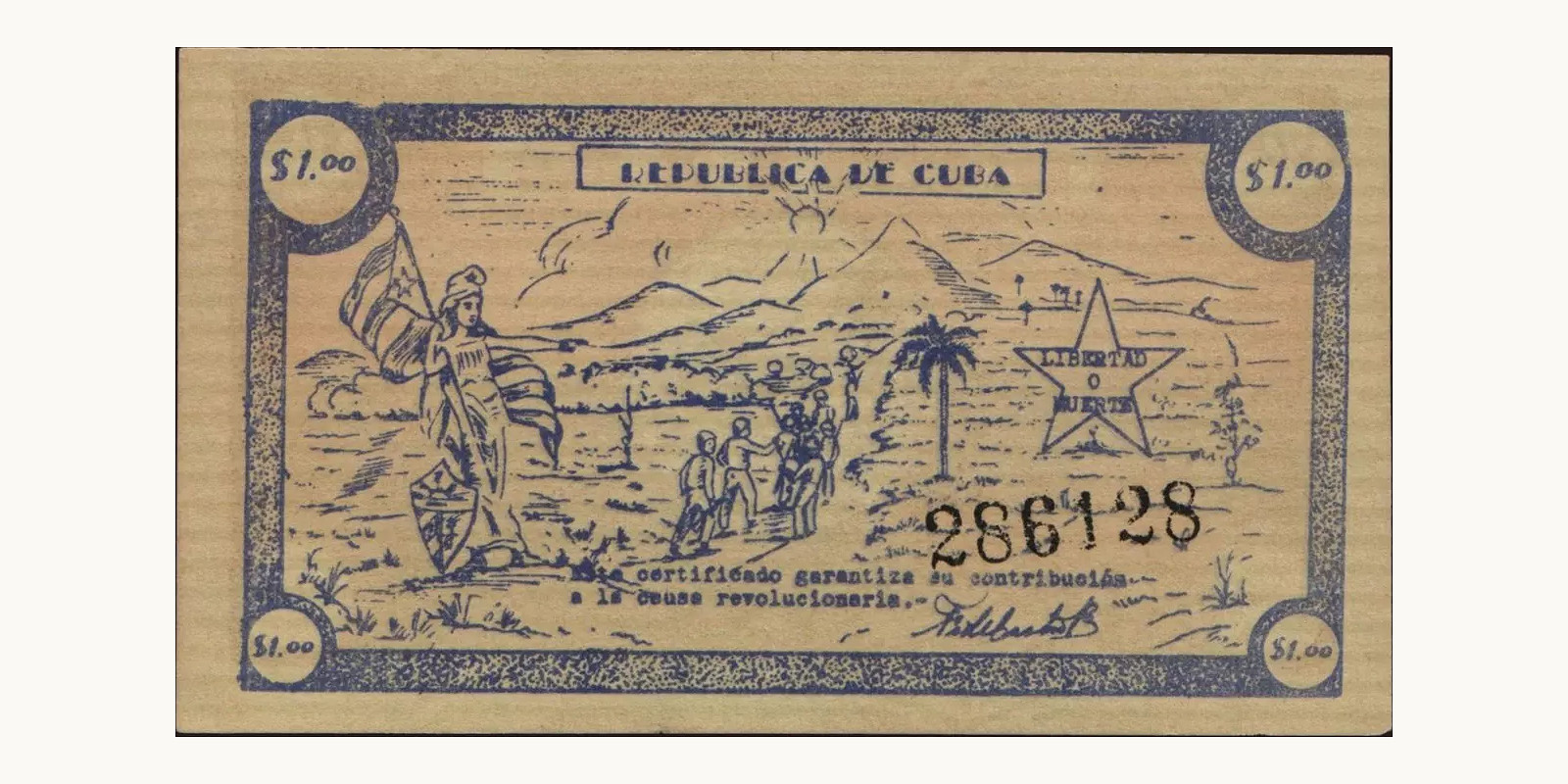
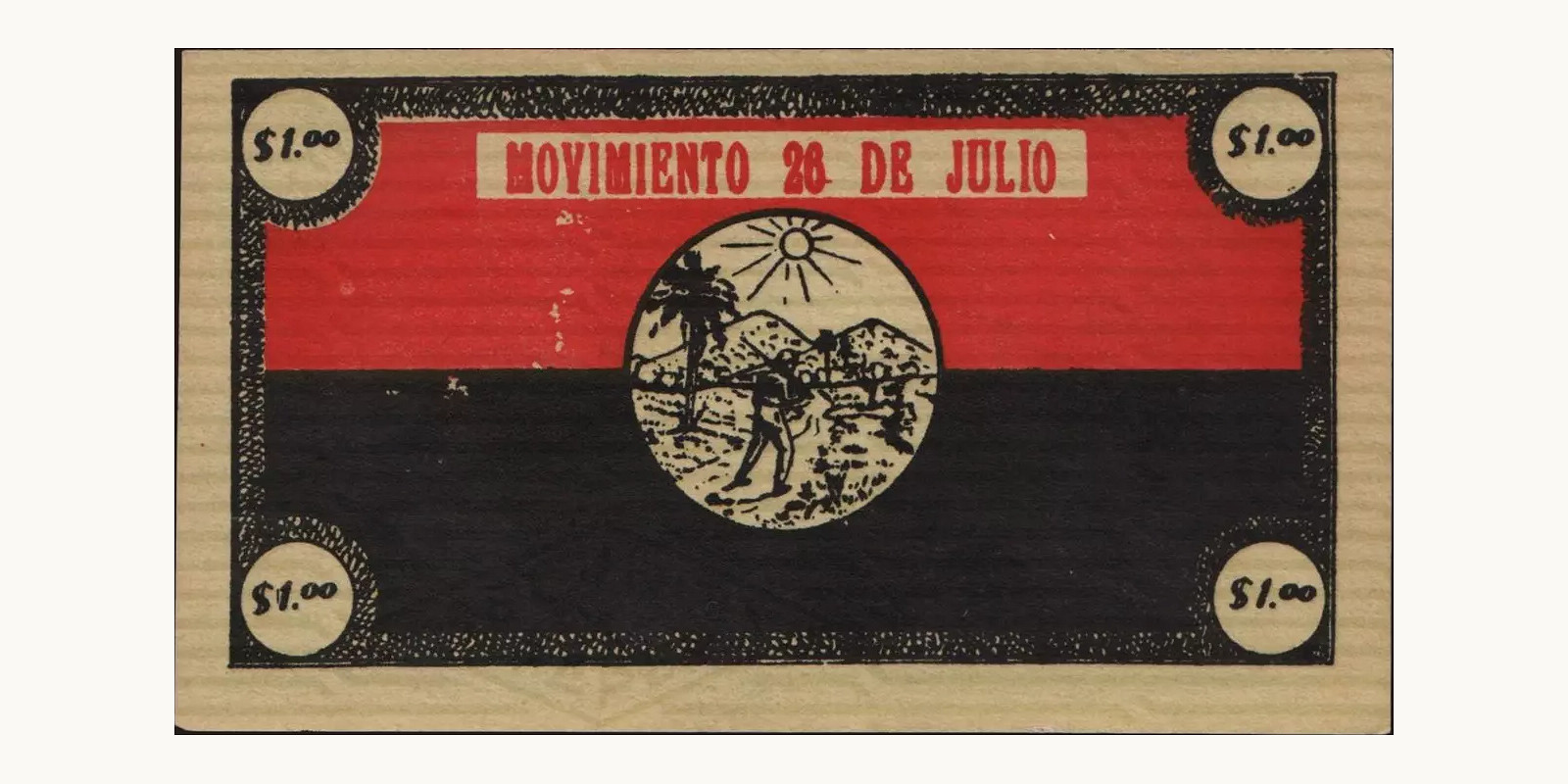
The front side design features a depiction of a revolutionary scene, including figures and a landscape with mountains and a palm tree. The reverse side displays the inscription “MOVIMIENTO 26 DE JULIO” with a central motif of a worker against a red and black backdrop. This note is not officially cataloged and is noted for its historical context rather than widespread circulation.