1 dinars 1942 — Iraq ( Pick: 18 )
Region:
Middle East & Asia
Front side
Back side
Banknote description
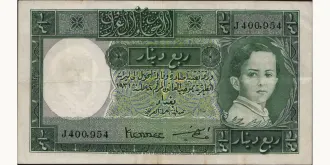
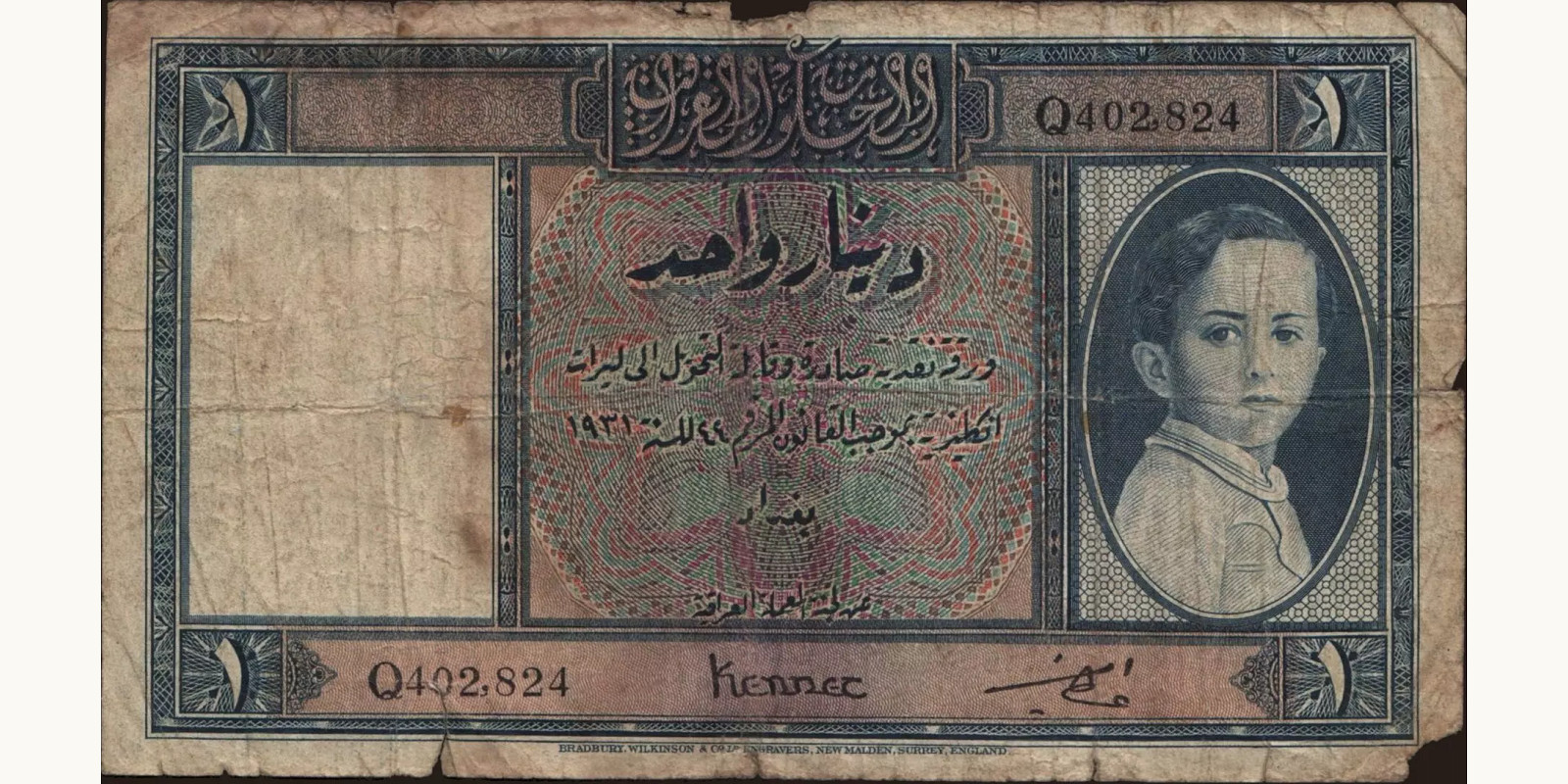
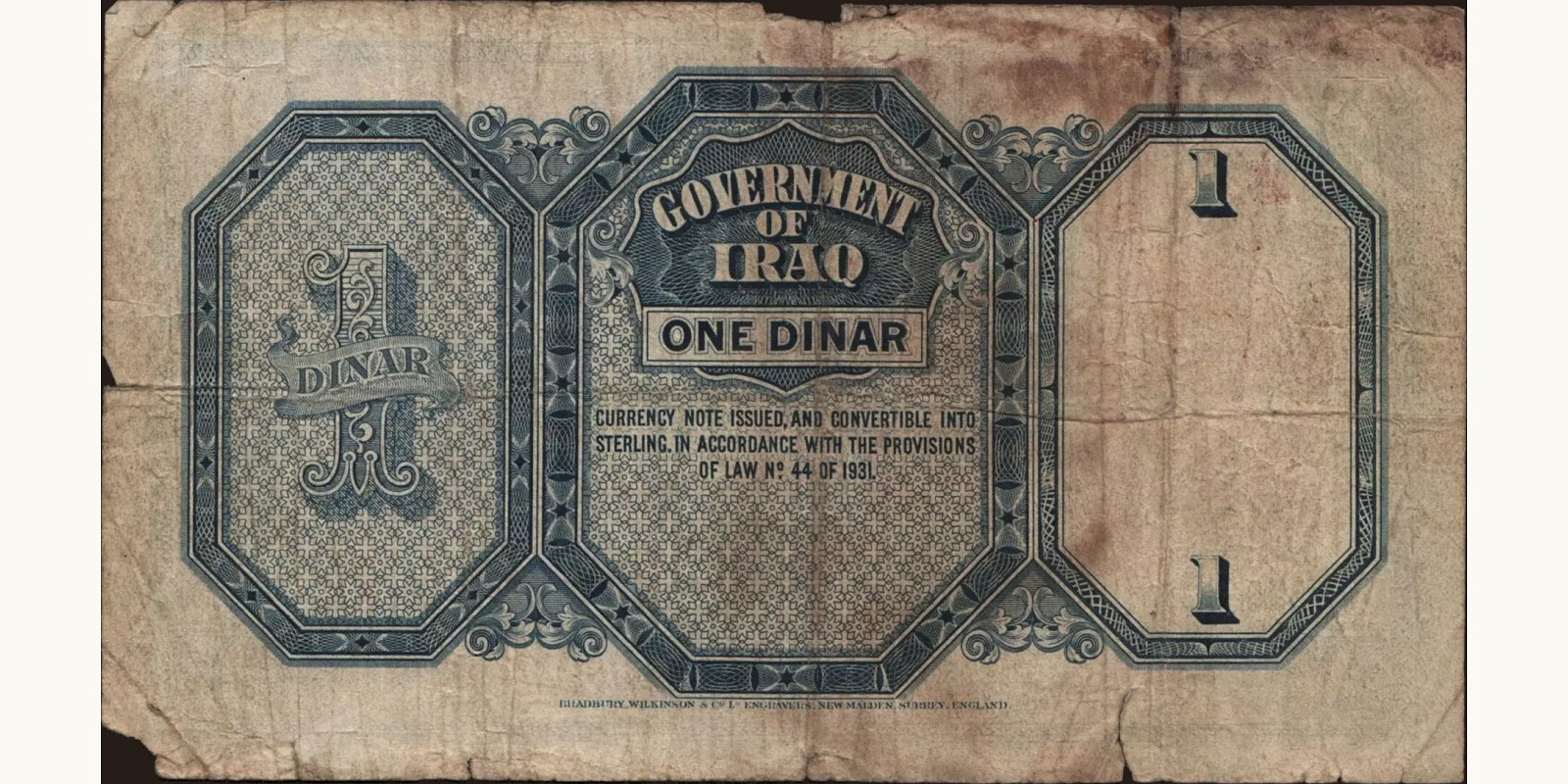
The banknote is a 1 dinar issued in Iraq in 1942. It is cataloged under Pick number 18. This note is characterized by its blue color and is printed on paper, measuring 161 x 91 mm. It is signed by Lord Kennet and Daoud al Haidari, with the printing performed by Bradbury Wilkinson in New Malden.
The note's design details include the signatures of its issuers and the printer, contributing to its authenticity. The dimensions and paper type further define its specifications within the catalog.
The amount produced for this banknote is not specified. The establishment of this 1 dinar note aligns with significant changes in Iraq's monetary practices during the early 1940s, reflecting the ongoing economic developments of that era.
The note's design details include the signatures of its issuers and the printer, contributing to its authenticity. The dimensions and paper type further define its specifications within the catalog.
The amount produced for this banknote is not specified. The establishment of this 1 dinar note aligns with significant changes in Iraq's monetary practices during the early 1940s, reflecting the ongoing economic developments of that era.
Specifications
- Signed by
- Lord Kennet, Daoud al Haidari
- Date of issue
- 1942
- Printing office
- Bradbury Wilkinson, New Malden
- Colour
- Blue
- Dimensions
- 161 x 91 mm
- Amount produced
- Not specified
- Pick catalog
- 18
About this banknote
The Government of Iraq issued the 1 dinar banknote, Pick number 18, in 1942. This issuance was part of Iraq's efforts to solidify its monetary system during the early 1940s. The note was printed by the renowned British company Bradbury Wilkinson in New Malden, under the signatures of Lord Kennet and Daoud al Haidari.
The front side of the blue-toned note features a portrait of a young boy in an oval frame on the right side. It carries inscriptions in Arabic. The reverse side displays the words “Government of Iraq” and “One Dinar” prominently, with an intricate geometric pattern. The note is convertible into sterling according to the provisions of Law No. 44 of 1931.