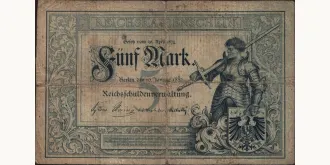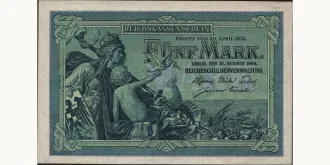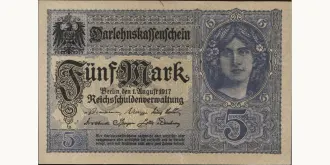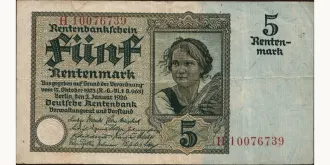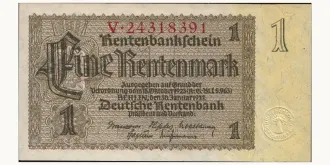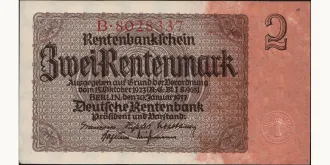
5 mark 1942 — Германия ( Pick: 186a )
Регион:
Европа
Лицевая сторона

Оборотная сторона

Описание банкноты
банкнота номиналом 5 марок, выпущенная в Германии в 1942 году. Она входит в каталог под номером Pick 186a. Размеры банкноты составляют 140 x 70 мм, а дизайн лицевой стороны включает портрет молодого человека справа. Водяной знак показывает цифру 5, расположенную вертикально слева, как лицом, так и обратно.
Банкнота напечатана красно-коричневым цветом и изготовлена из бумаги. На ней стоит подпись Доктора Гьялмара Шахта, и она была произведена Рейхсдрукерай. Эта банкнота классифицируется как вариант a и идентифицируется как выпущенная банкнота.
Доктор Гьялмар Шахт занимал пост президента Рейхсбанка в первые годы нацистской Германии, серьезно влияя на монетарную политику страны.
Банкнота напечатана красно-коричневым цветом и изготовлена из бумаги. На ней стоит подпись Доктора Гьялмара Шахта, и она была произведена Рейхсдрукерай. Эта банкнота классифицируется как вариант a и идентифицируется как выпущенная банкнота.
Доктор Гьялмар Шахт занимал пост президента Рейхсбанка в первые годы нацистской Германии, серьезно влияя на монетарную политику страны.
Характеристики
- Подписано
- Dr. Hjalmar Schacht
- Дата выпуска
- August 1, 1942
- Типография
- Reichsdruckerei
- Цвет
- Red-brown
- Размер
- 140 x 70 mm
- Тираж
- Not specified
- Каталог Pick
- 186a
Об этой банкноте
Рейхсбанк, центральный банк Германии, выпустил банкноту номиналом 5 марок в 1942 году. Эта серия, выпущенная во время Второй мировой войны, включала банкноты, которые были частью продолжающегося wartime производства валюты Германии. Д-р Хьялмар Шахт подписал эту серию банкнот, которая была напечатана Рейхсдрукереей, официальным государственным печатным учреждением.
На лицевой стороне банкноты номиналом 5 марок изображен красно-коричневый портрет молодого человека справа. Также присутствует водяной знак с числом 5, который может быть расположен как в правильном, так и в зеркальном варианте, с левой стороны. Размер банкноты составляет 140 x 70 мм. Она каталогизировалась как Pick 186a и была официально выпущена 1 августа 1942 года.