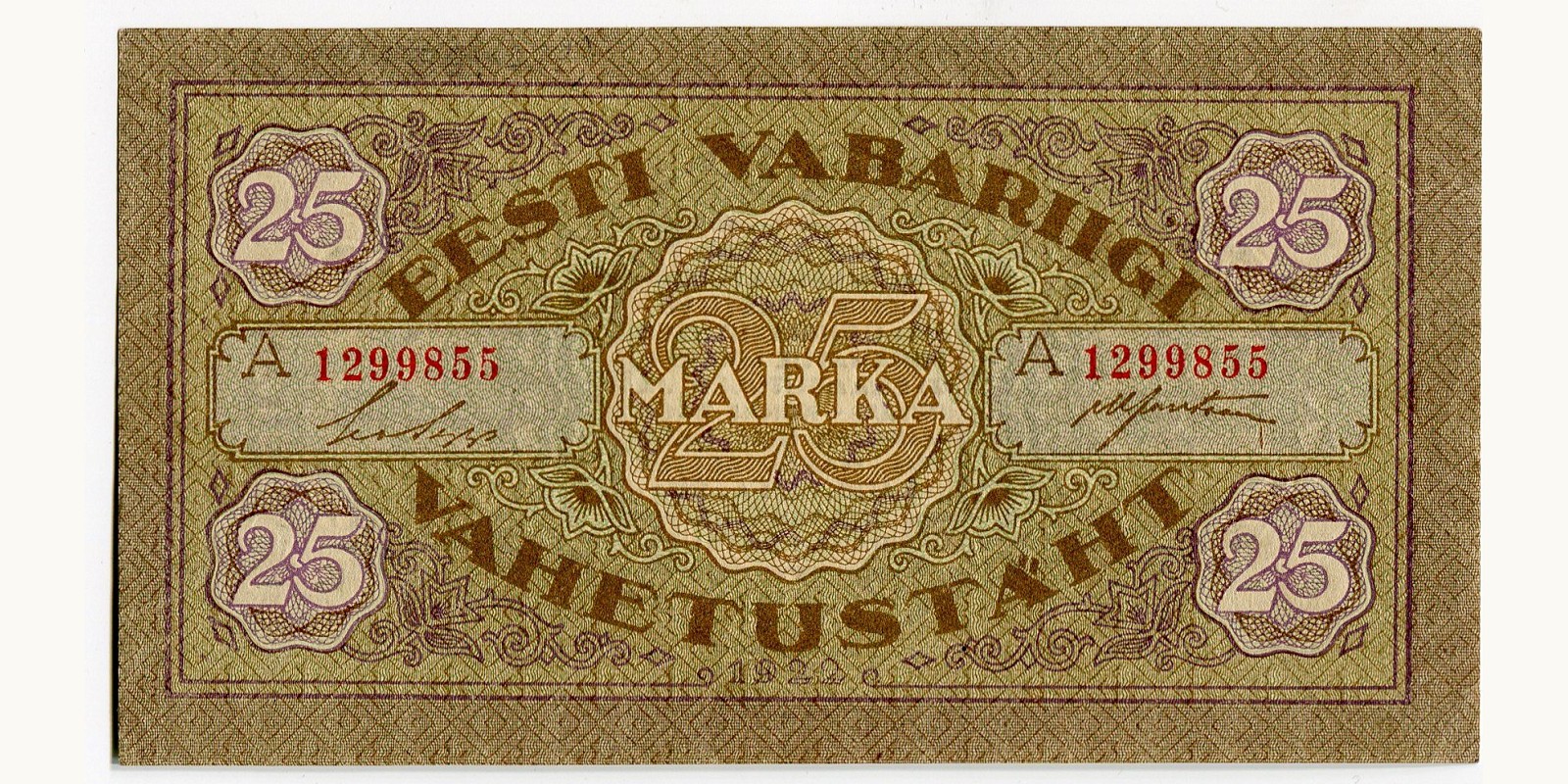
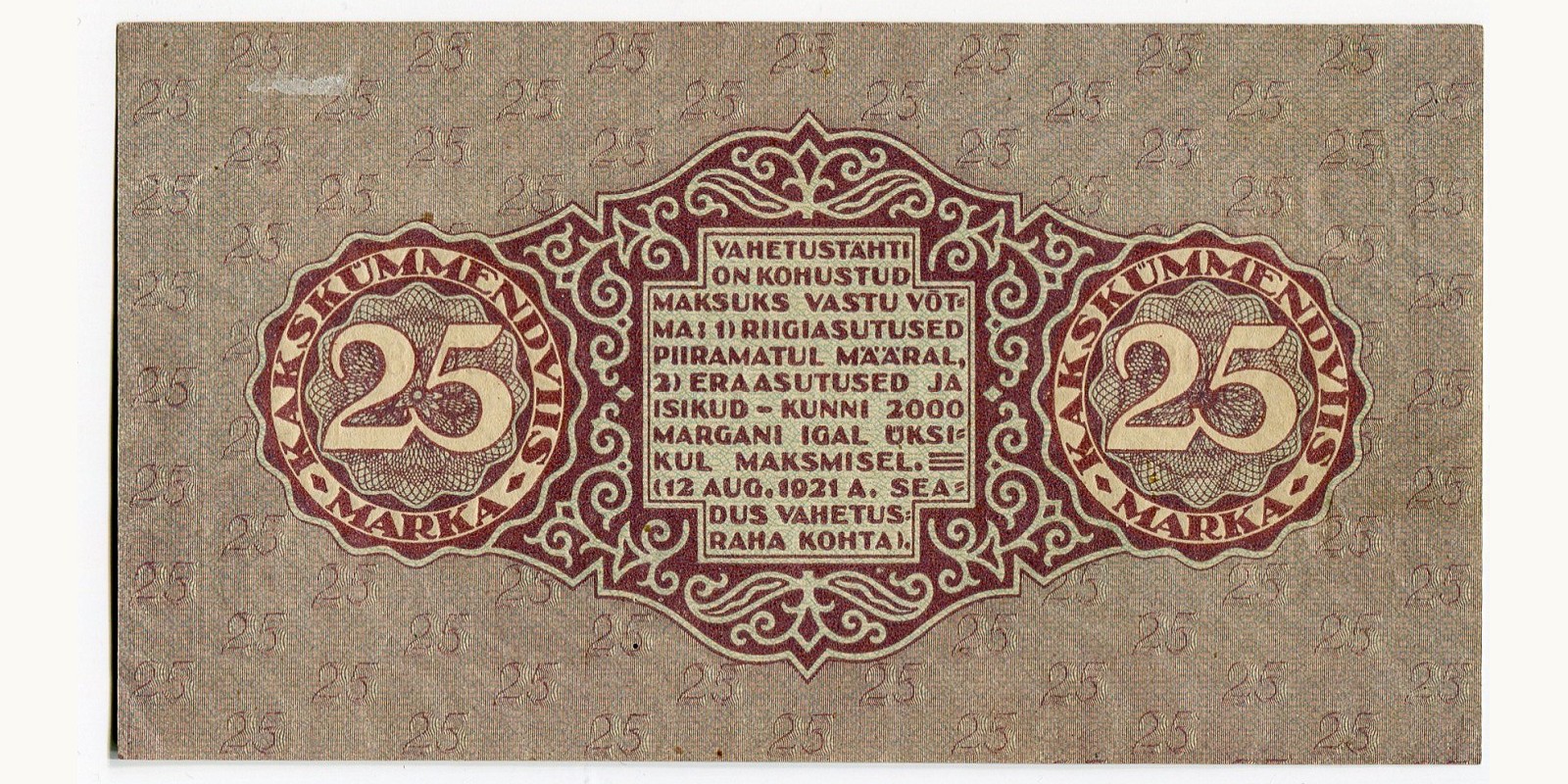
25 Mark 1922 — Эстония ( Pick: 54b )
Описание банкноты
Характеристики
- Подписано
- L. Sepp; M. Jantson
- Нумерация
- A 2 x 7
- Дата выпуска
- 25.04.1926
- Изъята из обращения
- 01.05.1931
- Типография
- State Printing Office, Tallinn, Estonia
- Бумага
- Tervakoski, Finland; Räpina, Estonia
- Цвет
- Brown and cream
- Размер
- 145 x 77 mm
- Тираж
- 4720000
- Каталог Pick
- 54b
Об этой банкноте
Банкнота в 25 марок, известная как "Vahetustäht", была выпущена Банком Эстонии в 1922 году. Эта серия была введена для стабилизации эстонской марки в период экономической нестабильности после получения независимости страной. Банкноты были напечатаны Государственным печатным бюро в Таллине, Эстония, на бумаге, произведенной в Тервакоски, Финляндия, и имели размеры 145 x 77 мм. Лавандового цвета банкноты были подписаны Л. Сеппом и М. Янтсоном, всего было выпущено 4 600 000 банкнот.
Замечательной особенностью этой серии является наличие водяного знака, который был распространенной мерой безопасности для предотвращения подделок. Деноминация в 25 марок была частью более широких усилий по введению обменных банкнот в 1922 году, наряду с банкнотами в 10 марок, для облегчения расчетов и укрепления доверия общества к валюте.
Похожие банкноты