2 centu 1922 — Литва ( Pick: 8 )
Регион:
Европа
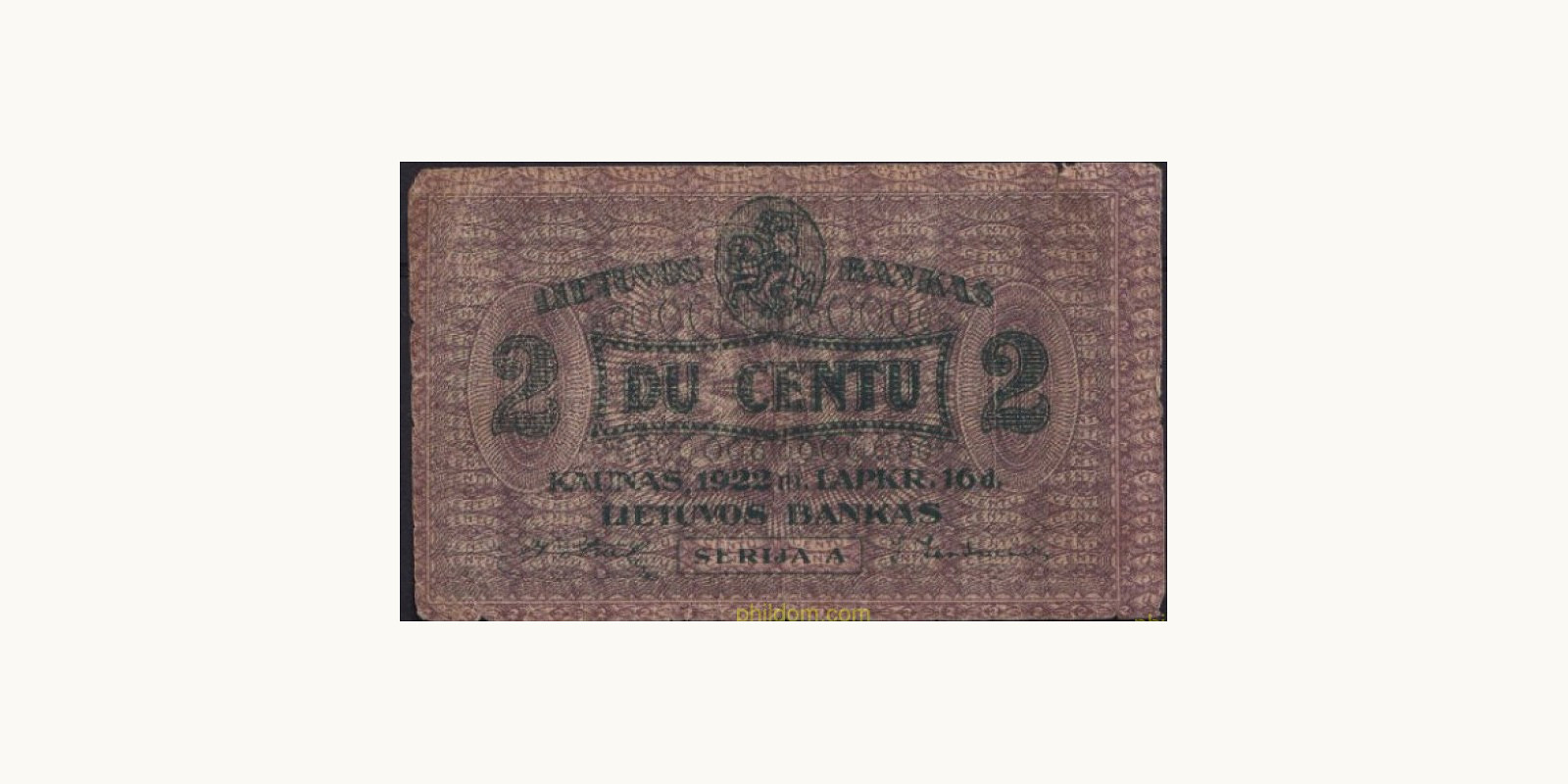
Лицевая сторона
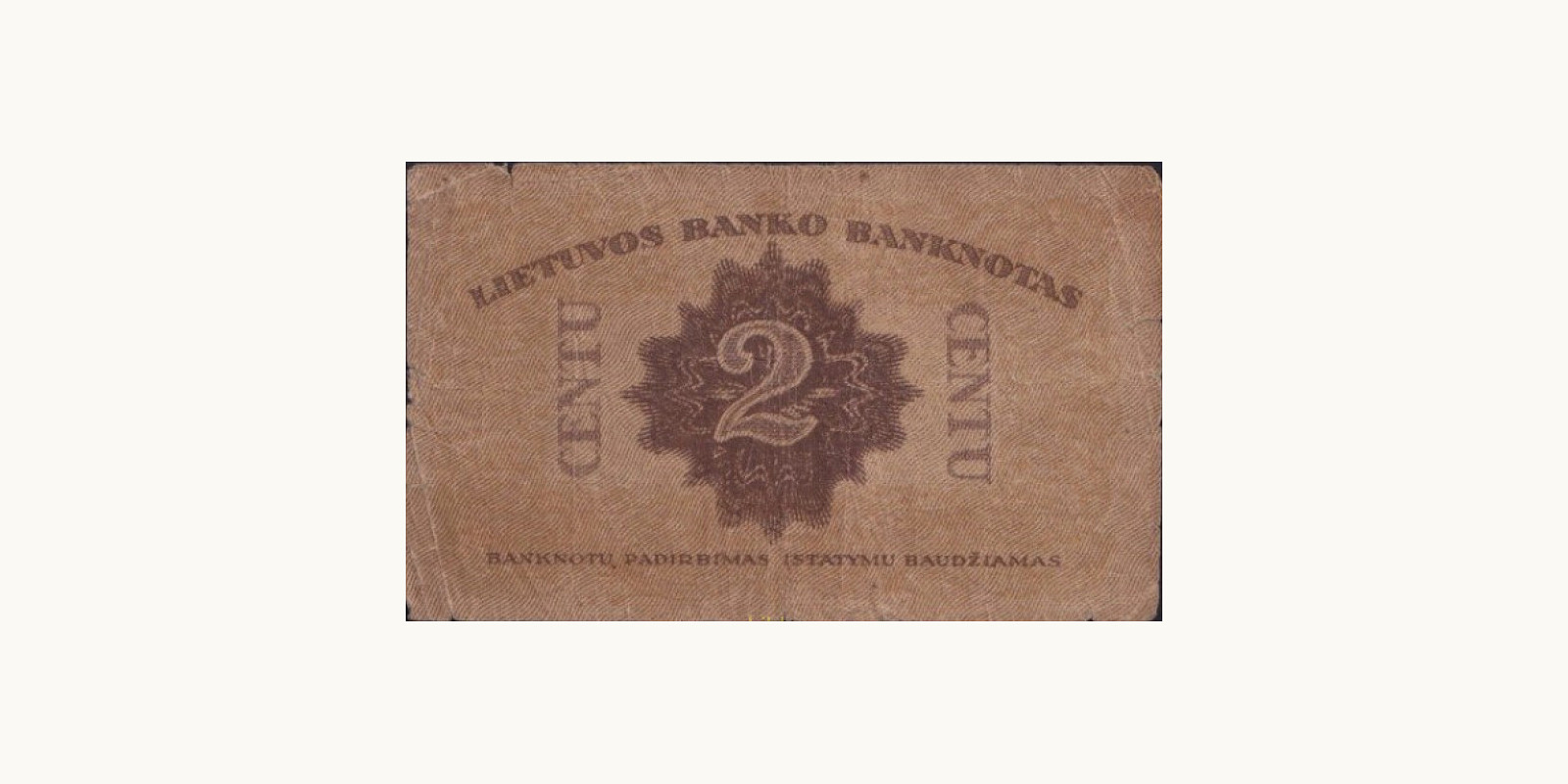
Оборотная сторона
Описание банкноты
Банкнота номиналом 2 сантас 1922 года из Литвы отражает ключевой момент в истории страны, когда она вышла из хаоса Первой мировой войны и последующей борьбы за независимость. После объявления независимости в 1918 году Литве остро потребовалась собственная валюта для укрепления национальной идентичности и экономической стабильности. Эта банкнота была частью первоначального выпуска, изданного в поддержку вновь образованной Республики Литва, символизируя разрыв с иностранным контролем и принятие самоуправления.
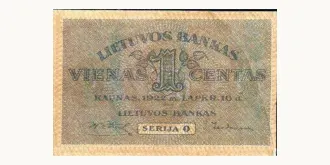
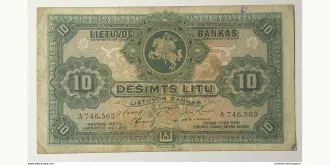
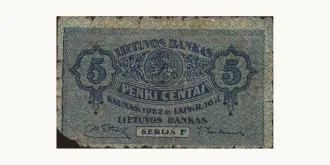
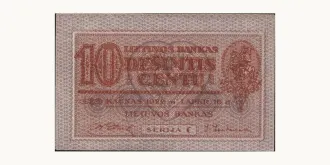
Визуально банкнота 2 сантас имеет дизайн, характерный для своего времени, с вниманием к деталям, отражающим литовские художественные влияния. Использование насыщенных цветов, в сочетании с замысловатыми мотивами, передает суть национальной гордости. Надписи на родном языке подчеркивают ее ценность и предназначение, в то время как общий макет сочетает простоту с элегантностью, отражая как функциональные, так и эстетические соображения.
Для коллекционеров и историков значение банкноты 2 сантас 1922 года выходит за пределы ее денежной стоимости; она олицетворяет начало современной валютной системы Литвы и служит свидетельством стойкого духа нации в ее формирующие годы. Эта банкнота не только является увлекательным дополнением для нумизматов, но и окном в историческую нарратив литовской борьбы за суверенитет, что делает ее привлекательным предметом для всех, кто интересуется финансовой историей и идентичностью региона.
Визуально банкнота 2 сантас имеет дизайн, характерный для своего времени, с вниманием к деталям, отражающим литовские художественные влияния. Использование насыщенных цветов, в сочетании с замысловатыми мотивами, передает суть национальной гордости. Надписи на родном языке подчеркивают ее ценность и предназначение, в то время как общий макет сочетает простоту с элегантностью, отражая как функциональные, так и эстетические соображения.
Для коллекционеров и историков значение банкноты 2 сантас 1922 года выходит за пределы ее денежной стоимости; она олицетворяет начало современной валютной системы Литвы и служит свидетельством стойкого духа нации в ее формирующие годы. Эта банкнота не только является увлекательным дополнением для нумизматов, но и окном в историческую нарратив литовской борьбы за суверенитет, что делает ее привлекательным предметом для всех, кто интересуется финансовой историей и идентичностью региона.
Характеристики
- Дата выпуска
- November 16, 1922
- Типография
- Andreas Haase, Prague
- Цвет
- Dark-green on gray-violet underprint; Light and dark brown
- Размер
- 80 x 52 mm
- Каталог Pick
- 8
Об этой банкноте
Банк Литвы выпустил эту банкноту номиналом 2 сантаса в 1922 году. Эта серия была представлена в период денежной реформы, направленной на установление литовского лита в качестве национальной валюты, которая заменила остмарку и царский рубль. Банкнота была напечатана Андреасом Хаасом в Праге.
На лицевой стороне банкноты изображён тёмно-зелёный центральный мотив с явно выделенным номиналом "DU CENTU" на серо-фиолетовом фоне. На обратной стороне представлен светло- и тёмно-коричневый дизайн с центром "2 CENTU". Банкнота изготовлена из бумаги, её размеры составляют 80 x 52 мм и она классифицируется как номер Pick 8.