100 lei 1932 — Румыния ( Pick: 33 )
Регион:
Европа
Лицевая сторона
Оборотная сторона
Описание банкноты
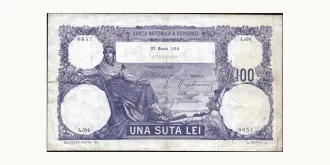
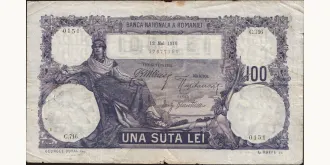
Банкнота номиналом 100 лей, выпущенная в Румынии в 1932 году. Она соответствует номеру Пика 33.
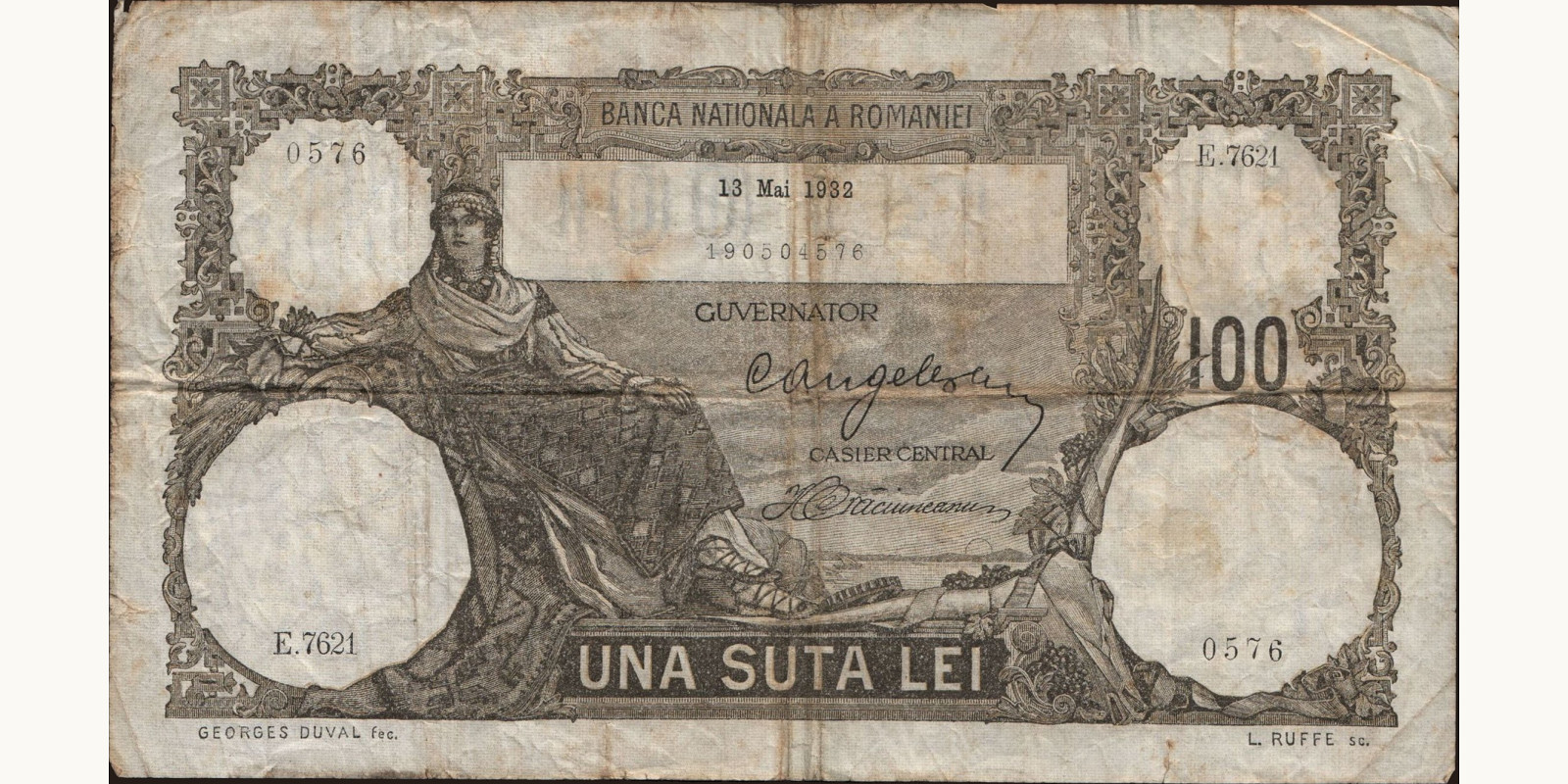
Оливково-коричневая банкнота имеет дизайн, относящийся к выпуску 1930-1933 годов, на лицевой стороне изображена женщина в национальном костюме. Существует три варианта подписей, и она имеет общие дизайнерские характеристики с банкнотой № 31. Водяной знак изображает головы Траяна и Минервы.
Размеры этой банкноты составляют 192 x 112 мм. Она напечатана на бумаге Банка Франции в Париже, Франция, и подписана Жоржем Дювалем и Леоном Анри Руффе. Румынское правительство выпустило различные номиналы в рамках своих усилий во время экономических трудностей 1930-х годов.
Оливково-коричневая банкнота имеет дизайн, относящийся к выпуску 1930-1933 годов, на лицевой стороне изображена женщина в национальном костюме. Существует три варианта подписей, и она имеет общие дизайнерские характеристики с банкнотой № 31. Водяной знак изображает головы Траяна и Минервы.
Размеры этой банкноты составляют 192 x 112 мм. Она напечатана на бумаге Банка Франции в Париже, Франция, и подписана Жоржем Дювалем и Леоном Анри Руффе. Румынское правительство выпустило различные номиналы в рамках своих усилий во время экономических трудностей 1930-х годов.
Характеристики
- Подписано
- Georges Duval, Léon Henri Ruffe
- Дата выпуска
- 1930-1932
- Типография
- Banque de France, Paris, France
- Цвет
- Olive-brown
- Размер
- 192 x 112 mm
- Каталог Pick
- 33
Об этой банкноте
Национальный банк Румынии выпустил банкноту номиналом 100 лей 13 мая 1932 года в рамках серии 1930–1933 годов. Эта серия была введена во время правления короля Кароля II, который взошел на трон в 1930 году.
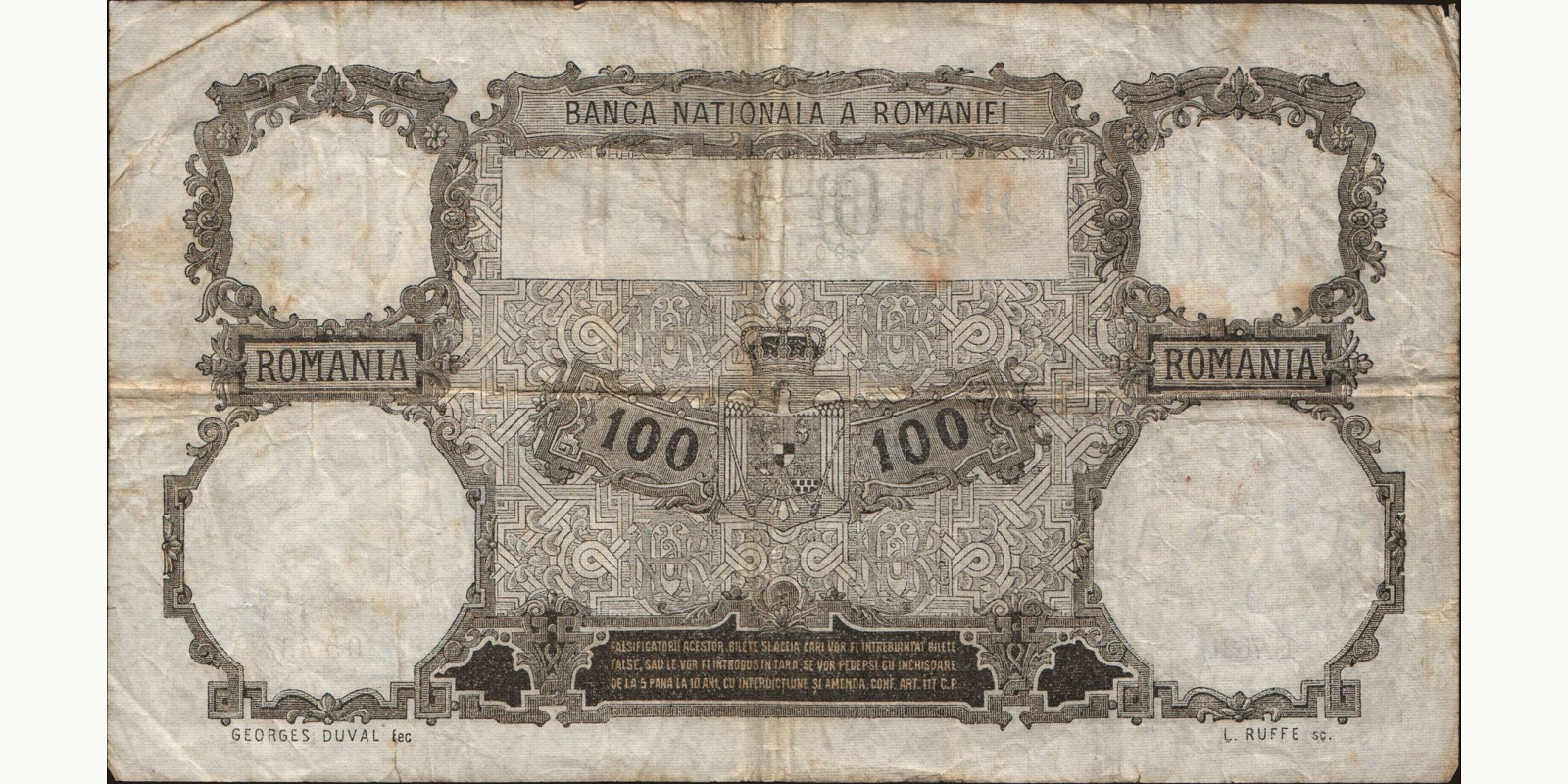
Аверс банкноты изображает женщину, сидящую в национальном костюме, с левой стороны. Реверс содержит надписи и декоративные элементы. Банкнота имеет размеры 192 x 112 мм и включает водяной знак с изображениями голов Траяна и Минервы. Она была напечатана Банком Франции в Париже и подписана Жоржем Дювалем и Лемоном Анри Руффе.