1 mark 1922 — Германия ( Pick: 61a )
Регион:
Европа
Лицевая сторона
Оборотная сторона
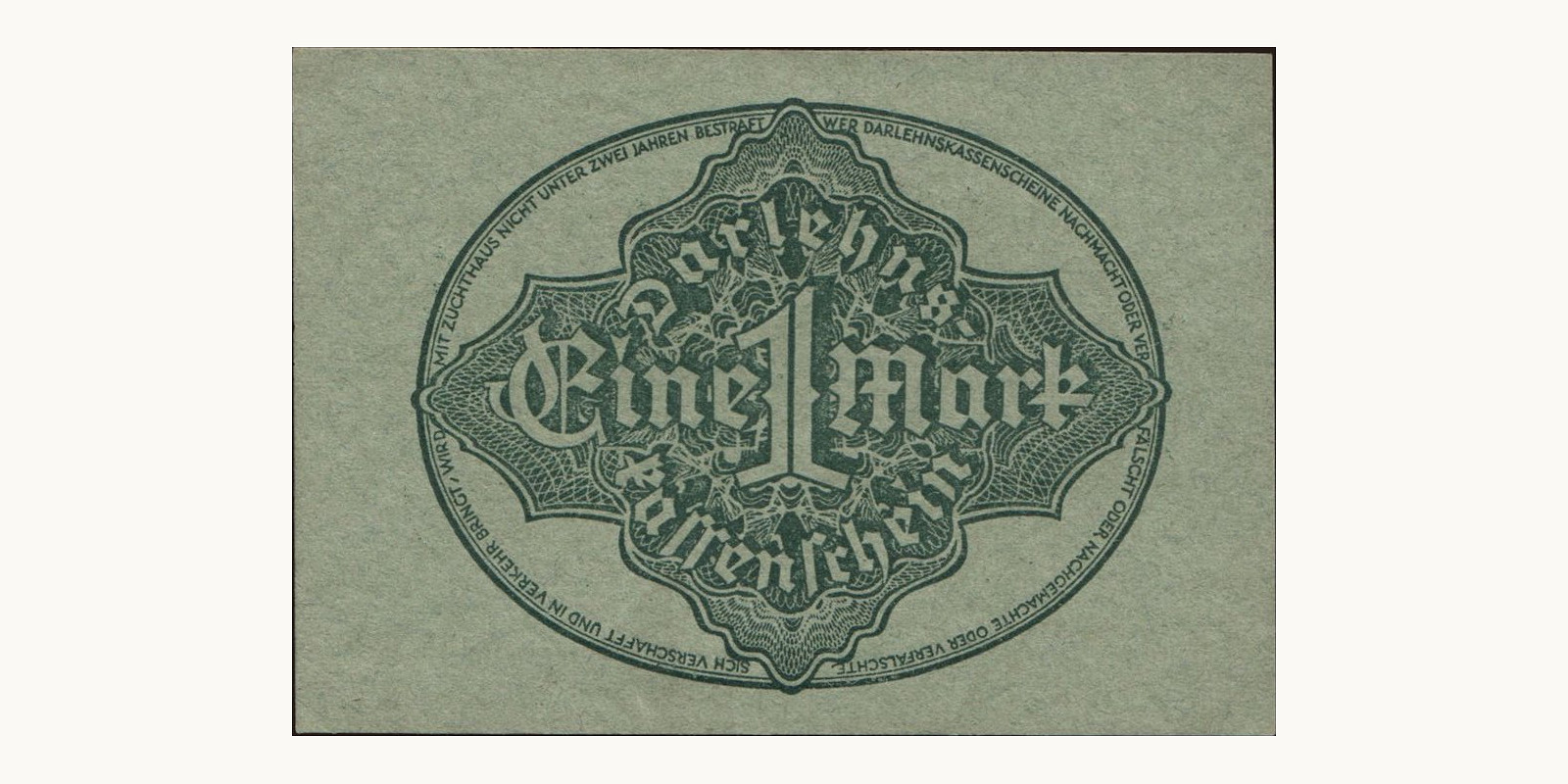
Описание банкноты
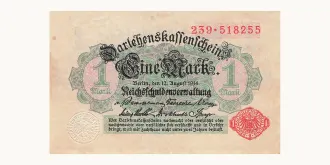
Банкнота номиналом 1 марка выпущена в Германии в 1922 году. Она каталогизирована под номером Пика 61a. Ее номинал и год выпуска помещают ее среди задокументированных банкнот этой серии.
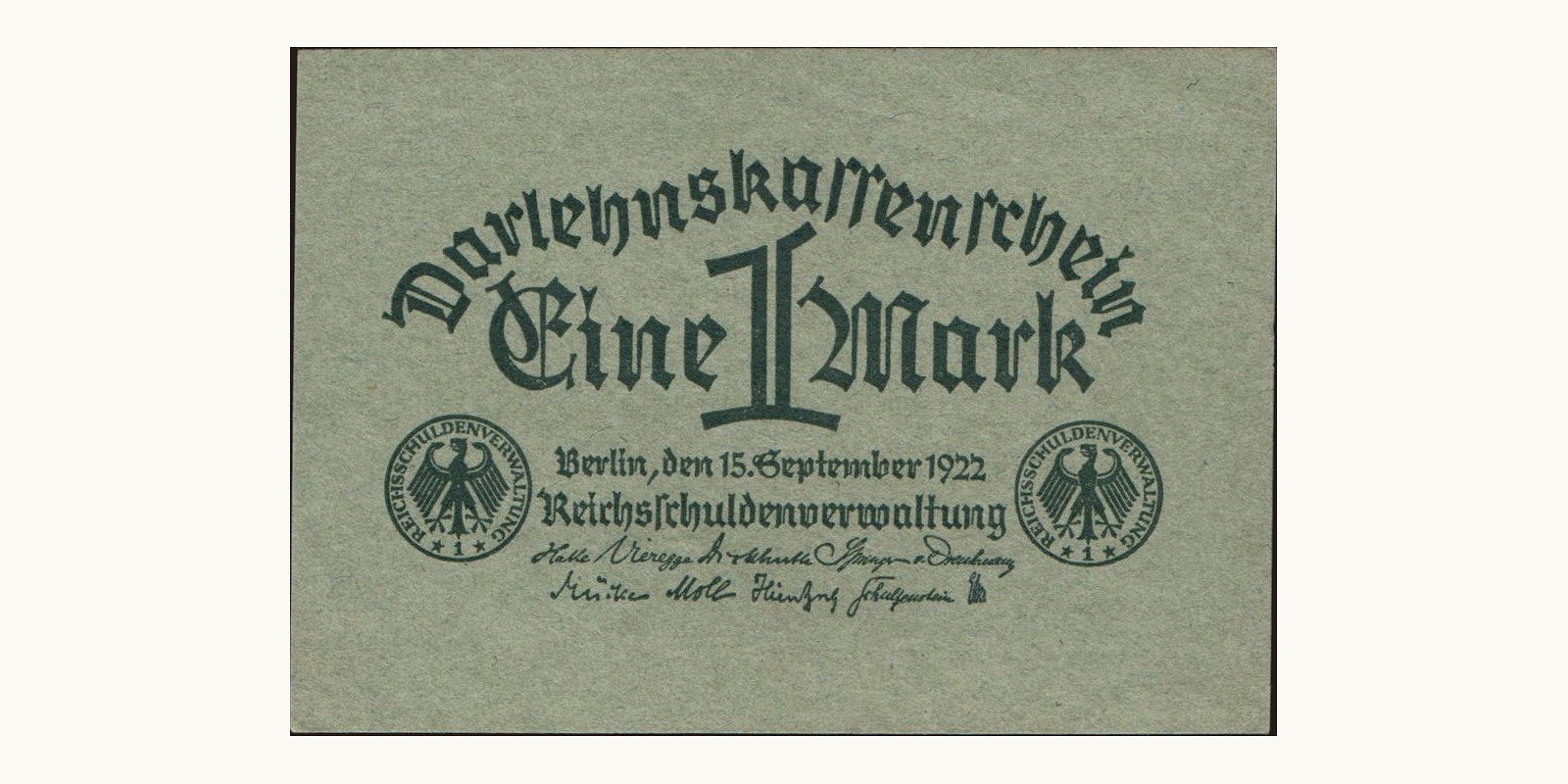
Дизайн лицевой стороны выполнен в темно-зеленом цвете на светло-зеленом фоне с большим центром. Банкнота имеет размеры 85 x 59 мм и напечатана на белой бумаге. Она указана как вариант a и содержит подписи Рудольфа Хавенштейна, Отто фон Глазенаппа, Карла фон Гримма, Карла Каффмана, Пауля Шнейдера, Арнольда Будчиеса, Бруно Бернхарда, Отто Зейфферта и Вильгельма Вокке.
Бумага, использованная для этой банкноты, белая с светло-зеленым фоном. Дата выпуска — 15 сентября 1922 года.
Дизайн лицевой стороны выполнен в темно-зеленом цвете на светло-зеленом фоне с большим центром. Банкнота имеет размеры 85 x 59 мм и напечатана на белой бумаге. Она указана как вариант a и содержит подписи Рудольфа Хавенштейна, Отто фон Глазенаппа, Карла фон Гримма, Карла Каффмана, Пауля Шнейдера, Арнольда Будчиеса, Бруно Бернхарда, Отто Зейфферта и Вильгельма Вокке.
Бумага, использованная для этой банкноты, белая с светло-зеленым фоном. Дата выпуска — 15 сентября 1922 года.
Характеристики
- Подписано
- Rudolf Havenstein, Otto von Glasenapp, Karl von Grimm, Carl Kauffmann, Paul Schneider, Arnold Budczies, Bruno Bernhard, Otto Seiffert, Wilhelm Vocke, Carl Friedrich
- Дата выпуска
- September 15, 1922
- Бумага
- white
- Цвет
- green and lilac underprint
- Размер
- 85 x 59 mm
- Каталог Pick
- 61a
Об этой банкноте
Эмитентом банкноты номиналом 1 марка в 1922 году был Рейхсбанк Германии. Эта серия была введена 15 сентября 1922 года. Она стала частью усилий Рейхсбанка по управлению сложными финансовыми условиями в Германии после Первой мировой войны.
Дизайн лицевой стороны банкноты содержит тёмно-зелёный на светло-зелёном фоне с крупным центральным мотивом. Размер банкноты составляет 85 х 60 мм, она напечатана на светло-зелёной бумаге. Банкнота подписана несколькими должностными лицами, включая Рудольфа Хавенштайна и Отто фон Гласена, что отражает надзор старших финансовых властей того времени.